


Test 123
If you have quite a bit of a heavy metal burden, it can affect your hormones and how you secrete them.
What is Heavy Metal Chelation?
Heavy metal chelation is a therapy that we use in order to take heavy metals that have potentially stayed in the body after exposure, bind them and get them out of the body. It’s something that you take either orally or intravenously that helps to bind up those heavy metals and actually get them out of the body. Heavy metals when we’re first exposed to them are in the bloodstream.
If we’ve been exposed years ago to a heavy metal, they often sit in tissues systemically, primarily fat cells. So sometimes when we have an overload of heavy metals, we can actually see weight gain as one of the symptoms. With heavy metal chelation testing, we actually use chelating agents in order to look at what your baseline is for heavy metal exposure. And then we use the same chelating agents for treatment if it’s needed.
With heavy metal chelation testing, it establishes if there is some kind of heavy metal burden in the body. If you’ve had mercury amalgams in the past, for example, if you’ve been exposed to well water as a kid, that can sometimes be a heavy metal exposure.
Why It’s Important
If you have quite a bit of a heavy metal burden, it can affect our hormones and how we secrete our hormones because it ultimately can increase inflammation. When there’s inflammation in the body, we do not make our hormones properly and in terms of specific hormones that it can really change.
The thyroid seems to have an affinity for different heavy metals in that thyroid function can actually be affected by long-term heavy metal exposure. So again, if we treat that underlying heavy metal exposure, we decrease the amount of heavy metal burden. We can start to see that the thyroid can actually rebalance and secrete the hormones properly.
Need help with hormone health?
Nearly half of women have experienced the symptoms of a hormonal imbalance, but the vast majority are unaware of the potential implications. Let a naturopath in Calgary help.
With diet and lifestyle recommendations there are some that are helpful for overall hormone health, and then there are others that we use when we start to get really specific once we’ve looked at comprehensive hormone testing.
Diet
The first of my top recommendations for diet, which is important for promoting liver detoxification of our hormones properly, is lemon water. In the morning, squeeze about an eighth of a lemon into a glass of water, and then switch to regular water cause it can be really hard on the enamel of your teeth. Have leafy greens and cruciferous vegetables in your diet every day. If you can get a variety of those leafy greens and different types of cruciferous vegetables so we’re getting different nutrients from each of them, and we’re actually promoting diversity in our gut microbiomes so that when we break down our hormones, we’re able to poop them out with lifestyle factors.
Sunlight
Sunlight is my number one recommendation for lifestyle. We have to make sure that we’re getting sunlight into our eyeballs in the morning. Morning sunlight is the best for getting enough cortisol to ensure we have energy throughout the whole day. That midday sun helps to promote our healthy sex hormone production, and then that evening sunlight helps to decrease cortisol when it’s time to go to bed.
Exercise
Exercise is so important for our mental health. It is so important for our hormone health, and we also get endorphins from exercise. We wanna make sure that we’re getting a diversity of exercise throughout the menstrual cycle. At certain times of the menstrual cycle, it’s more important to be doing certain types of exercise. When we’re around that time of ovulation, it tends to be better to be looking at more of HIIT-style workouts or weights. Into the second half of the menstrual cycle we’re looking more at cardio, but again, this is really fine-tuned once we’ve done testing so that we can understand where your hormones are at and what is best in terms of exercise moving forward.
These are the big foundations that we need in our lives every day in order for our hormones to be happy long-term, we want to have these foundations in terms of regular exercise, and a good diet, with lots of different fresh fruits and vegetables. We also wanna make sure that we’re getting that light exposure, and making sure you’re decreasing stress. You should start to see some changes in about three to six months, but these are things that we wanna implement that last for the rest of your life.
Need help with hormone health?
Nearly half of women have experienced the symptoms of a hormonal imbalance, but the vast majority are unaware of the potential implications. Let a naturopath in Calgary help.
There are a lot of different birth control options out there. The most common options that women hear about are the birth control pill and hormonal IUDs.
The Pill VS An IUD
When we think about a birth control pill, that’s something that we take orally that our body absorbs, so we absorb about 90% of that oral pill. We have about 90% of hormone circulation throughout our entire body, whereas the hormonal IUD, because they’re inserted into the cervix, they essentially only promote hormone production within that small area, so there’s much less of an impact on the whole body. It doesn’t mean that an IUD is the right option for every woman.
There are other options that we can think about in terms of more natural forms of birth control. The copper IUD is non-hormonal, which is just placed into the cervix, and essentially it takes up space in the uterus so that you can’t have implantation of an egg. It doesn’t affect the way you ovulate, but there are underlying risks there too, in terms of scar tissue development. That is the same for a progesterone-producing IUD as well. It’s important to understand how these different things can affect our bodies and our hormone production. There’s a great website called it’s alan.ca that goes through all of the different birth control options, and that’s a wonderful resource for women so that they can understand what are the benefits, pros, cons of each of the birth control methods, and what is the best one for me.
Cycle Tracking
When we think about natural forms of birth control, this really relies on women becoming in tune with our natural cycle and what is happening, and what changes we are experiencing month to month. This is much easier if you have a regular menstrual cycle. If your menstrual cycle is always changing, always different, it can be really hard to track this to understand when you are fertile versus when you’re not. The best thing that I generally recommend for patients that want this route for birth control is cycle tracking. You wanna track those different symptoms so that you can understand how your hormones change throughout your cycle.
The Body’s Natural Indicator
Ovulation is when you release an egg, and with that, you get cervical mucus discharge, and so that egg white sticky discharge that you might experience at around day 14 in your cycle is ovulatory discharge. Now that discharge happens right when we ovulate, then we have about three days after that we’re most fertile.
The reason being that that discharge is actually secreted is that it has little mucus proteins that form a longitudinal track so that if you did want to get pregnant, the sperm can actually climb up those mucus protein tracks in order to get up to the egg, which is really cool when you think about it that our body can do that. But it’s also a way for us to understand this is my most fertile window. This is when I need to be using protection like condoms.
Another option, if your cycle is very irregular, is using condoms every time you have sex. In order to prevent pregnancy. They are very effective and do not have any kind of hormonal changes associated with them. Another option is temperature tracking. Our temperature changes right around ovulation and it actually increases a little bit. You do need a very, very accurate thermometer in order to do this.
That goes to the 0.01 temperature gauge in order to actually see that change or that spike. What I generally recommend for women is that they track this over three months so that they really start to understand their menstrual cycle using protection throughout, and then they can start to understand, okay, this is my fertile window, this is when my temperature increases, this is when I need to be using protection, and at other times in my cycle, it’s okay not to. Again, this when it’s done correctly, can be a good form of birth control, but the cycle does need to be regular and you have to be really, really in tune with your body and noticing the changes that happen.
Need help with hormone health?
Nearly half of women have experienced the symptoms of a hormonal imbalance, but the vast majority are unaware of the potential implications. Let a naturopath in Calgary help.
Mingling at the water cooler with coworkers or grabbing a coffee with friends shouldn’t seem like difficult tasks. But to someone who recently suffered a concussion, even the most simple social interactions can become incredibly overwhelming. Suddenly, even standing in the same room as other people can make you feel unsafe… and that’s because your nervous system doesn’t feel safe.
When your brain sustains a traumatic head injury like a concussion, it can suffer several unexpected side effects, the primary being stress on your nervous system. As you begin your path to recovery, you might notice that typical social interactions don’t feel too normal anymore. Fortunately, you can put an end to the post-concussion symptoms that have seemingly put an end to your social life.
Has Socializing Become Stressful?
Many people are surprised to learn that social and emotional connectivity issues are very common after a traumatic brain injury (TBI) like a concussion. As a matter of fact, there are tons of ‘weird’ symptoms you may experience after a concussion — from anxiety and depression to memory loss and unexpected mood swings. One of these symptoms includes stress around socializing.
Social stress normally manifests as strained relationships with those closest to you or those you encounter on a daily basis, like your coworkers. You might find that it feels harder to go to work than it was pre-concussion, or you might feel more emotional than usual. On the other hand, you might feel more irritable or more easily prone to becoming overwhelmed in social settings.

Concussions Put the ‘Nervous’ in Nervous System
The human brain might be the source of our intelligence, but it can act downright stupid at times! Any time we suffer a blow to the head, we risk damaging the white matter tracts of the brain that relay and coordinate communication between different networks. Because the brain does not have the ability to identify its baseline (healthy state) naturally, it adapts to the damage the best it can.
However, it doesn’t always adapt in ways that allow you to function properly — and sometimes, it places a lot of stress on your body.
Researchers have found a direct link between head trauma and stress on the sympathetic nervous system, the part of your body responsible for a fight or flight response. Traumatic brain injuries like concussions can inflict an overwhelming variety of stressors on the sympathetic nervous system, which can derail network engagement in the brain and impact the ability to socialize.
When there’s no longer resilience, or what we call a ‘window of tolerance’ for added stress on the system, a fight or flight response becomes nearly unavoidable. Even a simple social interaction can serve as a low-grade, mild stressor, leading to difficulty interacting in social settings. Because your nervous system feels overwhelmed, it’s common for your body to feel unsafe in response.

Is Your Nervous System Overwhelmed?
So, could your nervous system be to blame for difficulty socializing after a concussion? It just might be! Concussions trigger several downstream effects, including but not limited to increased inflammation and skewed hormone production, both of which can force the brain to remain in a constant state of fight-or-flight known as freeze. Mood swings are very common in this state.
Once paired with potential white matter shearing, or damage to the communication pathways of the brain itself, it can become increasingly difficult to engage the networks necessary for normal social interaction. This may be a sign that your nervous system is overwhelmed, and while it may feel like a lot of work engaging in social moments, this is a post-concussion symptom we can definitely treat.
Yes, There’s a Way Back to Baseline
Here at Neurvana Naturopathic Medicine, we strive to help your body and your brain naturally return to baseline, or the healthy state you were in before your injury took place. It’s critical that anyone with a traumatic brain injury understands that there is a path back to baseline. However, returning to baseline after a concussion is a process that’s totally unique to each individual.
With the expansive spectrum of unexpected side effects that can occur within the concussive category, it’s important for me to treat each brain injury as a completely separate case. The emotional side effects or white matter shearing that occurs in one patient with, say, a car accident TBI can be different than what develops in another patient with a sports accident concussion.

Regain Your Social Life (For Good)
The first step to treat social and emotional connectivity issues after a concussion is to determine what is causing the sympathetic nervous system to hit that stress overload. To get a better idea of what’s impacting your brain, we conduct a quantified electroencephalography (qEEG) brain map. A qEEG brain map tracks electrical activity and communication between different brain networks.
The results of a qEEG can reveal how brain function has been disturbed by a traumatic brain injury, whether that be damage to white matter tracts or similar malfunctions that impact social and emotional skills. Once we can pinpoint the damage on a brain map, we can administer cranial reconditioning techniques that work to repair the impacts of repeated nervous system stress.
Cranial reconditioning techniques available at Neurvana Naturopathic Medicine for post-concussive symptoms include but are not limited to:
- qEEG-guided neurofeedback to help rewire the parts of the brain that have been disrupted due to traumatic injury and chronic stress.
- Biofeedback therapy to leverage communication pathways in the brain to control bodily functions like heart rate and blood pressure.
Get back to baseline.
Has the thought of social interaction become stressful after a traumatic head injury like a concussion? Seek guidance from the top-rated post-concussion rehabilitation clinic in Calgary.
Your home deserves to be your safe space throughout oncology treatment. But at a time when the Canadian Partnership Against Cancer has identified more than 28 known environmental carcinogens across the ten provinces, it’s important to understand how your normal surroundings play a role in your cancer care. Could your home have a negative impact on your health?
While it’s unlikely that your home itself poses a risk to your cancer treatment, the sad reality is that you are exposed to thousands of different chemicals each day, from your air quality to your food supply. Many of these substances, called carcinogens, are linked to cancer development and cancer progression. Let’s take a look at how your normal environment can affect your treatment.
Your Environment, Your Health, and You
The word carcinogen can be scary, especially for those who are undergoing cancer treatment. When we discuss carcinogens and your environment, we are referring to the variety of substances and other adverse chemicals added to your food and water supply via agricultural processes and industrial manufacturing. Many of these substances can have adverse effects on your health.
When you are repeatedly exposed to certain chemicals, such as carcinogens, they can accumulate in your body over time. The more these toxic substances accumulate, the more of a risk they pose for cancer development and progression. Even worse, several of these exposures can also affect your quality of life while receiving cancer care. So, what could be hiding in your environment?

Pesticides in Food and Water Supplies
Pesticides are a group of chemicals that include fungicides to control the growth of fungi and spores; herbicides for weed control; rodenticides for rodent control; and fumigants and insecticides to control the spread of insects. Pesticides can be found on the surface of fruits and vegetables as well as in certain localized water supplies due to run-off from nearby agriculture.
Research demonstrates a link between pesticide exposure and certain cancers, including non-Hodgkin lymphoma, multiple myeloma, and kidney, lung, and prostate cancers. According to the Canadian Cancer Society, many of the pesticides that are classified as carcinogens by the International Agency for Research on Cancer (IARC) are no longer used in Canada.
Arsenic in Municipal and Private Well Water
Arsenic is a chemical element that is naturally found in rocks and soil. However, many Canadians are surprised to learn they may consume arsenic in small amounts from their municipal drinking water or private well water. Natural sources, like nearby soil, as well as certain types of mining and smelting, can cause arsenic to enter local water supplies.
These levels are typically very low, but in territories that depend partially (like Alberta) or completely (like Prince Edward Island) on groundwater, they may be slightly elevated. Drinking water that is contaminated with a high level of arsenic over a long period of time has been shown to heighten the risk of bladder and lung cancer.
Note: Skin contact with arsenic has not been linked to cancer risk; therefore, contaminated water is safe to bathe in.
Outdoor Air Pollution and Other Particles
Air pollution refers to a combination of various chemicals, substances, and other particles in the air that are present in enough quantities to damage the environment — or the health and comfort of the humans nearby. For those undergoing cancer treatment, air pollution can prove to be especially bothersome or stressful on the body.
Generally speaking, the IARC classifies types of air pollutants based on their known association with cancer. For instance, gasoline engine exhaust, diesel engine exhaust, and radon are all examples of outdoor air pollution that are classified as carcinogens. Likewise, tobacco smoke is a common air pollutant that is a proven carcinogen.

Environmental Assessments in Oncology Care
Just because carcinogens and other chemicals exist in the general environment does not mean they are present in your environment. That’s why we conduct a detailed environmental assessment with every patient here at Neurvana Naturopathic Medicine. For oncology patients, this assessment helps to understand the environmental exposures that may be present throughout cancer care.
With the results of an environmental assessment, we can identify what substances could be negatively contributing to your health, to your disease, and to your quality of life during treatment. These results allow us to make very specific recommendations for each patient on how to actually alleviate some of those environmental exposures. Here are the four primary areas we assess.
1. Water Quality
We often perform an assessment to understand what types of exposures you may have through your water systems, and then recommend changes to water filtration units to ensure your water is clean and healthy. If you have a private well, the ministry of health or ministry of environment in your province or territory can also help you test levels of arsenic and other substances.
2. Air Quality
The second environmental component we assess is air quality in the home. This part of the environmental assessment is particularly important for those with respiratory cancers and lung cancers. While it’s difficult to control outdoor air quality during cancer treatment, we can offer several solutions to filter indoor air quality, such as portable air cleaners or air purifiers.

3. Food Quality
The third component we assess is food. More specially, we will look at food quality, as nutrition plays a large role in cancer care. If we find gaps in your nutritional care, we will work together to access healthy sourced foods. We will also go over how to shop for healthier food options as well as how to avoid chemical additives and other unnecessary chemicals in your diet.
4. Sleep Quality
Last but certainly not least, we will review your sleep quality, better known as your sleep hygiene. Sleep is an integral part of recovery, especially because your body must rest between sessions. Depending on the results of your assessment, we will look at how we can design solutions for your bedroom to help you fall asleep, stay asleep, and maintain a higher quality of sleep.
How to Gauge the Impact of Your Environment
So, how do you know if your environment is having a potentially negative impact on your health? Well, number one is working with a regulated healthcare practitioner, like myself, who has experience in the assessment of these issues! In today’s internet age, it’s all too common for people to self-diagnose (or over-diagnose) themselves to believe they have a certain exposure.
The ability to meet with someone with the expertise to understand all the different environmental exposures and help you work through that is beyond helpful. Together, we can test those exposures and look to see if they are present in your system. By working with a professional, you can be accurate and precise with your treatment, which is paramount for optimal cancer care.

Step 1: Identify Potential Toxic Exposures
First, I will issue an environmental assessment to recognize if there are toxic exposures present in your environment. I will identify these exposures and help you to understand what the source may be. From here, we can take more actionable steps to not only treat your specific type of cancer but also the specific toxins found within your normal environment.
Step 2: Remove and Reduce Potential Toxicity
One of the most important things to me in integrative cancer care is the patient’s quality of life. Once I learn what toxic exposures could be present in your environment, we will take steps to mitigate that exposure and prevent it from happening again. These steps can help in the fight to enter remission and, in the long term, remain healthily in remission.
Take control of your environment.
Your environment plays a major role in cancer care. Visit our Calgary naturopathic clinic for help understanding how your environment could be impacting your cancer journey.
Of the 79 organs in the human body, could the brain be the key to total wellness? I certainly think so — and so does Dr. Daniel Amen, a physician and adult and child psychiatrist who has honed the world’s largest database of functional brain scans to create personalized treatment plans for a patient’s every need. But what is a functional brain scan, and how does it help?
A functional brain scan refers to a type of medical imaging that detects changes in cerebral blood flow and neuronal electrical patterns to measure brain activity. Here at Neurvana Naturopathic Medicine, we administer quantitative electroencephalograms (qEEGs) to evaluate brain function based on statistical analysis and comparison to a normative database, like Dr. Amen’s.
Here’s a more detailed explanation of how these types of scans decipher brain waves — and what the results can mean for your health.
What is qEEG, Anyway?
The term qEEG stands for quantitative electroencephalography, a non-invasive diagnostic tool to evaluate brain function that measures electrical activity known as brain wave patterns. Because quantitative electroencephalography is quite the mouthful, we often refer to it as qEEG or simply ‘brain mapping’ for short. It tracks communication between different pathways in the brain.
We use the term ‘quantitative’ to describe qEEGs because the data gathered is assessed based on statistical analysis and comparison to a normative database. We then call the results of the data a ‘brain map’ because it looks like a literal map of the brain. This map serves as an objective snapshot of brain function at any given time to identify disruptions in normal pathway communication.
Through qEEG, we can identify the relative and absolute power of the specific frequencies the brain uses to function throughout the day, which reveals where resources are being under or overused. These disruptions help functional medicine providers like myself to link adjustments in brain function to a number of symptoms, whether they are physical, mental, or emotional in nature.

What Brain Patterns Can qEEG Reveal?
So, how do we use a brain map to identify potential shifts in function? We utilize low-resolution electromagnetic tomography analysis — more commonly referred to as LORETA — to create three-dimensional images of cortical current density, which provides an estimate of underlying brain generators. In simpler words, we track levels of electrical activity throughout the brain!

There are currently thousands of medical research studies on the efficacy of qEEG to help diagnose and treat a wide range of conditions, including but not limited to cognitive issues, such as memory problems and brain fog; emotional disorders, such as anxiety and depression; and traumatic brain injuries (TBIs), such as concussions and post-concussion syndrome.
At Amen Clinics, Dr. Daniel Amen has leveraged qEEG to identify:
- Distinct brain wave patterns linked to depression.
- Methods to distinguish depression from conditions like schizophrenia.
- Tactics to identify cognitive decline as memory issues develop.
- Brain wave activity linked to ADD and ADHD in children and adults.
- Processing issues in individuals with autism spectrum disorder (ASD).
How is qEEG Different from MRI or CT Scans?
A qEEG typically dives deeper into brain function than alternative scans, such as magnetic resonance imaging (MRI) or computed tomography (CT scan). A more granular look inside brain activity is often essential to identify conditions like post-concussion syndrome or other traumatic injuries, primarily because the brain structure will not always change on a macroscopic level.
Instead, shifts in brain wave patterns and elevated activity in particular pathways of the brain create microscopic changes that MRIs and CT scans generally cannot ‘see.’ Most of these scans come back ‘normal,’ despite the fact that brain function is moderately to severely disrupted. In comparison, qEEG LORETA images reveal underlying conditions stemming from deep inside the brain.
A qEEG scan is also different from an MRI or CT scan because of the way it is administered. A qEEG requires 19 sensors to be painlessly, noninvasively placed on the scalp to track how the brain communicates. Though an MRI or CT scan is also considered noninvasive, both require a patient to remain confined in a large scanner with minimal movements, which can be much less comfortable.

Dr. Amen and the qEEG Database
The ‘quantitative’ in qEEG is reflective of the statistical analysis applied to each functional brain scan. Each LORETA image is compared to a robust database to identify patterns or areas of elevated activity that indicate the brain has suffered a specific type of damage or developed a certain condition. The majority of qEEG analytical databases are modeled like Dr. Daniel Amen’s.
As the founder of American-based Amen Clinics and a major proponent of qEEG functional brain scans, Dr. Amen has performed more than 10,000 quantitative electroencephalograms. He currently hosts the world’s largest database of brain scans for psychiatry, with scans of patients aged 9 months old to 105 years old from across 155 countries… that’s a whole lot of brain scans, right?
Well, here at Neurvana Naturopathic Medicine, we also administer hundreds of qEEG scans each year. In fact, we refer to qEEG as our North Star to guide treatment protocols for each patient. And unlike Dr. Amen, our qEEG database reflects conditions beyond psychiatry — including irregular brain activity due to biotoxins like mold exposure and even chronic conditions like Lyme Disease.

Can You Access qEEG in Canada?
Yes, qEEG is readily available to you at Neurvana Naturopathic Medicine in Calgary, Alberta! As a Certified Functional Medicine Practitioner, I’ve worked at the Brain Treatment Centre of Alberta and have analyzed well over 20,000 functional brain scans and brain maps to help thousands of patients across North America pinpoint the cause of unexplained symptoms and chronic conditions.
At our Calgary clinic, we utilize swLORETA (standardized weighted low-resolution electromagnetic tomography analysis) to explore deeper cortical layers in the brain, like the amygdala, cerebellum, thalamus, and subthalamus. We help our fellow Calgarians — and Canadians from across multiple provinces — identify structural changes in the brain that allow for proactive treatment.
qEEG at Neurvana Naturopathic Medicine
Of course, qEEG services at Neurvana Naturopathic Medicine don’t just stop with a brain map. We take the results of your functional brain scan to provide qEEG-guided neurofeedback, a cranial reconditioning technique that helps to essentially rewire parts of the brain that have been disrupted due to traumatic injury, emotional distress, and chronic or autoimmune conditions.
Neurvana was recently voted as the Best Naturopath in Calgary, due in part to our cranial reconditioning techniques that cannot be found at other clinics across the city. We are one of the only clinics in the city to provide biofeedback therapy, which harnesses the power of the brain to control bodily functions, such as heart rate, blood pressure, and other physiological responses.

Take the guesswork out of your treatment.
Microscopic changes in brain activity can finally reveal the source of major health concerns. Discover if a brain scan, like qEEG, can help successfully guide your treatment protocol today.
Here at Neurvana Naturopathic Medicine, you’d be hard-pressed to find a patient or practitioner who didn’t think our clinic was the best in Calgary. Fortunately, the independent reviewers at The Best Calgary agree! Neurvana has been voted one of the clinics with the best naturopath in Calgary, and we couldn’t be more proud. Check out why our office earned this achievement below!
What Sets Neurvana Apart from the Rest?
If you’re not familiar with The Best Calgary, it’s a third-party review website created to make being a Calgarian consumer as simple as possible. The team at The Best Calgary visits local businesses, samples the services, conducts polls with past customers, and analyzes the results to provide its readers with a concise breakdown of just about every service you can find in the city.
For the team’s Best Naturopath in Calgary list, clinics were assessed by four primary criteria: credibility, to ensure each patient received effective naturopathic treatment; flexibility, to cater to Calgarians with a busy schedule; excellent client care, to deliver impeccable patient experiences; and convenient booking, to assure a smooth appointment scheduling process.
Here’s how Neurvana Naturopathic Medicine stacked up against 14 other clinics in the city!
Calgary Providers with Robust Expertise
The Neurvana Naturopathic Medicine team is composed of three naturopathic doctors (NDs), one certified functional medical practitioner (CFMP), and one certified trauma coach. Our providers are well-versed in multiple verticals, from kinesiology and neuroscience to women’s health, chronic health conditions, and oncology care. Together, we can cater our treatments to patients with degenerative, gastrointestinal, hormonal, neurological, and even pediatric conditions.
Patient-Preferred Private Lab Testing
Because our providers encompass a wide variety of health conditions, we leverage an expansive collection of diagnostic testing. As a naturopathic clinic with a focus on results, our private lab testing services ensure we can pinpoint the root source of a condition and effectively measure treatment efficacy. Patient-preferred private lab testing services offered at Neurvana include hormone testing, genetic testing, allergy testing, Lyme Disease testing, and more.

Naturopathic Clinic with Unrivaled Services
Neurvana was specifically noted for its vast assortment of naturopathic services, particularly qEEG brain mapping, IV therapy, and food sensitivity testing. In fact, Neurvana was the only clinic on the list that was shouted out for neurofeedback and biofeedback, two cranial reconditioning techniques ideal for patients suffering a concussion, traumatic brain injury (TBI), or cognitive impairment.
Consumer-Conscious Clinic Hours
The Best Calgary rated Neurvana Naturopathic Medicine as one of the top naturopathic clinics in Calgary for several reasons, but one important factor in the team’s grading process was clinic accessibility. In terms of flexibility, our clinic opens earlier and closes later than most offices in the city to accommodate as many Calgarian patients as possible.
Likewise, unlike other clinics on the list, Neurvana Naturopathic Medicine also encourages patients to call to schedule an appointment, so we can determine if you’re a good candidate before you spend any time or money. If we think you’re a good fit for our services, we’ll book you an assessment — if not, we’ll refer you to another local practitioner who we think is better suited for your case.

See what makes us the best.
Want to experience the best naturopathic treatment in Calgary? Head to Neurvana Naturopathic Medicine, of course! Schedule your consultation today.
Would you believe me if I told you that every trip to the grocery store is also an opportunity to balance your hormones? Sure, it might sound crazy that food can have such a significant impact on your hormone health — but it’s true! Your diet, including the foods you pick up on your weekly run to the grocery store, can influence both your hormone production and hormone detoxification.
While optimal hormone health isn’t as simple as swapping out your regular grocery cart for a bundle of fruits and vegetables, the way you shop for and consume food can certainly help improve your overall hormone balance. Take a look at why your diet is so important for hormone regulation, as well as how to improve your diet with fool-proof techniques for a hormone-healthy meal.
Why is Diet Important for Hormone Regulation?
Hormones are your internal chemical messengers. They’re created in special endocrine glands located throughout your body and travel via your bloodstream to tissues and organs, where they trigger reactions like growth and development or digestion. When your diet does not include the proper nutrients, it cannot provide your body with the proper building blocks for hormones.
Your body primarily relies on a diet rich in healthy fats and protein for general hormone production as well as to enable your hormones to travel wherever necessary in your bloodstream. Similarly, your body also requires the nutrients from your diet to help your liver detoxify hormones. Hormone detoxification is an essential process to keep your hormonal balance in check.
When your hormones become unbalanced, there are a host of different symptoms you can experience, from acne and hair loss to premenstrual syndrome (PMS) side effects like tender breasts, mood fluctuations, and even weight gain. Fortunately, there are simple steps to help get your hormones back on track, starting with the food you choose to eat on a regular basis.

What Can Impact a Hormone-Happy Diet?
When it comes to food that impacts a hormone-healthy diet, it all starts with the items you keep in your home to create your daily meals. It’s one thing to tell yourself you need to eat healthier, it’s another to actually shop for healthy options. If the options at the grocery store seem endless, you’ll be happy to know the foods that can impact a hormone-happy diet are pretty easy to spot.
As a general rule of thumb, it’s food that lies in the middle aisles — pre-packaged foods and items rich in chemical additives — that are major hormone disruptors. Likewise, if you look at a food label and have to either question what an ingredient means or struggle to pronounce it, it’s probably something that should not go in your body. Ingredients like sodium benzoate or monosodium glutamate are flavor enhancers that can ramp up taste but really negatively affect your hormones.
Instead, stick to the outskirts of the grocery store that are full of fresh fruits and vegetables. Diversity in your diet, especially among fresh produce, is what will keep your hormones happy. Of course, it’s not always possible to rely on fresh fruits and vegetables alone to keep your diet healthy (especially living in Canada winters!), so just be sure to keep an eye on ingredient labels.

3 Fool-Proof Hacks for a Hormone-Healthy Diet
A common question I receive from my patients is, “Does a hormone-healthy diet have to be boring?” No, far from it! Just because fruits and vegetables make up the primary part of your diet, it does not mean that it needs to be boring. Natural flavors like garlic, cayenne, and citrus can pack a punch of flavor, and various veggie-based sauces can be equal parts delicious and hormone healthy.
When your body becomes accustomed to chemical flavor enhancers, it might be a little boring when you first start eating fresh vegetables because real produce won’t have the same flavor profile as an additive. It’s important to get comfortable in the kitchen to find a way to maintain a diet that’s just as good for you as it is tasty. Three of my daily fool-proof hacks for a hormone-happy diet include:
- Lemon water in the morning. Squeeze one-eighth of a lemon into a glass of water right when you wake up to promote the detoxification of your hormones through the liver. Then, switch to regular water for the rest of the day to protect your teeth from the lemon’s natural acidity.
- Leafy greens with every meal. Incorporate a variety of kale, Swiss chard, spinach, and mixed greens with each meal throughout the week to give your body the nutrients it needs to support proper detoxification of your hormones.
- Cruciferous vegetables every day. Cook down an assortment of broccoli, cauliflower, and Brussels sprouts with each meal to give your body the necessary nutrients to detoxify the liver. Don’t eat too many raw cruciferous vegetables, as they can be hard on your digestive tract and thyroid.

How to Build the Optimal Plate for Hormones
While the above tips are an awesome starting point for a healthy daily diet, they don’t exactly create a wholesome, balanced meal. If you want to begin shopping for and cooking healthier meals, I recommend serving three categories of food groups on each plate: healthy carbohydrates, healthy fats, and healthy proteins. Here’s how to incorporate those into hormone-balancing meals:
- One-half of your plate should be carbohydrates. Healthy carbohydrates are primarily found in vegetables. Aim to include three different vegetables of three different colors (think broccoli, carrots, and bell peppers), or an assortment of brown rice or quinoa.
- One-quarter of your plate should be fat. Avoid trans fats and processed foods in favor of healthy fats like extra-virgin olive oil (EVOO), avocado, nuts and seeds, and nut butter like almond butter to receive the proper hormone-building nutrients.
- One-quarter of your plate should be protein. Include protein options like chicken and cold water fish or plant-based protein like rice and beans, lentils, and tofu to give your body the nutrients it needs to help hormones travel throughout the body.

Need help with hormone health?
Nearly half of women have experienced the symptoms of a hormonal imbalance, but the vast majority are unaware of the potential implications. Let a naturopath in Calgary help.
Anywhere you look on the internet, you’ll find a ton of misinformation regarding nutrition and cancer care. While some falsely claim that a diet of rare mythical fruits can miraculously cure cancer, others state that data-backed nutritional changes can’t make any difference in your outcomes with the disease. Fortunately, research has conclusively proven that the second claim is totally false.
Nutrition will always be a cornerstone of cancer treatment. Nutritional changes play a significant role in not only your outcomes with the disease but also your quality of life, both while undergoing cancer care as well as once treatment is completed. Here’s what you need to know about how your diet can influence your cancer journey, with actionable steps for beneficial nutritional changes.
Can Nutritional Changes Impact Cancer Care?
Researchers have spent decades analyzing how different food groups impact cancer care, from preventing the onset of certain cancer types to mitigating the symptoms of specific cancer treatments. We’ve discovered nutrition grounded in the regular intake of fruit and vegetables — particularly broccoli, brussels sprouts, cabbages, and garlic — plays a protective role in cancer care.
However, it’s not just adherence to a healthy diet that incurs positive effects. Individual nutrients found within certain foods are what benefit cancer care. An uptick in foods rich in antioxidants, folic acid, selenium, and vitamins like B-12 and D helps reduce the risk of breast, colorectal, and prostate cancer proliferation up to 70% to limit the rapid reproduction of harmful cancer cells.
Existing cancer symptoms and side effects can also be influenced by nutritional changes to your protocol. For example, many patients experience cancer cachexia or cancer-related weight loss from an advanced stage of the disease or while undergoing treatment. Certain nutritional interventions, such as higher doses of omega-3 fatty acids, can not only slow down weight loss but even completely prevent it in the first place.

What Are Beneficial Nutritional Approaches?
When it comes to nutrition for cancer care, many oncologists look to the Mediterranean diet. The Mediterranean diet is primarily plant-based, with a focus on fresh produce, whole grains, and olive oil and cold water fish as the main sources of healthy fat. This is in stark contrast to the standard American diet (SAD), which has a very high carbohydrate and meat intake with minimal fiber.
Several clinical trials show that patients who consume a standard American diet have a drastically different quality of life during and after cancer treatment than those who follow a Mediterranean diet. In fact, researchers have found a 17% and 12% decreased cancer mortality rate in men and women who adhere to the Mediterranean diet, which is key to those working towards remission.
It’s important to note that nutrition protocols vary from patient to patient. Nutritional care must be personalized to the type and stage of cancer, the type of cancer treatments, and the side effects the patient is experiencing. At Neurvana Naturopathic Medicine, cancer protocols are designed to help prevent some of those side effects as well as consider the patient’s personal preferences.

What’s So Special About the Mediterranean Diet?
The Mediterranean and plant-based style of eating drastically improves most patients’ quality of life throughout treatment and also improves their chances of getting into long-term remission. But what’s so special about the Mediterranean diet? Put simply, many Mediterranean foods — namely fruit, vegetables, olive oil, and certain fresh fish — include nutrients that inhibit cancer growth.
The Mediterranean diet includes nutrients that have been scientifically proven to help:
- Reduce tumor cell growth and development to limit the spread of the disease
- Enable chemoprotective effects to limit side effects from cancer treatment
- Increase anti-oxidative and anti-inflammatory effects for better quality of life
- Regulate cancer-prone mediators like hormones or growth factors
- Improve the production of healthy bacteria in the gut microbiome
There are various Mediterranean-based nutritional changes that can be targeted to a patient’s specific protocol. The question is, how do we build a healthy diet that can not only deal with side effects as they occur but maintain a positive quality of life throughout treatment so we won’t have to begin more aggressive interventions later on if those side effects become prominent?

Let me fill you in on the secret…
How to Make Your Diet More Mediterranean
Nutritional care can be targeted to the specific quality of life issues that patients are dealing with, but more importantly, can often prevent those side effects from occurring in the first place. Simple, cost-effective nutritional interventions I recommend patients implement at home to really change their outcomes and how they’re going to be feeling throughout cancer treatment include:
Eat more fresh produce. Fruits, vegetables, and legumes are rich in nutrients like antioxidants that cannot be found in processed foods like salty or sugary snacks. Avoid artificial preservatives and flavor enhancers in food and opt for fresh produce instead.
Consume less red meat. Oncologists recommend no more than 12 to 18 oz. of cooked red meat per week. Substitute smoked, preserved, and salted meats for cold water fish and shellfish, and turn to beans and whole grains like brown rice for protein and fiber.
Focus on healthy fats. Stock up on extra virgin olive oil (EVOO) as a Mediterranean-style source of healthy fat, and consume a moderate amount of fish rich in omega-3 fatty acid per week. A moderate amount of cheese and yogurt is also beneficial.

Should You Ditch Your Current Nutritional Care?
Let’s be real: Everybody likes certain unhealthy foods. If you don’t like them, you’re probably a robot! Though there’s a myth that you need to eat healthy 100% of the time to adhere to your cancer care, research suggests you don’t need to be perfect. The truth is, shifting towards a healthy diet a majority of the time rather than never at all is where you’ll gain your nutritional benefits.
My general rule of thumb is something I call the 80/20 rule.
I advise my patients to eat the foods they know are healthy 80% of the time and allow themselves their favorite cheat foods 20% of the time. Have a handful of chips or sugary candies. It’s okay to indulge here or there, so long as they’re not staples in your diet — they’re just an occasional treat. In other words, don’t be afraid to have a bit of leeway in your nutritional care!
Need a new diet?
Nutrition plays an essential role in cancer care and remission. Visit our Calgary naturopathic clinic for help designing an effective nutritional intervention for your cancer journey.
From a slight tingle in your shoulder blade to a dull throb under your kneecap, chances are, you’ve become familiar with the first signs of an injury. And whether you’re an avid athlete or simply prefer an active lifestyle, you figure that an injury can only mean one thing: time away from your favourite activities… or does it? Is rest truly the only cure for muscle and joint injuries?
The verdict is in, and as it turns out, time off after an injury does not always work. In fact, sometimes a period of inactivity can not only exacerbate the injury itself but also prolong the uncomfortable inflammation that accompanies muscle and joint damage. If you’re concerned how a recent injury might take you away from your favourite activities, this is what you should know.
‘Relative Rest’ Versus Inactivity After an Injury
After an injury, it’s common for a doctor to advise you to stop doing whichever activity got you into trouble in the first place. So, if you were a soccer player who suffered a knee injury while playing soccer, it’s almost guaranteed you will be told to discontinue playing soccer for a certain amount of time while your body is given a chance to heal. In naturopathic medicine, we call this ‘relative rest.’
So, what is relative rest, anyway? (Spoiler alert: It doesn’t mean you lay in bed and do nothing all day.) Relative rest involves completing certain types of exercises and physiotherapy movements while still giving your body time to heal. It’s not so restrictive that recovery is slowed or compromised, but it will involve avoiding activities that aggravate the injured area to the point of impaired healing.
Now, this does not mean that you will need to avoid your favourite activities forever — it’s almost always just for a short period of time we refer to as the inflammatory response to an injury, when white blood cells invade the area to help your immune system heal the underlying damage. Sports injuries produce an inflammatory response to help your body regenerate and repair itself.
New evidence has shown muscle cells release positive regulators to speed up the inflammatory process. In particular, muscle-derived nitric oxide (NO) has been found to inhibit inflammation and protect healthy muscle. Fortunately, certain types of exercises advised in relative rest can ramp up NO production to limit inflammation, aid in muscle regeneration, and enhance healing.

Realizing When Rest Doesn’t Help Healing
The timeline for relative rest varies depending on the severity of the injury and several secondary factors like age and concurrent health conditions. Sometimes, however, the advice to take time away from your favourite activities while the body heals itself does not work. At Neurvana Naturopathic Medicine, I see patients who tried that approach, but their supposedly short-term pain now lingers.
In some cases, this is because muscle-derived proteins called cytokines signal for a continuation of the inflammatory process, which can limit the repair of damaged structures and trigger muscle atrophy (the thinning of muscle mass). Likewise, being that the inflammatory response to muscle damage is not uniform for all patients, older individuals and those with chronic inflammatory conditions may still struggle to heal from a sports injury, even with doctor-advised relative rest.
When limiting activities no longer contributes to healing, the conversation will shift away from relative rest and more toward active recovery. We’ll begin to discuss how much exercise you need to be doing and what types of therapeutic activities you should be completing — along with when resuming your favourite activities can be possible and how to ease back in with confidence.

Relearning Physical Boundaries After an Injury
After the inflammatory response from a sports injury, there is a very good chance you will experience some pain or discomfort when you first get back into the activity you love. While this is a normal part of the healing process, it’s still essential to relearn (or reset) physical boundaries after an injury. One of my favorite ways to do this is through what I call the ‘four out of ten’ rule.
In this rule, zero represents no pain whatsoever and ten represents the most pain you’ve ever been through in your entire life. Four out of ten is when general discomfort turns to pain. At level four, you might be thinking, “I feel it, I know that it’s still there, but I can do my favourite activity as normal. I don’t have to change my gait and I’m not changing my rhythm to avoid the sensation.”
A shift happens when you reach level five. Here, discomfort becomes pain. You might notice a limp, struggle to support your body weight, or have to grip the rail when going downstairs at level five and beyond. I advise my patients to use the ‘four out of ten rule’ as a personal compass to guide whether you’re doing too much too soon, being sure to stop activity when discomfort turns to pain.

Reclaim Your Favourite Activities (Sooner Rather than Later)
Rest is a really necessary piece of the medical pie, but it’s certainly not the whole thing. During relative rest, a naturopathic doctor like myself will advise you to complete a variety of therapeutic exercises ranging from balance and strength training to aerobic conditioning. We can also develop a personalized treatment plan to begin to treat any underlying damage at the source.
Strategies we may incorporate to help reclaim your favourite activities post-injury include:
- Prolotherapy
- Laser therapy
- Manual muscle therapy
- Physical manipulation (adjustments)
- Trigger point injection
- Acupuncture
Resume your favourite activities.
Get back to what you love, minus the pain. Discover how a naturopathic doctor with a focus on pain management can help.
A common question I receive from cancer patients is, “How does fitness influence my outcomes?” The truth is, there is no one-size-fits-all approach to exercise in cancer care — but there is a method to build in healthy, sustainable, reasonable amounts of exercise through all phases of the cancer journey. The key is to have a practitioner who can update fitness protocol to meet your needs.
At Neurvana Naturopathic Medicine, our practitioners work alongside conventional cancer care teams to generate a comprehensive treatment plan, no matter the condition. As a Naturopathic Doctor with a focus on integrative cancer treatments, it’s my job to guide patients through exercise regimens that not only improve quality of life but also better survival ratings long-term.
Here’s what you need to know about exercise as part of holistic cancer treatment.
Impacts of Exercise at the Beginning of Cancer Treatment
When patients first begin cancer treatment, the focus is to maintain as much healthy, moderate-intensity exercise as possible. There is ample research to support that if we can maintain healthy levels of aerobic and anaerobic fitness (or weight-bearing exercises like walking and mild weight lifting), our patients have significantly better survival ratings long-term.
Now, I’m not just talking about a 1% to 2% change in survival. I’m talking about changes on par with some of the medications that we could potentially prescribe to treat cancer… exercise can be that powerful for giving you a better chance at long-term survival. In particular, patients diagnosed with breast, colon, and colorectal cancer can improve survival rates with consistent physical activity.
Not to mention, building in healthy, moderate-intensity exercise has also been shown to drastically improve the quality of life of patients going through a variety of conventional and non-conventional cancer treatment approaches. Here at Neurvana, fitness regimens are curated based on exercises proven to improve fatigue scores, pain scores, and mobile function, and reduce brain fog.

Role of Fitness to Enhance Mobility Throughout Care
While it’s great to consider the benefits of exercise at the beginning of cancer care, we must also recognize that certain patients may be in situations where mobility becomes a very serious issue. Despite limited mobility, there is still potential to significantly improve your quality of life and your long-term function with exercise. What’s important is that we’re constantly working at it.
The research has been quite conclusive that a leap from a sedentary lifestyle to a protocol of three to six exercise sessions per week can create qualitative differences in cancer cell proliferation. Regardless of cancer type or treatment, there are numerous ways to incorporate movement into your daily regimen, even if you’re not able to get out of bed at this point in your journey.
The answer is to work alongside a practitioner who will guide you along your cancer journey, check in with you on a regular basis, and update those treatment protocols and exercise regimens to best satisfy your present needs. In this way, we can maintain healthy levels of fitness throughout cancer care to enhance limited mobility and improve range of motion and strength during treatment.

Effects of Exercise in Remission and Repair Maintenance
After countless rounds of chemotherapy, radiation, surgery, and integrative therapies on top of that, there’s nothing like the relief of being declared cancer-free. At Neurvana Naturopathic Medicine, the first three to six months after treatment are still considered part of active treatment. This is when we transition into a remission and repair maintenance phase for patients with an exercise regimen.
At this point, we’ll perform a detailed assessment — similar to the evaluation you receive when you first become a patient — to understand your baseline levels after undergoing cancer treatments. Various treatment side effects, especially from chemotherapy and radiation, can linger. Our goal is to alleviate any remaining side effects, so patients reach optimal function of health as fast as possible.
How Do You Know Your Limits in Cancer Care?
Another common question I receive from patients completing a fitness protocol is, “How much exercise is too much?” Again, there is no one-size-fits-all approach to exercise in cancer care. Knowing how much or how often to push yourself with exercise is something that relies on a daily check-in with a practitioner who has a thorough understanding of your unique cancer journey.
As you progress through treatment, symptoms will fluctuate and change in intensity. You can anticipate varying levels of treatment-related side effects, like fatigue, pain, gastrointestinal disturbances, and cognitive changes (brain fog). If you’re suffering through a difficult period of side effects, pushing yourself too hard at those moments will actually be counterproductive.
Instead, this is the time to dial back that intensity. Stick with more gentle types of movement therapy, then start to build up the intensity to more of a moderate level once you feel ready. Remember, it’s okay to have days where you’re not feeling up to pushing yourself with exercise. A few days off will not make or break your outcomes, but they can improve your spirits.

Looking for integrative cancer care?
Fight cancer with fitness protocols customized to your needs. Let’s work together to achieve healthy and sustainable amounts of exercise throughout all phases of your cancer journey.
All complex illnesses seem to share quite a curious history, and Chronic Inflammatory Response Syndrome (CIRS) is no exception. Though CIRS recently made headlines as the condition that took Chicago Blackhawks captain, Jonathan Toews, out of the 2020 NHL season, the history of CIRS extends much deeper than that — all the way to a small town in Maryland in 1996.
Today, CIRS is defined as a multisystem and multi-symptom illness that thousands may be genetically predisposed to across the world. When fatigue, insomnia, and flu-like symptoms rear their head to no avail, CIRS may be to blame. Whether you’ve received a CIRS diagnosis yourself, or a lack of a diagnosis has you scratching your head, take a look at the history of CIRS for clarification.
What is Chronic Inflammatory Response Syndrome (CIRS)?
So, what is CIRS, anyway? Chronic Inflammatory Response Syndrome is a syndrome that occurs when a type of biotoxin, like mold, bacteria, or viral infection, triggers an inflammatory response in both the body and brain. Inflammation begins to damage critical hormone receptors in the brain, which ultimately renders it incapable of turning off the inflammatory response.
Inflammation begins to run rampant in response, and impacts every single system in the body — and when I say every system, I do mean every. Most notably, CIRS affects the nervous system, which can trigger a wide range of symptoms from cognitive impairment to shooting pain. However, the effects of CIRS also impact the liver and the gut, causing fluctuating gastrointestinal issues.

Common Symptoms of CIRS
If you were curious what a “multisystem and multi-symptom illness” is, CIRS is the textbook definition. There are actually 37 documented symptoms of CIRS, and that’s just to date! The most common symptoms of CIRS include insomnia, fatigue, weakness, and flu-like symptoms. While CIRS symptoms will vary from case to case, here are a few of the most common by bodily system.
Respiratory Symptoms:
- Nose bleeds
- Nasal polyps
- Sore throat
- Sinus/nasal congestion
- Sensitivity to odor
Cognitive Symptoms:
- Dizziness
- Night blindness
- Light sensitivity
- Blurred or hazy vision
- Ringing in the ears (tinnitus)
Musculoskeletal Symptoms:
- Joint pain
- Muscle cramps
- Muscle weakness
- Morning stiffness
- Shooting, stabbing, or burning pain
Gastrointestinal Symptoms:
- Reflux
- Abdominal pain
- Nausea and vomiting
- Diarrhea or constipation
- Unexplained weight gain or loss
Immune Symptoms
- Headache
- Inability to concentrate
- Poor short-term memory
- Low blood pressure
- Lack of sex drive (low libido)
Where Was CIRS First Discovered?
The history of CIRS dates back to the small town of Pocomoke, Maryland. A local fish estuary in the Chesapeake Bay developed an infiltration of an organism called dinoflagellates. Dinoflagellates are usually considered algae and are mostly marine plankton — if you’ve ever heard of red tide or seen the ocean glow red, you’re familiar with dinoflagellates — and some can be toxic.

In 1996, a specific genus of dinoflagellate called Pfiesteria entered the fish estuaries and infected the fish, which then infected the water. Anybody that came into contact with the water, drank the water, or was near the water became ill. Symptoms began with significant joint and muscle pain, fatigue, diarrhea, abdominal pains, brain fog and cognitive distortions, and headaches.
Suddenly, hundreds of residents began to express a bunch of nasty symptoms that people would normally show when they got sick…but the problem was, doctors could not find any infection. There were no signs that somebody was infected with a bacterial overgrowth or viral issue. Nothing was able to be found, and a whopping 30,000 people got ill while they waited to learn more.
How Was CIRS First Diagnosed?
With the town of Pocomoke now the epicenter of this mysterious disease, the Centers for Disease Control and Prevention (CDC) was brought in to investigate. The water quality hadn’t changed, and there were no other signs of anything that could have been affecting people. Fortunately, a local family physician named Dr. Ritchie Shoemaker was on the case.
Dr. Shoemaker had developed an interest in biotoxic diseases and realized that a biotoxin (like Pfiesteria) might be behind the sudden outbreak. He began prescribing a binder pharmaceutical cholesterol-lowering medication called Cholestyramine, which helped bind toxins that the gallbladder was dumping into the gut and prevented them from recirculating throughout the body.

People’s diarrhea went away, but not only that, everything else got better for most patients. This greatly puzzled physicians at the time, because this drug wasn’t able to be actually reabsorbed by the gut into the body. And that wasn’t the end of the curious results — there was about a quarter of the population that just wasn’t getting better at all.
Some patients in Pocomoke were still fatigued and having cognitive issues, headaches, muscle and joint pain, sleep disturbances, dizziness and vertigo, and disorientation. They were feeling cold very easily, even feeling flu-like constantly. These symptoms would fluctuate quite a bit, where some days would be a bit better and other days were a lot worse. So, what was the deal?
Where Are CIRS Cases Originating Now?
While there are still many uncertainties surrounding CIRS, fortunately, there are tons of researchers around the world investigating this phenomenon. Today, we now have validated protocols and access to tools and resources to be able to fully understand CIRS. We now know there are over a dozen different causes for Chronic Inflammatory Response Syndrome — and counting.
In the late 1990s, we discovered that Lyme and co-infections were a trigger for the CIRS response. Throughout 2006 and 2009, we learned that water-damaged building (WDB) exposure was also capable of causing it. Since our modern-day buildings are built in square, box-like structures without proper airflow and most wooden building materials are recycled, drywall and particle board can develop microorganisms within just 30 minutes to 3 hours.
Step one in a WDB is always to remove and replace the material. Unfortunately, endotoxins from bacteria due to gray and black water damage can float around. They have a half-life of 20 years, so if there’s been water damage that has been remediated, these toxins can float around in the air for anywhere from 20 to 60 years before the building reaches a medically-acceptable level.

Moreover, we’ve learned that 25% of the population is genetically susceptible to contracting a biotoxin-related disease. People could get exposed to a water-damaged building, move out of their house or change their workplace, and yet they still didn’t get better, even though they were away from the exposure. So, in 2009, the World Health Organization put in a medical consensus standard on water-damaged buildings to protect a very substantial proportion of the population.
But was that enough to limit CIRS cases? No, and in 2016, we discovered that most people with post-concussion syndrome actually have CIRS and the concussion was the trigger for it! The newest kid on the block is COVID — post-COVID syndrome is actually a form of CIRS. The more agents we find actively causing CIRS, the more we are able to make productive diagnoses.
What to Do if You’re Expressing CIRS Symptoms?
If you’ve learned anything from this blog today, it’s that you don’t need to go swimming in an algae-ridden pond or live in a home with visible mold growth to develop CIRS. Most people are unknowingly exposed and absorb toxins — or catch COVID or suffer a concussion — that ultimately triggers long-term inflammation.
If you’ve been experiencing a wide range of symptoms and have yet to find a solid diagnosis, it might be time to investigate CIRS. Here at Neurvana Naturopathic Medicine, I’ve taken courses by Dr. Shoemaker, the physician at the forefront of early CIRS care, and am ready to help you find a solution. You can even take one of Dr. Shoemaker’s tests to identify the biomarkers of CIRS in office.
A complicated history doesn’t mean a difficult future.
It’s been a journey to discover and diagnose CIRS, but we know more now than we ever have before. If you believe you may have CIRS or have received a CIRS diagnosis, discover how naturopathic treatment can help.
Cancer treatment is much more than the pamphlets you read or doctors’ offices you visit. It’s the physical pain that radiates through your body at all times of the day. It’s the sleepless nights that are worsened by mental and emotional stress. Cancer treatment is far from easy — and it’s okay to acknowledge how difficult therapy can be, even if you’re grateful that treatment options exist.
The truth is, a disease as aggressive as cancer requires intensive treatment. Cancer therapies can have dozens of unpleasant side effects, from nerve damage and immobility to radiation-induced burns, mouth sores, and more. Cancer patients deserve alternative options that can improve their general quality of life while still actively targeting cancer cells at the source.
Low-level laser therapy is a safe, low-risk option that can help minimize or eliminate a variety of negative cancer treatment side effects for you or someone you love. Now is the time to learn more about how low-level laser therapy can be used in conjunction with current cancer treatments to improve comfort and peace of mind throughout the journey.
What is Low-Level Laser Therapy?
Laser light is very different from normal light. Normal light, like what’s generated by the sun or a light bulb, has several wavelengths that spread in many directions. In comparison, the term ‘laser’ is actually an acronym that’s short for Light Amplification by Stimulated Emission of Radiation. Laser light has one, high-energy wavelength that’s focused in a very precise, narrow beam.
Low-level laser therapy, also known as cold laser therapy, uses wavelengths of red and infrared light to stimulate cellular healing inside of treated tissue. Unlike natural sunlight, low-level laser light is not warm to the touch and will not burn the skin. When treating localized tissue, it has strong anti-inflammatory properties and can stimulate tissue regeneration and healing.

How Does Laser Therapy Work for Cancer?
In addition to a variety of pain conditions, low-level lasers are primarily used to manage the negative side-effects of conventional cancer therapies, such as chemotherapy, radiation, and various targeted or immunotherapy agents used in cancer treatment. Laser therapy is extremely safe to use, does not interact with other medications and therapies, and has a very low risk of side effects.
Laser therapy for cancer treatment typically utilizes two types of devices: a super luminous diode array and a high-intensity laser red and infrared probe.
- Super Luminous Diode Array — Flexible to allow the treatment provider to remain very close to the skin and easily conform to deeply penetrate the targeted tissue.
- High-Intensity Laser Red and Infrared Probe — Smaller to access more sensitive or internal tissues, such as the oral cavity or spine, on a deeper and more targeted level.
Low-level laser therapy can be used in conjunction with existing cancer treatment to reduce or eliminate unpleasant or dose-limiting side effects.
What Cancer Symptoms Respond Well to Laser Therapy?
There have been dozens of medical studies that have sought to quantify the cellular mechanisms of low-level laser therapy use in oncology. With many different types of cancer impacting today’s patients, and several different types of treatment approaches for each patient, researchers are continuing to find additional uses for laser therapy in the field of oncology.
Primary cancer treatment symptoms that have been proven to respond well to laser therapy include chemotherapy-induced peripheral neuropathy (nerve damage), lymphedema, radiation-induced burns, and mucositis. Here’s how low-level laser therapy has been shown to help.

1. Peripheral Neuropathy
Many chemotherapy patients are familiar with this common, problematic side effect called chemotherapy-induced peripheral neuropathy, or nerve damage from a chemotherapy agent. Peripheral neuropathy often accumulates in the hands and feet, causing a lack of sensation or pain, tingling, and burning sensations that progress into the rest of the hands and feet.
This is what’s called a dose-limiting side effect. Peripheral neuropathy can make simple tasks like eating or picking up objects incredibly difficult, causing major quality of life issues. If neuropathy continues to progress, doctors will need to decrease the dose of your chemotherapy agent or discontinue it completely, because this serious negative side effect can become permanent.
Treating neuropathy is important for quality of life and to ensure we’re able to continue to use effective therapies that can damage the cancer itself. There are not many conventional treatments available to prevent neuropathy from happening or to treat it once it does occur — except laser therapy, which can significantly reduce the severity, and in some cases, eliminate it altogether.
2. Lymphedema
Lymphedema is the build-up of lymph fluid in fatty tissues that causes swelling called edema — hence why it’s called lymph-edema. Breast cancer patients are often at high risk of lymphedema due to the surgical removal of some of the lymph nodes in the axilla or the armpit area. Breast cancer patients with lymphedema can experience immense pain and mobility issues.
There are no medications that can be useful for lymphedema, but laser therapy is an incredibly effective tool. There is significant laser research, and I’ve seen this work in practice. I’ve seen dramatic regressions of lymphedema over a period of weeks of using low-level laser therapy, sometimes to the point of complete regression that involves a massive reduction in pain.

3. Radiation-Induced Burns
Radiation is good at killing cancer cells, but it also kills all of the other healthy cells it touches. Many patients who received localized radiation for cancer treatment or prevention of recurrence of cancer have noticed redness, irritation, and actual wounds over top of the tissue that had the radiation therapy applied to it.
Cold laser therapy can help protect healthy tissue and still preserve the ability of therapies like radiation that damage tumor tissue. We see significant improvements in recovery times, heal wounds much faster, drastically reduce pain and inflammation, and help people get their quality of life back much quicker with laser therapy than letting the body try to heal it on its own.
4. Mucositis
Mucositis is a common negative side effect that occurs with radiation, chemotherapy, and targeted immunotherapy agents. These treatments cause inflammation and irritation that impact the oral cavity inside of the mouth. These impacts typically display as mouth sores and dryness as well as difficulty swallowing, which can be a major quality of life problem in itself.
Over the years, I’ve utilized low-level laser therapy over a period of weeks with several patients and have been able to not only reduce the severity of mucositis and inflammation but also completely remove it. There’s no other therapy that really works quite as well for such a common side effect like mucositis, and several studies have proven its safety and effectiveness.

What to Expect for Laser Treatment?
Laser Therapy can substantially improve or eradicate several negative side effects of traditional cancer therapies, such as radiation and chemotherapy. Primarily, low-level laser therapy can reduce pain, numbness, and inflammation that’s associated with common side effects like peripheral neuropathy and lymphedema, as well as protect healthy tissue that receives cancer treatment.
With laser therapy, you can expect a reduction in negative side effects such that you do not need to decrease the dose of your chemotherapy agent or discontinue it completely. This way, you can improve your quality of life during cancer treatment, all while making sure you can continue to use effective therapies that do not stimulate the growth of cancer cells.
Is Low-Level Laser Safe to Use with Active Cancer?
Yes, low-level laser therapy is safe to use with active cancer. We have reviewed significant evidence over the last several years that have utilized a laser therapy device in conjunction with conventional treatments over top of areas where there was active cancer still detectable inside that tissue.
What those research trials show conclusively was not only did using the laser therapy result in the improvements in all of those symptoms and quality of life problems that we were talking about, but it involved no change to the growth of the tumors at the same time.
Find safe solutions for cancer treatment side effects.
Cancer treatment is hard on the body. Connect with a provider who can assess your care protocol and improve your quality of life.
You’ve eaten healthy, exercised, and maintained a consistent water intake, but the number on the scale still hasn’t shifted, at least not as much as you’d expected it to. Sound familiar? At Neurvana Naturopathic Medicine, I work with plenty of women who struggle with similar stubborn weight gain. There are a ton of reasons why this could be happening, particularly your hormones.
Hormones are powerful chemicals. Too much or too little of one of your body’s many hormones can cause noticeable differences in both your appearance and your overall health — differences that can manifest as unexpected weight gain. Take a look at how various female hormonal imbalances can impact your weight journey and how we can work together to balance them.
What are Hormones and Why Do We Have Them?
Hormones are your body’s chemical messengers. They are created in glands located throughout your body and released into your bloodstream to send certain messages. Various bodily systems have specific receptors to recognize and respond to each hormone. They work slowly over time to communicate different bodily processes, such as growth and development.
Hormones are a key driver of metabolism, the process for converting what you eat and drink into energy. They also play a major role in blood sugar regulation, sexual reproduction, and stress response, all three of which can impact weight loss and weight gain. We must have hormones to control and regulate our biological processes, but it’s important to have them at the correct levels.

Which Hormones Impact Weight Gain and Weight Loss?
A special group of cells called endocrine glands produce hormones. The major female endocrine glands that we’ll discuss in relation to weight gain and weight loss are the adrenal glands, thyroid, and ovaries. When understanding the source of your weight concerns, we’ll specifically monitor the stress hormones produced from your adrenal glands, the function of the thyroid and your levels of thyroid hormone, and your female sex hormones, namely estrogen and progesterone.
1. Cortisol: The Stress Hormone
Cortisol is a type of hormone produced and released by your adrenal glands. It impacts several bodily functions and mainly helps regulate your response to stress, known as your fight or flight response. When you’re super stressed out, your body is more likely to produce more cortisol. This is because your body is preparing you for that fight or flight response.
When you have a lot of cortisol in your body, it’s essentially like you’re preparing to run away from a bear or square up against a mountain lion. So, you tend to have more abdominal weight gain as your body brings in more resources to prepare. However, that response is really not something you should be experiencing daily — not just for your weight, but truly for your general well-being.
To understand if excess cortisol is to blame for your unexplained weight gain or trouble with weight loss, we’ll start by looking at relevant lifestyle factors and assessing your stress levels. In particular, we’ll analyze the cortisol levels in your blood or urine to determine how it’s secreted daily and if there’s a concern with it either being too high or too low.

2. Thyroid Hormone: The Metabolism Hormone
Your thyroid gland is super important to your overall metabolism, or how you get energy from your food. It essentially kickstarts your metabolism and gets your body’s energy pathways working more efficiently. However, the thyroid doesn’t produce just one hormone. There are a few we need to talk about in relation to weight loss and weight gain, specifically the:
- Thyroid stimulating hormone, which comes from the pituitary gland in your brain.
- Thyroxine (T4), the inactive hormone that’s released by the thyroid gland.
- Triiodothyronine (T3), the active hormone that’s released by the thyroid gland.
A comprehensive overview of the thyroid involves a thorough analysis of all three markers. You see, when we’re looking at the thyroid, thyroxine or T4 is released from the thyroid gland but it doesn’t actually bind to receptors in the body. T4 cannot start metabolism, which leads to energy production and weight loss, so we need an active form of triiodothyronine or T3.
However, the thyroid releases T4 the majority of the time. So, we rely on what’s called peripheral conversion, or a conversion from T4 to T3 in the bloodstream. There are a ton of cofactors involved here, such as nutrients like selenium, zinc, and iron. An analysis of your nutrient status can provide insight into if you’re converting your T4 into T3 to maintain proper metabolism and weight loss.
Now, if we’re under a lot of stress, your cortisol stress hormone can also play a role in blocking your conversion from T4 to T3. It’s essential to receive a thorough overall assessment of the cortisol and thyroid hormones together to understand if stress is contributing to underlying thyroid conditions that can lead ultimately to weight gain.

3. Estrogen and Progesterone: Female Hormones
The last category we’ll examine for hormonal causes of weight gain is female hormones. Estrogen and progesterone are two hormones that are really important in the female cycle or monthly period. A woman’s ovaries make most estrogen and progesterone; however, your adrenal glands and fat cells can also produce small amounts of each hormone.
Estrogen is typically higher in the first half of your cycle to stimulate ovulation. Progesterone is higher in the second half of your cycle and will rise once ovulation has occurred so that you can rebuild the endometrial lining you shed during your last period. Weight gain can be a concern when these hormones are imbalanced, especially if there’s cyclical weight gain right before your period.

This type of weight gain or excess abdominal bloating is typically a culprit of estrogen dominance, where estrogen is too high in relation to progesterone. An underlying cause of this may be anovulatory cycles, or when you’re not ovulating monthly. If you’re no longer cycling and in perimenopause to menopause, weight gain could be caused by estrogen and progesterone drop-off.
When your body stops regular estrogen production, an enzyme in your fat tissue can create estrogen instead. So, your body may produce excess abdominal fat to create enough estrogen until your typical number of estrogen receptors begins to reduce naturally through menopause. We’ll always begin treatment with a hormone assessment to determine what may be imbalanced.

Can Hormones Be Balanced for Weight Loss?
A hormonal imbalance can present itself in multiple ways in the body. For women, it’s often in unexplained weight gain or complicated weight loss. The most important step in getting your weight journey back on track is to conduct a hormone assessment. We’ll measure the amount of specific hormones, either in your urine or blood, to create a baseline of your current levels.
Depending on the results of your hormone panel, we’ll move along to other types of diagnostic testing to gain a comprehensive overview of how hormones are released and received in your body. We’ll take a deeper look into the function of certain endocrine glands, such as your adrenal and thyroid glands, to ensure they’re operating at optimal levels.
Once we complete comprehensive testing, we can implement a plan to effectively balance your hormones. We can help enable proper function through supplementation or nutraceuticals, diet, and lifestyle changes that support your body’s natural abilities and aid in a healthy weight loss plan. Our goal is to balance hormones for the long-term, so you can take control of your weight for good.
Tired of seeing the same number on the scale?
Hormonal imbalances may be to blame for unexpected weight gain and complicated weight loss plateaus. Learn how a naturopathic doctor with a focus on women’s hormones can help.
Mistletoe may be symbolic of holiday cheer, but now, it’s giving cancer patients something to smile about all year long. As one of the most widely studied alternative medicine therapies in cancer care, mistletoe extracts have shown to limit the debilitating side effects of conventional cancer treatment. In fact, mistletoe therapy is among the most prescribed treatments in Europe for cancer patients.
Now, I know that it might sound bizarre that mistletoe — the same plant many drape from their doorways around Christmas — can be a leading cancer treatment. But would you believe me if I told you that mistletoe is classified with a select few ancient herbs and botanicals that have been proven to treat pain symptoms for centuries? Here’s how mistletoe therapy works in modern cancer care.
What is Mistletoe Therapy?
Mistletoe therapy is a complementary cancer treatment derived from the mistletoe plant. There is a specific extract in mistletoe plants, called mistletoe lectins, that have been shown to offer several different benefits in oncology care. Lectins are a type of naturally-occuring proteins that help protect the mistletoe plant from disease in nature, and early doctors made good use of this ability.
Mistletoe was a popular herbal remedy in ancient medicine throughout Greece, Italy, and northern Europe to treat ailments such as chronic headaches and seizure disorders. In the 1920s, physicians in Europe began to integrate mistletoe therapy into cancer care to alleviate the common side effects of conventional treatment, such as headaches and nausea caused by radiation treatment.
In the last couple of decades, mistletoe therapy made its way over to North America, where researchers quickly began to investigate the numerous physiological effects mistletoe lectins have in patients with cancer. In modern integrative cancer care, mistletoe therapy is administered by an injection under the skin, into a vein, or into a cancerous tumor to limit cancer care side effects.
In the last couple of decades, mistletoe therapy made its way over to North America, where researchers quickly began to investigate the numerous physiological effects mistletoe lectins have in patients with cancer. In modern integrative cancer care, mistletoe therapy is administered by an injection under the skin, into a vein, or into a cancerous tumor to limit cancer care side effects.

Why Use Mistletoe Therapy During Cancer Treatment?
Conventional cancer treatment can be very harsh on the human body. While therapies like chemotherapy and radiation are meant to damage (and eradicate) cancer cells, they often cause debilitating side effects. In these cases, patients either need to lower the dose of the medication, which limits the effectiveness of treating the cancer itself, or they must discontinue the medication.
Either scenario can significantly impact cancer treatment.
Your care team wants to administer therapies that can give you better chances of remission and, hopefully, a cure from your cancer — but, we can’t do that if your body physically cannot tolerate them. That’s where mistletoe lectins come into play! There’s copious amounts of research that has conclusively demonstrated that mistletoe is able to help with a variety of different quality of life issues for cancer patients, especially patients who are going through conventional care treatments.
What Side Effects of Cancer Treatment Can It Help?
There are several different types of side effects that can show up quite commonly with chemotherapy and radiation therapy. They range from fatigue, nausea, and vomiting to indigestion, diarrhea, and constipation. Other problematic side effects include nerve damage, issues with focus, memory, and attention span, as well as various types of pain syndromes.
Mistletoe therapy is fascinating because it doesn’t seem to be useful for just one type of side effect. Rather, mistletoe has research in almost every type of side effect that can accompany chemotherapy and radiation. Here are a few side effects I’ve witnessed dissipate with mistletoe therapy.

1. Lessen Fatigue, Gastrointestinal, and Pain Symptoms
Fatigue is a major side effect that we often see improve quite a bit with mistletoe therapy, along with gastrointestinal symptoms like nausea, constipation, and diarrhea. In a recent global study, 50% of patients with varying stages and types of cancer found relief from nausea after beginning mistletoe therapy. Mistletoe lectins helped improve pain symptoms for another 95% of study participants.
2. Reduce Mental Health Concerns and Improve Quality of Life
Depression and anxiety are very common side effects while going through different types of chemotherapy. Those mental health concerns compound with the difficulty of dealing with a cancer diagnosis. Mistletoe has several clinical trials that demonstrate significant improvements in those symptoms over time. Even social function can be improved by 90% with mistletoe therapy.
3. Heighten Survival Rates and the Ability to Fight Cancer
Certain trials have shown extensions of overall survival when using mistletoe lectins alongside other treatment regimens. Others have demonstrated an increase in the amount of natural killer cells (NK cells) that help the body fight cancer. While individual results will rely on the type and stage of cancer you’re fighting, it’s important to consult with a regulated healthcare practitioner with training in mistletoe therapy, like myself, to learn if it could be right for you.

How is Mistletoe Therapy Incorporated into Cancer Care?
At Neurvana Naturopathic Medicine, we incorporate mistletoe therapy as a combination approach. It is one of the multiple tools we have at our disposal to complement your cancer care; and we have detailed discussions about the benefits and risks of any types of therapies you may or may not want to use in your care. We take a precision medicine approach for each patient along with their exact type of cancer and individual mutations found inside that cancer to be as specific as possible.
Mistletoe is generally extremely safe, and we guide each patient through a very slow and steady increase in this therapy over time. We monitor progress constantly to determine what types of reactions we’re having to that medication, and over time, we build it up to the point where we’re seeing significant quality of life improvements in those patients — with very little to no negative side effects. Mistletoe therapy can be a powerful tool in your cancer journey to help you feel better.
Is mistletoe therapy right for you?
Mistletoe lectins are a promising, all-natural solution to alleviating the devastating side effects of traditional cancer treatment. Now is the time to learn if it could be the right fit for you.
What are the first words that come to mind when you think of your monthly period? For most women, those words would be uncomfortable, painful, and annoying (or even hot compress and chocolate ice cream!). But what if your menstrual cycle could reveal more about your physical health than just those unpleasant premenstrual syndrome (PMS) symptoms?
As a naturopathic doctor, I like to refer to your monthly period as your fifth vital sign as a woman. Aside from the basics like body temperature, blood pressure, and pulse and respiration rate, your period — or really, the colour of your period — can help determine your overall health. The key is to learn what to look for and understand what your body is telling you.
Here’s a crash course to decode what the colour of your period is telling you about your health.
What Does a Healthy Period Look Like?
A ‘healthy’ period looks different for every woman. The average menstrual cycle is 28 days long, but it can range from 21 days to 35 days. Menstrual flow (bleeding) should last three to seven days. Your flow should be fairly light, not too light — in other words, if you’re not bleeding for at least three days during your period, you may want to check in with your doctor.
Too light of a period may signal an underlying hormonal imbalance. However, an oral birth control pill, hormonal IUD, or other hormonal-based medication can either stop or dramatically lighten your period. So, if you’ve been on birth control or an alternative hormonal regimen for over a year, you can anticipate a lighter period or not having to use a tampon since your flow is so light.

You should change your tampon (or pad or DivaCup, whatever works for you!), every four to eight hours with a healthy period. Your feminine product does not have to reach maximum absorbency at this time. In fact, you may want to speak with your doctor if you’ve been having consistent overflow bleeding month to month or have needed to change your tampon really, really often due to leaks.
Other indicators of a healthy period are the type of discharge you’re having throughout your cycle. Most women have a discharge that is egg white and kind of sticky around day 14 to 18 — have you noticed this discharge happening for you? Or are you having other types of discharge throughout your cycle? Remember that discharge can be a normal — and healthy — part of your period, too.
What Colour is Normal Period Blood?
Normal period blood can be several shades of red. What most consider ‘normal’ is bright red to dark red blood for about three to seven days. Dark period blood is normal at the start and end of your period, since this blood might have taken longer to travel through your cervix and vagina. Bright red blood is common during the heaviest days of your cycle, which may begin on day two.
If you notice brown blood at the start or end of your period, it’s likely because the blood is older and the uterine lining darkens the longer it takes to leave your uterus. However, consistently brown or even black period blood does warrant further investigation by your doctor. A lack of the hormone progesterone may not be lining the uterus appropriately, causing darker shades of period blood.
Likewise, inadequate progesterone production can lead to super heavy bleeding or really light bleeding. Uncovering those hormonal imbalances via the colour of your period blood can give us a lot of information in terms of which hormones we think might be out of balance and which hormones we need to test and investigate to help you reach optimal health.

So, are there any colours of period blood that are not normal? Yes! Grayish discharge throughout your cycle could be a sign of an infection, and heavy bleeding with pieces of grayish tissue could indicate a potential miscarriage. If there are any hints of gray in your period blood, visit a doctor as soon as possible to learn what your body is trying to tell you.
When Should I Worry About the Colour or Consistency of My Period?
With cycles that can last for up to 35 days, there will be times when you question the colour or consistency of your period. One thing to look for is spotting or light bleeding throughout your cycle. If you’re spotting around days 14 to 18, or need to wear a pad or tampon, that can be due to underlying hormonal imbalances and certainly warrants talking to your healthcare provider.
You should also keep watch for watery, pink discharge that occurs irregularly or without a pattern in regards to your cycle. Unlike normal spotting, this discharge will have a very thin consistency. This type of vaginal discharge may be a sign of cervical cancer that should be examined by your healthcare providers as soon as possible — as should frequent white discharge. Speak with your doctor if you’re noticing any kind of itchiness as well, as it may be a sign of a chronic yeast infection.
Lastly, if you’re noticing a lot of big clots in your period, that can be a red flag and definitely warrants further investigation. It’s normal for clots to form, as our body does forms clots when we shed blood. Clots are supposed to be around dime size; however, if they’re getting to quarter size or anything bigger, it warrants looking into further reasons into why that might be happening.
What does the colour of your period reveal?
Monitoring your monthly period can uncover hidden hormonal imbalances that impact your overall health. Learn how a naturopathic doctor with a focus on women’s hormones can help.
Maybe you pushed yourself a bit too hard at the gym, or perhaps you took a tumble out on the trail. No matter the case, you’ve joined the other 4.2 million Canadians who suffer a severe injury each year. So, what to do now? After an injury, there are two immediate steps you should take.
First, you should visit a doctor’s office for a proper diagnosis and treatment plan. Next, you should head to the grocery store, so you can stock up on a post-injury diet. Though not always the most obvious destination after an injury, the grocery store holds the key to an effective recovery.
Don’t believe me? Check out how much nutrition truly affects injury recovery below!
Does Nutrition Affect Injury Recovery?
If you thought a healthy diet wasn’t essential for healing an injury, think again. Nutrition affects every system in the human body, including the three systems that control your ability to heal:
- Digestive system absorbs and metabolizes nutrients,
- Immune system decreases inflammation and removes injured cells,
- Circulatory system enhances healthy blood flow and distributes nutrients.
These three systems are primarily involved in normal cellular turnover, the process that removes damaged cells and replaces them with newer, healthier cells. The food you put into your body each day powers each of these systems and provides the building blocks necessary for recovery.
Yet, while nutrition is your primary source of energy after an injury, the quality of the food you eat truly impacts recovery. Your diet must be able to provide the vitamins, minerals, and antioxidants required to limit inflammation, combat oxidative stress, and build injured tissue back stronger.

Can a Bad Diet Increase Your Risk of Injury?
A bad diet can absolutely interfere with the systems that keep your body strong and resilient against injury. Poor diets, especially those with high levels of processed junk food and artificial ingredients, cannot support the healthy cellular turnover that limits new injuries and heals current damage.
For instance, foods high in refined carbohydrates (think white flour and refined sugar) are associated with increases in inflammation and oxidative stress, which can harm the immune system. A damaged immune system cannot fight back against inflammation before or after an injury.
Similarly, processed foods (like sugary drinks and bakery products) can slow down the digestive process and even dehydrate the digestive tract. The result? An extremely slow and occasionally painful digestive process that limits the amount of readily available nutrients for the body.
6 Pillars of a Post-Injury Diet to Enhance Recovery
Injury recovery is a complex process, but the steps to support healthy healing are actually quite simple. With three main bodily systems powering recovery — the immune, circulatory, and digestive systems — your diet must cater to the needs of each system. That’s where a wholesome diet of healthy calories, fresh produce, lean proteins, hearty fiber, and robust spices comes in!
Here are the six pillars of a post-injury diet to include in your recovery grocery list
1. Healthy Calories

You should never be in an energy deficit — also known as cutting calories — while acutely recovering from injury. The recovery process is an anabolic or growth process, which requires that you have a growing environment. Therefore, calories should never be restricted during this time.
But reader beware, there are good calories and then there are bad calories you should avoid.
Good calories are those that provide healthy fats and complex carbohydrates, like lentils, brown rice, and potatoes. Bad calories are those that fail to provide your body with actual nutrition, like sugary sweets, refined flours, and fried fast food that lack vitamins and minerals.
Fresh, whole foods are your best shot at bulking out your grocery cart with healthy calories. These foods are the primary source of fuel in the injury recovery process and create the energy necessary to remove damaged cells and develop newer, healthier cells in their place.
2. Fresh Fruit

Fresh fruit is the key to managing healthy inflammation levels post-injury. Fruit is packed with vitamins, like vitamins C, A, and E, that have potent antioxidant and anti-inflammatory effects. In fact, certain fruits can even improve crucial blood flow to your injured tissue, like:
- Apples
- Blackberries
- Blueberries
- Cherries
- Oranges
- Strawberries
Not to mention, a deficiency in vitamins C and E can actively slow down tissue repair after an injury. For instance, a lack of vitamin C can reduce cell growth and the formation of new blood vessels, whereas a lack of vitamin E can cause excess scar formation around the wounded tissue.
3. Cruciferous Vegetables

Cruciferous vegetables are a rich source of phytonutrients and glucosinolates, plant-based compounds that can help lower inflammation and protect against further damage. Phytonutrients and glucosinolates give cruciferous vegetables their deep green color, such as in produce like:
- Broccoli
- Broccoli sprouts
- Brussels sprouts
- Cabbage
- Collard greens
- Kale
Most cruciferous vegetables — especially those listed above — are high in vitamins and minerals, like Vitamins A, C, and K. They’re also packed with iron, folic acid, and fiber, to help keep you feeling fuller longer (and prevent the urge to snack on processed or sugary foods).
A healthy diet includes at least two and a half cups of vegetables per day. Two cups of raw leafy vegetables, like kale and collard greens, is equal to a one-cup vegetable serving; whereas one cup of raw or cooked vegetables, like broccoli or Brussels sprouts, is equal to a one-cup vegetable serving.
4. Lean Proteins or Protein Powders

Protein is one of the most important aspects of nutrition while actively healing an injury. Protein not only reinforces your body’s muscle tissue but also helps reduce the risk of losing muscle mass while in recovery. A protein deficiency can ultimately impair cellular growth and the formation of new blood vessels, and decrease the ability of the immune system to lessen inflammation.
Adults should aim for approximately 20 to 30 grams of protein per meal, for a total of three to four meals per day. You can find protein in lean meats, like chicken or turkey breast, or in convenient protein powders or protein bars. Also aim to include 2 to 3 grams of Leucine per meal.
Leucine is one of three essential branched-chain amino acids (BCAAs) that provide energy to skeletal muscle and other tissue during exercise. Leucine helps enhance tissue recovery post-injury and can be found in foods like poultry, fish, milk, and eggs.
5. Nuts and Seeds

Inflammation is the primary injury symptom that can prolong recovery. Fortunately, you can include healthy foods in your diet that help control this inflammation, particularly foods with omega-3 fatty acids. Though present in fish, you can also find essential omega-3 in foods like nuts and seeds like:
- Almonds
- Chia seeds
- Flax seeds
- Hemp seeds (hearts)
- Sesame seeds
- Pumpkin seeds
- Walnuts
Nuts and seeds are also an awesome source of healthy carbs. Plus, they’re high in recovery-boosting nutrients, like vitamin C, magnesium, and zinc. Stock up on nuts and seeds when grocery shopping to replace sugary breakfast cereals or snacks like pretzels and chips.
6. Robust Spices

I know what you’re thinking… spices for injury recovery? Yes! Herbs and spices have been proven to show anti-inflammatory and antioxidant properties. Here are five herbs and spices to include in your cooking to enhance injury recovery:
- Cumin: Rich in phytonutrients called flavonoids that help improve blood flow and reduce soreness.
- Black seed (black cumin): Proven to reduce inflammation and relax smooth muscles, as well as provide a healthy serving of copper, iron, and zinc.
- Ginger: Presents strong anti-inflammatory properties and can assist with pain management.
- Turmeric: Contains the compound curcumin, which offers anti-inflammatory properties that match the effectiveness of certain anti-inflammatory drugs.
- Cayenne pepper: Source of Vitamins C, A, B6, and K that can increase enzyme production in the stomach to more effectively break down the nutrients in food.
And did I mention that the above spices can make your food more delicious, too?
Dietary Changes to Reduce the Risk of Injury
What you put into your body dictates what you get out of it. If you’re looking to reduce the risk of injury, it’s important to fuel your body with foods that allow its systems to truly thrive. It’s also important to implement dietary changes that provide your body with a healthy dose of nutrients.
Be sure to avoid long-term energy deficits, like weight loss diets or short-term crash diets. These dietary changes — along with fasting — should always be supervised and monitored by a trained professional. Similarly, avoid any overt deficiencies in protein, vitamins, and minerals. Tools like Cronometer.com or MyFitnessPal.com can track your nutrient intake to learn what’s lacking.
Lastly, attempt to get the majority of your calories from a wide variety of minimally processed, whole foods that YOU digest and absorb well. A cheat sheet for a generally healthy diet includes a wide variety of fruits and vegetables, protein, complex carbohydrates, nuts, seeds, and legumes. Work with a holistic nutritionist to learn what foods digest and absorb best for you.

Is it Ever Too Late to Make Dietary Changes?
It’s never too late to make dietary changes! What you eat today will impact your health within minutes to hours. This means you can decide to overhaul your diet today and begin to experience the benefits almost immediately. While you might not be able to heal your injury overnight, you can fuel your body with the nutrients it needs to repair and protect itself from further damage.
If you’re unsure where to start, reach out to a local naturopathic doctor with a focus on sports medicine and injury recovery. Together, we can discuss dietary changes, optional nutraceuticals or supplements, and other lifestyle changes that can assist in a healthier, happier you.
Can you find injury recovery in the grocery store?
Nutrition plays a major role in injury recovery and prevention. If you’ve been injured, reach out to a trusted naturopath to learn how to fuel your body for optimal recovery.
When you have acne, your medicine cabinet tends to overflow with topical ointments, Instagram-endorsed elixirs, and an assortment of antibiotic medications. At times it feels like you’d try just about anything to get rid of stubborn whiteheads or inflamed blackheads for good. But Accutane? Those side effects seem a bit too harsh, even for severe acne treatment.
The truth is, Accutane side effects are incredibly harsh — to the point that some patients must enroll in a risk evaluation and safety program before they can receive their first dose. Before taking your chances with the potential life-threatening risks of Accutane, take a look at safer alternatives that can help identify and solve the true source of your acne once and for all.
What is Accutane, and Why is It So Harsh?
Accutane is the brand name for the drug isotretinoin, a vitamin A derivative related to retinol and other retinoids used in skincare. It targets oil production, clogged pores, bacteria, and inflammation to treat severe acne that hasn’t responded to other treatments, such as antibiotics. Isotretinoin is also available to purchase under the names Absorica, Amnesteem, Claravis, Myorisan, and Sotret.
Since Accutane is a vitamin A derivative, your body will react to the drug much like it would to increased doses of vitamin A. While normal doses of vitamin A found in fresh fruits and vegetables are relatively harmless, higher doses can cause acute toxicity of the liver within as little as three months. Side effects of liver toxicity can include vertigo, muscle aches, and alopecia.

Once introduced to the body, Accutane can build up in the bloodstream over time. It can impact your central nervous system (CNS), with potential impacts that range from headaches to increased pressure on the brain, a life-threatening condition. There is a risk of serious mental health problems, including depression, psychosis, and suicidal thoughts. Studies have also linked Accutane to inflammatory bowel diseases like Crohn’s disease and ulcerative colitis (UC).
Accutane is fetotoxic, which means it can poison or cause degenerative effects in a developing fetus. Patients who experience a monthly period must be on some form of birth control while taking Accutane to avoid pregnancy, as the drug can cause miscarriage, premature birth, and severe birth defects. Patients must enroll in the iPLEDGE risk prevention program in the U.S. and Pregnancy Prevention Program® in Canada to confirm they are not pregnant to fill an Accutane prescription.
Potential Side Effects of Accutane Treatment
Accutane works to clear acne by reducing the amount of oil released by the oil glands in your skin. As a result, one of the most common side effects of Accutane treatment is incredibly dry skin and lips that may crack and bleed. While this side effect may fade within a few weeks after stopping Accutane, other more harmful side effects may be permanent.
Known potential side effects of Accutane treatment include:
- Headache and fatigue
- Joint and muscle pain
- Dry skin and chapped lips
- Dry nasal passages and nose bleeds
- Heightened sun sensitivity
- Faint yellowing of the skin
- Fragile or peeling skin on the palms and soles
- Mood changes, such as irritability or sadness
- Dry eyes or trouble with eyesight
- Stomach and bowel pain
- Heartburn or indigestion
- Nausea and vomiting
- Lack of appetite
- Dark urine
- Diarrhea
More severe side effects of Accutane treatment include:
- Suicidal thoughts
- Thinning hair or alopecia
- Ringing in the ears or tinnitus
- Temporary or permanent hearing loss
- Reduced night vision
- Rectal bleeding
- Bleeding gums

Why is Accutane Still a Common Treatment Option?
With the above laundry list of potential side effects — some as severe as hearing loss or suicidal thoughts — it might seem impossible for Accutane to remain as common of an acne treatment. So, why is Accutane still so popular? The short answer is that some patients still have success with Accutane for severe acne, which makes it desirable despite the drastic side effects.
The long answer is that acne is often only looked at skin deep, when it is often much deeper than that. Accutane is considered a last-ditch effort once topical ointments and antibiotics are unsuccessful at clearing acne. However, when those treatments aren’t successful, it’s typically because the source of acne is not bacterial in nature.
How Does Naturopathic Acne Care Differ?
Acne is rarely skin deep. That’s why naturopaths look inside of your body to determine what’s causing acne from the source. Your practitioner will order diagnostic testing — including hormone and gastrointestinal testing — to better understand what’s happening beneath the surface of your skin. There are often four primary non-bacterial causes of severe facial and body acne.
- Hormonal imbalances like too much or too little estrogen and testosterone can cause frequent breakouts as well as skin that’s overly dry or oily.
- Blood sugar dysregulation caused by hyperglycemia (high blood sugar) or hypoglycemia (low blood sugar) can put your oil glands into overdrive and clog skin.
- Gastrointestinal (GI) dysbiosis or when the bacteria in your stomach and intestines become unbalanced can also equate to imbalances in the skin.
- Diet and lifestyle can contribute to the overall health of your skin, including eating foods high in processed sugar and fat or foods that are difficult for your body to digest.
Naturopathic acne care works to identify the root source of your acne and then eliminates triggers that can be causing skin troubles. For instance, if hormonal imbalances are to blame for severe acne, your naturopath can begin a regimen of supplements or nutraceuticals to support the structure and function of your hormone cycle, and implement diet and lifestyle modifications.

Is it Possible for Me to Have Clear Skin?
Yes, it is possible for you to have clear skin! All we need to do is figure out the true cause of your acne, and we can use targeted supplementation as well as diet and lifestyle modifications to address it. From removing foods that cause inflammation in your skin to supporting a healthy hormone cycle, there are tons of steps we can implement to achieve clear skin without harmful Accutane.
Keep you (and your skin) healthy.
Clear skin shouldn’t involve life-threatening side effects. Discover how a naturopathic doctor in Calgary can help eliminate acne and support a healthier, happier you.
Long walks around the riverbanks with your partner. Ice cream dates with your children. Life’s simplest pleasures never feel farther away than when you’re staring down a cancer diagnosis in the middle of aggressive treatment. When treatment begins to take a toll on your mental and physical health, it’s important to know that quality of life is still possible with the proper cancer care.
As you embark on the road to remission, surround yourself with a care team who intimately understands how to navigate the hardships of cancer treatment — a care team who can provide supportive therapies to reduce the severity, and in some cases, completely prevent certain negative side effects. Here’s how you too can have a positive quality of life during cancer treatment.
Can Cancer Treatment and Quality of Life Truly Coexist?
Health plays a significant role in our happiness. When we receive a cancer diagnosis, it’s easy to assume that if our health declines, our happiness must decline, too. Fortunately, that could not be farther from the truth. It is possible to have a positive quality of life, even while enduring aggressive cancer treatment.
Traditional cancer care tends to go through the motions of aggressively targeting cancer at the source, often to the detriment of the rest of the body. There’s a common misconception there are no remedies for the side effects of chemotherapy, radiation, immunotherapy, and other conventional treatments, which leads people to believe that they must suffer to properly heal.
So, it’s no wonder why we assume we cannot have any quality of life during cancer care!
However, what some conventional care plans do not account for is that most potential side effects do have researched supportive therapies that can help to reduce the severity of or eliminate certain side effects. Off-label medications, supplements, intravenous therapies, and lifestyle and dietary changes can make it possible for those undergoing cancer treatment to have a quality of life.

What Are the First Steps to Improving Your Quality of Life?
The first steps towards improving your quality of life begin with meeting with an integrative cancer specialist. An integrative cancer specialist is a medical professional who combines complementary and alternative medicine (CAM) with traditional cancer treatment, such as chemotherapy, to help cope with the symptoms and side effects of medical and radiation oncology.
As the resident integrative cancer care specialist at Neurvana Naturopathic Medicine, I spend the first moments of an initial appointment discussing the research surrounding integrative cancer care to better inform you of how we can actively improve your quality of life. Next, we review your individual preferences and concerns surrounding your current cancer treatment.
From here, the first steps towards a quality life will consist of a personalized approach to cancer care that considers all factors of your existing oncology treatment, working in conjunction with your traditional care team for optimal support. Each week, we’ll review how your side effects ebb and flow until we can reduce the severity of or completely prevent certain negative impacts.

How Does Integrative Care Differ from Conventional Treatment?
Nearly 80% of individuals report physical side effects like nausea, vomiting, and fatigue while undergoing traditional cancer treatments like chemotherapy. However, quality of life also refers to emotional or psychological and social side effects, of which patients rank the non-physical side effect “affects my family or partner” above all other negative side effects of conventional treatment.
Instead of issuing the same aggressive conventional treatment for each individual, integrative cancer care uses testing to determine unique factors about your physiology to customize precise treatment approaches. For instance, tumour sensitivity testing can allow your integrative specialist to learn exactly what your specific tumours are sensitive or resistant to in terms of treatment.
Rather than put your mental and physical strength (and that of your family) through the wringer with countless conventional treatments, integrative cancer care relies on detailed monitoring to make treatment decisions that alleviate the burdens on your quality of life. The use of a much broader array of evidence-based therapies helps improve mental and physical health, including:
- Off-label medications,
- Supplements and nutraceuticals,
- Intravenous therapies,
- Injection therapies,
- And lifestyle and dietary changes.
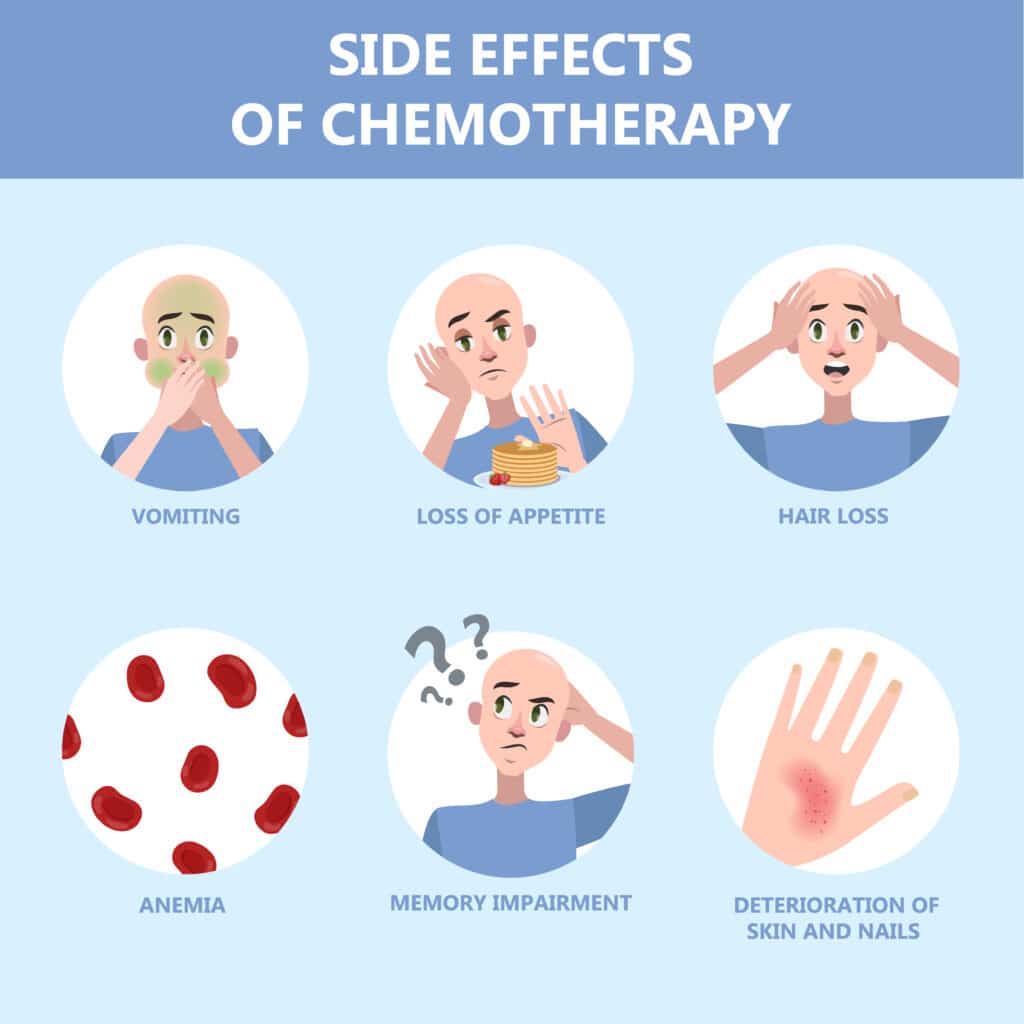
Does Quality of Life Influence Cancer Treatment Outcomes?
Yes, quality of life can influence cancer treatment outcomes. Management of side effects can improve the efficacy of tumor therapy, which can be used to eradicate cancerous growths in the body. Not to mention, supportive therapies can also protect healthy cells from significant damage caused by medical and radiation oncology, like chemotherapy.
When healthy cells are protected during cancer care, it helps to decrease the rates of long-term side effects of conventional cancer treatment, such as heart and vascular problems and hypothyroidism. Overall, a better quality of life increases the chances of long-term remission and decreases the risk of developing other disorders that can arise after completing cancer therapy.
Likewise, an improved quality of life helps you and your loved ones remain positive throughout cancer treatment, which can be quite the journey. Though it may sound cliché, a positive attitude is one of the most effective tools against cancer. The ability to remain optimistic in the face of cancer care is a primary attribute of integrative cancer treatment that simply cannot be overlooked.
The quality of life you deserve during cancer treatment.
Your cancer diagnosis is not your identity. Learn how a care team with intimate knowledge of integrative cancer care can help give you the quality of life you deserve during cancer treatment.
Did you know that women are twice as likely to be diagnosed with anxiety as men? Nearly 25% of women — or one in four — have been diagnosed with an anxiety disorder in the past year alone. Though anxiety has several causes that range from external to internal stress factors, hormonal changes throughout the menstrual cycle are one of the leading causes of anxiety among women.
If you’ve been feeling as though your current anxiety symptoms have fluctuated throughout the month, it’s very possible that your hormones may be to blame. Alternatively, if you’ve begun to experience anxiety along with menstrual irregularity, it may be time to check your hormone levels. Here’s a quick breakdown of how anxiety is linked to your hormones, and what you can do about it.
Can Hormones Cause Anxiety?
Hormones absolutely contribute to anxiety. Hormones are microscopic chemical messengers that deliver signals from one part of your body to another. They play a crucial role in regulating several important bodily processes, from metabolism and mood to sexual function and reproduction. When hormone levels become too high or too low, we refer to them as imbalanced.
Hormonal imbalances interfere with a variety of bodily processes and cause multiple complications, especially anxiety. For women, hormonal imbalances are likely to occur during the menstrual cycle when hormone levels fluctuate. This fluctuation can lead to severe anxiety symptoms, as well as a host of other symptoms, like bloating and acne —which can ultimately worsen anxiety.
How Does the Female Hormone Cycle Work?
The female hormone cycle involves a ton of fluctuation throughout the menstrual cycle. Female menstrual cycles generally occur every 24-35 days. . The first half of the menstrual cycle, or days one to 14 for most women, is called the follicular phase. This is the estrogen-dominant phase of the cycle, and can cause higher levels of serotonin, the “happiness hormone.” Estrogen levels spike during this phase, but then drop off to allow ovulation to occur.

Once we ovulate, the small capsule that releases the egg (the corpus luteum) begins producing progesterone which initiates the progesterone-dominant that begins the progesterone-dominant phase called the luteal phase (typically days 15 to 28 of the cycle). If we do not become pregnant at this phase, both progesterone and estrogen levels dramatically drop. Estrogen will soon soar again at the beginning of the cycle, creating recurring fluctuations that cause upwards of 80% of women to experience at least one physical, mood, or anxiety symptom.
What Hormones Typically Cause Anxiety?
Women are at higher risk of developing anxiety throughout reproductive phases that cause drastic hormone fluctuation, such as puberty, menstruation, pregnancy, postpartum, and peri- and postmenopause. The primary hormones responsible for anxiety-like symptoms are the two main female sex hormones, estrogen and progesterone.
The leading cause of hormone-influenced anxiety that I see within my practice is progesterone deficiency, meaning that progesterone levels have not risen enough after ovulation during the luteal phase. This creates an imbalance between progesterone and the other sex hormone estrogen, ultimately causing leading to estrogen dominance.
Low progesterone levels can have severe mental effects on women, since this sex hormone is also a neurosteroid that can have a significant impact on the brain. Progesterone is a key component of our overall mental health; therefore, I often see women experience anxiety symptoms in the second half of their menstrual cycle when those levels become imbalanced.

How Women Can Get Their Anxiety Under Control
If you’ve been struggling with anxiety lately, trust that you’re not alone. There are actions we can take together right now to help curb those symptoms and allow you to lead a more comfortable, confident life throughout your menstrual cycle. The best thing for us to do to learn why there may be hormonal imbalances causing anxiety is to look at comprehensive hormone testing.
For women suffering from anxiety, we typically test during the second half of the menstrual cycle when both estrogen and progesterone are elevated. Unlike at-home test kits, which are not synced with your unique cycle, we conduct these between days 21 and 22 of your menstrual cycle to determine if your progesterone levels are rising enough in comparison to your estrogen.
In addition to personalized diagnostic testing, I’ll sit with you to learn more about what kind of symptoms you’re experiencing, too. We’ll discuss what other “PMS symptoms” you may be struggling with, like bloating, breast tenderness, acne, or irregularity. Then, we’ll put those symptoms in a timeline — are they starting 10 days before your period? Are they starting one week after your period?
These steps give us a ton of useful information in terms of what hormone imbalances may be occurring, so we can implement long-term lifestyle changes to get your anxiety under control.

Long-term Lifestyle Changes for Balanced Hormones
Once we look at comprehensive testing and review your symptoms, we can put the two together to implement a plan to effectively balance your hormones right here at our Calgary naturopathic clinic. There are multiple options for bettering your diet and exercise, which are wildly important not only for hormone balance but also hormone metabolization (meaning detoxification of hormones through your liver).
The first thing we start with is getting your hormones back on track. Sometimes, this means implementing supplementation or nutraceuticals to support the structure and function of your hormone cycle. Next, we will discuss diet and lifestyle modifications as these are foundational for long term hormonal balance.. We work together to implement changes you can sustain long-term, so your hormones remain balanced long-term.
Lifestyle modifications we can implement for balanced hormones and lessened anxiety include:
- Personalized exercise recommendations to provide different types of movement at varying intensity levels throughout the different phases of your cycle
- Improved holistic diet of whole foods and vegetables to help the body metabolize hormones well through the liver
- Inflammation reduction with plant-based antioxidants and omega-3 fatty acids
- Sleep health tips to ensure your body (and mind) has adequate time to rest and recuperate
- Stress control methods to better adjust to natural fluctuations in the hormone cycle
Together we can implement a system that not only helps to regulate your hormones but also alleviate the symptoms of hormonal imbalance, like anxiety.
Remove the cycle of anxiety from your menstrual cycle.
Women deal with enough health concerns — anxiety caused by hormonal imbalances does not need to be one of them. Learn how a naturopathic doctor with a focus on women’s hormones can help.
As a Naturopathic Doctor, I’ve gotten pretty accustomed to people calling me anything other than my first name. Doctor, Doc, you name it — but Iron Man? That’s a new title! While I might not have a full suit of body armor waiting in my office à la Tony Stark, I do have seven Half Ironman Triathlon distance races under my belt… and for that, I’ll gladly take the title of resident Iron Man.
Each day, I speak with patients who have had to put their athletic ambitions on hold due to an illness or injury. I’m here today to explain how I found my way into Ironman races, and how I keep my body healthy throughout months of rigorous training. If you’re an athlete yourself or have dreams of competing in a race of your own, these tips for training and injury prevention might help.
The Dare that Kickstarted it All…
So, how did I become interested in Ironman Triathlons in the first place? Well, my history with races actually began with a dare to my brothers. I’m the second-youngest in a family of four boys, and we all did Kids of Steel Races between ages 8 and 12. The four of us grew up active and all swam competitively, but we played different team sports, like volleyball and water polo.

Soon, high school turned into college, and triathlons turned into textbooks. We all found ourselves a little more inactive than we would’ve liked post-college, so I decided to pose a little challenge to my brothers to see who would want to do a Half Ironman Triathlon. My two older brothers accepted my dare, so the three of us signed up for a Half Ironman race in California and started training that fall.
The race was in July of the following year, meaning we had practically nine months to train — until my eldest brother gave up just three weeks into training! My other brother and I trained for the next three months together… until he gave up, too. I’m too stubborn, so I still decided to go for it. I proceeded to have an epic day of failure, cramping, and awesomeness that hooked me into the world of triathlon for good.
… And the Races I Have Competed In Since
If anybody here is a triathlete, you know it can be really addicting. After my first race (which definitely wasn’t my strongest) I picked up triathlon as my main sport for the next six years. Since then, I’ve done seven Half Ironman races. Also called Ironman 70.3 in reference to the total distance in miles, a Half Ironman involves a 1.2-mile swim, 56-mile bike ride, and 13.1-mile run.
I took nearly a two-year break from races between May 2019 and September 2021, namely in part to the pandemic. My first race back was in Calgary, in Rocky View County; and then I headed to the States for two Ironman 70.3 races, one in Phoenix and another two weeks later in Indian Wells. My most recent event was also my first full Ironman distance race in Penticton.

It’s been a blast to get back to racing and competing, and being surrounded by an entire community of like-minded athletes. I’ve done some local races and fun runs, along with some smaller triathlons around North America. I’ll admit, I am usually a bit nervous, but I’ve learned to turn those jitters into nervous excitement — which always has me coming back for more.
How You Can Also (Safely) Train Like an Iron Man
Triathlon training can be hard on your body if you’re not smart about where you’re using your energy. Right now, 60% of my training is a lot of biking, simply because it’s the easiest thing to get in. I can commute to work, so I bike a lot to and from work. Not to mention, because pools are finally open here in Canada, I’m also swimming about twice a week.
Before the pools were open, I was putting on a wetsuit, thermal hat, thermal gloves, and thermal booties, and jumping into the cold water lakes here in Canada to get my swim training in — which was not ideal. Now that pools are back, my training schedule consists of a few days of mild strength training, two or three days of swimming, four to six days of cycling, and usually three runs in a week.

Tips to Prevent Injuries, As Told by a Naturopathic Doctor
Here’s a tip straight from a naturopathic doctor: Injuries rarely come out of the blue. Something I’ve learned through my experience with endurance sports is that there’s always a type of clue that an injury is on the horizon, whether it’s some calf tightness or one leg that takes a little bit longer to recover from a workout than the other side.
The best injury prevention you can do is to notice those little changes. Take care of them with stretching, foam rolling, and massage, and back off the training just a little bit — or dig into the type of training you’ve been doing to figure out what’s pushing your body to a breaking point, before it actually breaks. Nine times out of 10, it’s a training error that causes that injury.
Earlier I mentioned that I bike a ton since it’s easier, however, it also poses the least injury risk for me. I have a higher rate of injury when I do too many miles running, and I learned that from a recent Achilles tendon injury. I didn’t listen to my body and pushed through workouts, not giving enough time to recover between hard workouts. And with running, specifically, you pay the price.
The simple reason for that is because tendons take a lot longer to recover than your muscles do. Your muscles might feel pretty good the day after a workout, but the tendons probably won’t recover from that initial run for about 72 hours. If you’re working around a busy schedule (or you’re impatient like me) and you run back-to-back, you risk injury. The bottom line? Rest up!

Are you an athlete or want to become more athletic?
If you’re interested in learning more about me and my athletic journey, or want to get yourself out of pain and prepare for a race of your own, book a discovery call today.
When Rosemary found out that her cancer she thought was in remission had spread to her lungs, she decided to take her daughters’ advise and came to speak with Corey Deacon at Neurvana Naturopathic Medicine. Find out how her path changed through one visit.
I’m Rosemary, and I’m a rancher in Central Alberta. The first time I found out I had cancer was in 2015, probably late in the fall of 2014.
I noticed that I had, what appeared to be some kind of little nub in my anal area, inside. And it wasn’t like a hemorrhoid, so I kinda paid attention to it. And by the first part of the year I knew it probably was something to be looked at. By the time I got it looked at it turned out to be anal cancer.
So I went in and had treatment for that summer, radiation and chemo at the same time. We got rid of it, but then the following, I think it was a year after that, the following fall, I went in for my routine test, which had been clear, and they saw some spots on my lungs. They decided that probably wasn’t anything, but they wanted to take a look. And it turned out to be that this particular cancer, as unlikely as it was, had spread into my lungs, and I had a few little nodules there.
“I knew really soon that I probably wasn’t gonna survive the treatment, and so I quit. And then I thought, now I have to do something.”
So then it came time to go through maybe treatment a second time, but the treatment plan wasn’t very user friendly, shall we say. I had been always reading up on natural health stuff and believed in healings one’s self.
When I started treatment the second time, I knew really soon that I probably wasn’t gonna survive the treatment, and so I quit. Then I thought, now I have to do something, meanwhile, my daughters had heard Corey Deacon speak, and they said, “Mom, this guy’s for you.” So I went and saw him, and he was.
How was Neurvana Naturopathic Medicine different than other places you went to?
The first thing Corey told me when I told him what I was going through, and what I needed was I’m not gonna treat your cancer, but I am gonna treat your body and your immune system. Let’s let it take care of itself. I said that’s fine with me.
He was able to really explain how the body worked, the body systems. You could just understand. And I thought, this makes perfect sense to me, and I wasn’t gonna do anything else, this was what I needed to do. So I said, yeah, let’s go ahead.
What made you want to work with us?
They’re there for you all the time. They’re very open and friendly.
Corey’s one of the smartest men I’ve ever met, yet he can bring things to a level where you understand. I know sometimes he says he should dumb it down a bit, but I’ve asked him not to because even though I may not be able to repeat what he just said, I do understand what he’s saying.
“We saw shrinkage in the nodules which nobody had ever told me I’d have. I feel like I’m 10 years younger… there’s no sick for me, I just don’t feel it.”
No matter how shook up I get sometimes, all of a sudden your confidence or your fear ahold, he’s just calm. And he’s able to say to you, “this is how it’s working, and it’s working good, and things did work.”
We saw shrinkage in the nodules which nobody had ever told me I’d have. I am now two years in. I feel fantastic. I feel like I’m 10 years younger, that alone, there’s no sick for me, I just don’t feel it.
What made you decide it was worth the investment to move forward?
Originally, my daughter had talked to somebody who’s a mother or somebody that was going through some treatment. And there was some numbers suggested, which I thought, oh that was somebody else’s illness.
He (Corey) was upfront with how much the start would cost, and asked me if I had to budget. And I said, “what do you mean?”
He said, “well some people can’t afford some of this.”
I said, “how about you take care of the treatment, and I’ll take care of finding the money.”
Because, for me, this is my life, so money didn’t (really matter), and overall if you spread it out over the couple years.
Has it been an investment? Yes, it has, but it’s worth every penny.
“Has it been an investment? Yes, it has, but it’s worth every penny.”
I know where the money’s going. Somebody said to me, “do you think you’re being ripped off.”
I said “No, ’cause I’ve seen the lab test and I’ve seen the different costs. And so, they accumulate, but they’re for very reasonable things.”
What major wins have you had working with us?
The neurofeedback part which is something that was very new to me really brought about lots of changes. I had lots of problems with fear, anxiety, those kinds of things, I saw those levels come right down.
The chemo had given me memory gaps, and that became way less of an issue.
The diet end of it, which was for inflammation and to control disease and stuff, made me lost 30 pounds. I’m the same size I was in high school, I can do the things I did back then.
Overall it’s just, the whole thing is so integrative, and it just works.
Are you a happier healthier person after working with us?
Oh, for sure, yeah, for sure.
It calms your brain and you learn how to do relaxation things because the diet helps make you feel better and healthier. It doesn’t hurt to be slimmer, but just because it makes me healthier. That’s all about being healthy.
“The fear’s under control because I know somebody’s helping me deal with the issue of cancer. I firmly believe that I’m going to recover from it.”
I can get out and do the things, I don’t have depression and things. The fear’s under control because I know somebody’s helping me deal with the issue of cancer. I firmly believe that I’m going to recover from it.
Where do you think you’d be if you decided not to invest in yourself and work with us?
Well, by going through the treatment road I was headed down, if I was still alive, I certainly wouldn’t look like this. I’ve watched a close relative, the same age as me, passed away not long before me. I saw her go down that route. There’s not much left of you.
That’s what I ran into when I was going into treatment the second time. I was supposed to have eight rounds of chemo, three weeks each, and by the middle of the second round, I was already as bad as I’d been at the end of my first rounds of chemo.
I just looked down this long pipe and saw myself not making spring, and if I did, there wouldn’t be anything left of me to enjoy.
To me, it was a choice that, if my life was to end, it was gonna end on my terms. But I also knew that I probably wasn’t gonna die because I’m gonna find something else to do. I knew that was out there.
So in finding this, it was just a tool, that helped me go forward with the belief that I can live and overcome this. Yeah, it’s what I needed to do.
I’m not sorry in the least, money’s money, you can always get more.
What advice do you have for someone experiencing something similar to what you were?
We each have to make out own choice. We each have to believe in what we do.
“We each have to make out own choice. We each have to believe in what we do.”
If you have to do chemo and radiation and this, “cause that’s what you need to believe in”, then you do that.
If you don’t believe in the chemo and radiation, or it doesn’t seem like that’s gonna be the good end result for you. You can do this.
The main thing here, that I can’t say often enough, is you have to believe. You have to believe it’s gonna work.
Ready to start healing?
Quickly find out if we’re the best providers for you and your unique challenges with a complimentary call with a health adviser.
After a concussion in 2008 Stephanie felt numb and angry all the time. Find out how working with us at Neurvana Naturopathic Medicine brought back her joy.
My name is Stephanie and I’m from Lethbridge, AB. I was to teach phys ed for 16 years and administration for a year and a half before I had my accident.
How did your accident happen?
I had a mountain biking accident in 2008. I fell about eight feet into a coulee when I was training for 24 Hours of Adrenalin out in Canmore.
After I sat up, I felt like my nose was bleeding, and was immediately dizzy. It turned out it was a severe TBI, and an undetected CSF leak for 15 months.
Who did you see after your accident?
I saw seven doctors, two neurologists, and finally was referred on to an EMT who discovered my CFS leak in five minutes of talking to her.
I didn’t have a lot of support.
I was told, you’re dizzy because you’re preggers. I was two weeks pregnant when I feel, so I didn’t get a lot of support that way from the medical community. And then after I had my child I was told something along the lines of, you have a post-concussion. It is what it is.
What parts of your life was affected by your accident?
Before my accident, I had been teaching for five years, and when I turned 30 I was asked to apply for the vice-principal role at my school of 550 kids.
I got the position and became was the youngest woman VP at the time. Because of my, TBI I was unable to resume my career as an administrator in the school.
I have yet to return to full-time work since the accident. Fatigue and dizziness and disorientation and memory issues are my biggest concerns. And with not having the energy level, I can never return to full-time work.
How did you feel emotionally afterwards?
It’s difficult. I was 32 years old and mountain biked daily. I was a marathon runner, a soccer player, a golfer, and a very successful teacher.
I had plans to move on to become a vice principal and then a principal, and my life went a completely different way than originally planned, and it was devastating. So, I’ve had a lot of depression, and anxiety.
What led you to work with Neurvana Naturopathic Medicine?
In March 2017, I was biking downstairs in my basement on a trainer. I got off my bike and immediately I felt really dizzy.
It didn’t make any sense. It felt like a concussion, there was a delay of vision, disorientation immediately, but I didn’t hit my head, so I was concerned.
It was bizarre, I went to my sports med doctor down in Lethbridge, and she said, “It is what it is. You’ve had head injuries, we don’t know why your feeling like this. we can’t explain it. “
About two weeks later my friend called me from Dallas, and he says, “You better get down here. There are amazing things down here. You need to get down here. “
So I boarded the plane with my mom, and we went down to Dallas and discovered a lot of integrative medicine pieces as to why I wasn’t recovering.
When I got back to Canada, my doctors here were not supportive. I needed to go on bioidentical hormones. They wouldn’t support it. They kind of looked at the paper and put it aside and had no interest in helping me out.
I ended up working with a naturopath who referred me on to a doctor who prescribed bioidentical hormones.
Things were really good with the hormones for probably two months, and then everything fell apart. I felt like my body just hit rock bottom. I had tons of symptoms that were worse than before. I had lots of pain, digestion issues, my memory got worse. I pulled myself off the hormones, and I got myself into Dr. Lynne Murfin.
Through working with her, she referred me on to Corey Deacon at with Neurvana.
What made you want to work with us?
First off, I didn’t see results right away from the neurofeedback, so I can’t say it was the neurofeedback, that I saw results right away, and I bought into it.
It was the fact that, in conversations with Corey and Liz, they told me this is what to expect. They said that I was going to get worse before I got better, but it will help you.
Corey and Nicole shared some personal stories with me about what had happened to them and how they were feeling now. It gave me the hope that there was going to be a change.
So I stuck with it, and it got worse before it got better, but then all of a sudden, like Nicole had promised me, when she said “by about 15 to 20 sessions you’re gonna see a difference.” I started seeing a difference. It was around session 18, 19 that my life started to change.
What major wins have you received from working with us?
The first symptom I saw a difference in was irritability and anger. I have two young children at home who are 7 and 10 years old, and they can push buttons.
I’m a teacher who works with kids all day, and I felt like my first goto emotion was always anger. I always had this underlying irritability every day, all day.
The neurofeedback took away the irritably, I started getting almost calm. I was almost, even-keeled. And, from that moment on, I started feeling moments of joy.
For the last 10 years, I either felt numb and had absolutely no feelings, or was angry and irritable. So to find that place of joy for the first time in almost 11 years was pretty exciting. That was my first aha moment with Neurvana.
Are you a happier person than when you first started working with us?
Yes! I’ve seen a big change in myself, last year during my daughter’s big birthday of turning six, I remember thinking, when is this gonna be over. Instead of revelling at the moment and enjoying it. This year, when she turned seven, I enjoyed every minute of being there, and that for me was a success.
Where would you be if you had not have worked with us?
I’d be irritable, I’d be angry, I’d be missing out on many things in life.
Knowing the science behind neurofeedback and understanding what it’s doing to my nervous system, I couldn’t get out of that fight or flight state for the last 10 years. It made me miss out on being present in my life.
What advice do you have for someone experiencing something similar to what you were?
Don’t give up.
Keep asking.
If it’s wrong and you feel it’s wrong.
Keep pushing forward.
There is help out there, and people who are willing to do anything for you and support you.
The medical system has a time and place, but with post concussion, there are other supports available, and I would encourage you to seek and find them.
What would you say to someone on the fence about working with us?
It’s Worth it. Yeah, it’s worth it.
I’m excited, for the first time in a long time, I’m excited to move forward and enjoy the rest of my life.
I know I’m not done here with my journey at Neurvana. I’ve got a few sessions to go and some work to do, and I know it’s expensive. I understand it. But it’s your health, and it’s worth it.
I would have pay double the amount to get here. I would, it’s worth the money, the time and the energy to put into Neurvana Naturopathic Medicine and neurofeedback.
I promise you I am getting the results.
Ready to start healing?
Quickly find out if we’re the best providers for you and your unique challenges with a complimentary call with a health adviser.
From personal care items to at-home test kits, Amazon has become a one-stop-shop for Canadians looking to stay on top of their health. Nearly half of all Canadians aged 18 to 54 shop on Amazon at least once per week—and there’s a good chance many of them are taking a gamble on at-home hormone tests. But can these tests really reveal hormonal imbalances?
The truth is, you can order just about any at-home test kit you want on Amazon or over-the-counter, but you may not be satisfied with the outcome. Many at-home tests lack a description for your results, like what an elevation or reduction in certain hormones means, where others source an untrustworthy lab or uncertified practitioner to analyze your sample.
Before opting for an at-home test kit yourself, take a look at the pros and cons of at-home hormone testing and when a Naturopathic Doctor may be better suited for the job.
What is Hormone Testing?
Hormones are a type of chemical. They control crucial bodily functions, like reproduction, metabolism, sleep cycle, and even mood. Hormone testing is a method of analyzing the level of specific hormones in your body as well as learning how your body is processing these chemicals. It has become a widely accepted technique to uncover hormonal imbalances.

A hormonal imbalance occurs when one or more hormones are present at an improper level within the body. An imbalance may stem from an under-or overproduction of certain hormones or difficulty detoxifying specific hormones. The purpose of hormone testing is to get to the bottom of which hormone levels are skewed and why—then learn how to rebalance them.
What Are the Different Types of At-Home Hormone Tests?
At first glance, at-home hormone tests seem relatively simple. Most require just a pinprick of bodily fluid, which is then placed on a card that’s sent back to the company analysing the results. The most common types of at-home hormone tests are saliva or blood.
What Are the Different Types of At-Home Hormone Tests?
At first glance, at-home hormone tests seem relatively simple. Most require just a pinprick of bodily fluid, which is then placed on a card that’s sent back to the company analysing the results. The most common types of at-home hormone tests are saliva or blood.
However, your results pretty much stop there—leaving you with questions about what “active hormone” even means and why it matters.
Realistically, active hormones refer to the amount of chemicals available to bind to receptors. These hormones float around in the body and, when bound to receptors, can cause shifts in hormone metabolism or hormone activation. With no further context delivered with at-home test kits, you’ll likely be unsure how to move forward with this information alone.

Blood-Based Hormone Tests
Where saliva-based tests provide a snapshot of active hormones, blood-based tests provide only a somewhat more robust picture. Blood-based tests locate active hormones freely available in the bloodstream as well as inactive hormones bound to proteins. Yet, since roughly 95% of hormones are bound to proteins, blood tests cannot reveal which percentage of the hormones are active.
Moreover, blood-based at-home test kits only provide a partial picture of your overall hormone activity. These tests don’t provide a look at your metabolites, the breakdown products of your hormones. Without this data, it’s difficult to learn how your body is processing and creating hormones. In other words, you’re still at square one learning how to balance them.
Why Should I Get My Hormones Tested with a Professional?
Professional hormone testing is significantly more comprehensive than at-home test kits. At-home kits you buy online won’t explain how you’re supposed to interpret your results or describe how you can help yourself. Instead, they leave you responsible for tons of research, most of which won’t make much sense without additional context (or an actual medical degree!).

In comparison, a professional hormone test provides access to a practitioner who can interpret your results as well as a game plan for resolving imbalances. At Neurvana Naturopathic Medicine, we utilize urine testing to deliver the most detailed, informational hormone test possible. With the help of a practitioner, a urine hormone test will look at:
- Levels of specific hormones, like estrogen, progesterone, testosterone, DHEAS, and cortisol
- Precursors or building blocks of hormones to learn how your body is creating them
- Metabolites of hormones to reveal how your body is processing these chemicals and if there’s any gap in your liver’s ability to detoxify hormones
What Will My Results Tell Me?
Professional tests provide an exhaustive overview of hormone health compared to the snapshot of available hormones you receive from at-home tests bought online. When you take a professional test with a Naturopathic Doctor, your practitioner can interpret your results and explain whether or not you need to support actual hormone production or the detoxification of hormones.
Some individuals spend years thinking they have imbalanced hormone production just to learn it’s been their liver struggling to process and detoxify available hormones. A Naturopathic Doctor will analyze your test results so you can understand your overall hormone health. Then, you’ll develop a plan together to figure out how to balance them naturally, so you can re-enter the world feeling your best.
Take the guesswork out of hormone testing.
Is at-home hormone testing confusing you? Book an appointment with Dr. Smith to have your hormones tested, analysed, and balanced today.
Arthritis, tendinitis, bursitis—if you have a pain condition that ends in “itis,” it’s likely you’ve been offered cortisone treatments in the past. Cortisone injections are typically one of the first (and only) options offered by traditional doctors. While these injections might offer temporary benefits, they do so at the expense of potential long-term complications.
If you’re skeptical about receiving a cortisone injection or are eager to discover treatment alternatives, you’ve come to the right place. Learn more about why cortisone has become the go-to therapy for pain management, why it’s not the fix-all solution others claim, and how treatment alternatives can save you trouble down the line.
Why is Cortisone Such a Common Treatment?
Also referred to as a steroid shot or corticosteroid, cortisone is typically injected into joints, tendons, ligaments, and other soft tissue for pain management. It’s a type of steroid that can lower inflammation to potentially lessen pain. It’s not actually a “pain reliever” at all, just a method to reduce side effects that may lead to pain. So, if it’s not a pain reliever, why is it so popular?
Cortisone has become the most common pain relief technique both in Canada and around the world due to its safety profile. Scientists are familiar with how cortisone works in the body and believe it can be effective in some pain conditions. One look at the Prescribing Information for cortisone reveals just how many conditions it can be used to treat.
Since cortisone is considered relatively safe and far less invasive than surgery, it’s usually one of the first pain management techniques your family doctor or pain management specialist will recommend. Today, cortisone is considered a “stop-gap” for patients who are in pain. An injection won’t improve a patient’s condition, but it may temporarily limit pain symptoms.

How Does Cortisone Work for Pain Management?
Now that we’ve established that cortisone itself is not a pain reliever, it’s important to take a look at how these injections work for pain management. When injected into a tissue, like a ligament in the knee or tendon in the shoulder, cortisone does two things. First, it completely turns off or alters the immune system in that area, so that it cannot react to normal stressors. This turns off inflammation.
Technically speaking, many pain symptoms stem from inflammatory conditions. If you have arthritis, tendinitis, or any other inflammatory condition, cortisone is meant to decrease the inflammation. It impairs the immune system’s ability to respond to any injury within that tissue for three to six months, or as long as it takes for the immune system to recover in the area.
Next, cortisone stops the production of new collagen in the injected area. Collagen is a crucial protein that’s in tendons, ligaments, cartilage, and any other tissue that can be a pain generator. It’s also the key to normal healing, repair, and cell turnover. Cortisone prevents the production of new collagen, which essentially means it will not allow the impacted tissue to heal.
Why is Cortisone Not a Fix-All Solution?
Though cortisone might seem like a quick fix, it’s truly not all it’s chalked up to be. For one, cortisone truly is a quickfix. In the short-term, cortisone can mask pain symptoms because the affected tissue has become metabolically inactive. This is a medical way of describing tissue that’s not actively healing or regenerating, but instead sitting there and absorbing stress.
Even more, cortisone injections typically do not last that long—especially if you’ve been receiving injections for months on end. Though you might have your normal life back for a few weeks, your immune system may quickly recover in the affected area and your inflammation can turn right back on. Cortisone does nothing to heal the tissue or underlying injury, just hide the symptoms.

Plus, if cortisone does work well for you, you could be doing more harm than good while feeling pain-free. You might start playing sports, running, or picking up your little ones, despite still having injured tissue. Then, you’re out of luck if you stress the tissue and need your body to produce more collagen, simply because cortisone impairs that ability.
Lastly, cortisone injections can be highly problematic for those who are diabetic or struggle with blood sugar. A well-known side effect of cortisone is a worsening of blood sugar. If you opt for cortisone injections, anticipate that you may need to work with your doctor to alter your insulin regimen or locate dietary solutions that could help with blood sugar control.
What Alternative Treatments Are Available for Pain Management?
The drug information for cortisone clearly states that corticoid therapy is not curative and will not be able to heal an underlying injury or condition. The drug facts also note that cortisone is “rarely indicated as the primary method of treatment” and should be used adjunctively with other therapies. Fortunately, there might be a better option altogether.
The most common alternative therapy for pain management is prolotherapy. Prolotherapy is a regenerative medicine injection to treat musculoskeletal injuries and chronic conditions like arthritis. Consisting of a safe, hyperosmotic solution that stimulates local immune cells in an affected area, prolotherapy is essentially the exact opposite of cortisone.
Though injected into the affected area like a corticosteroid, prolotherapy ramps up the immune system response to a potentially damaged structure that didn’t heal right the first time. It increases collagen production to promote healing and helps eliminate old scar tissue or fibrotic tissue that causes pain. In other words, it helps your body mend injured tissue rather than mask pain.

How Are Alternatives Different from Cortisone?
When I speak with my patients, I like to refer to cortisone injections as a cycle. First, you’re a candidate for a steroid injection. Next, it’s helpful for a time. Then, you’re told you can only receive a few per year. You’re stuck on a circular track with one stop—the injections your doctor schedules. You plan your entire life around this one stop, until the cortisone no longer has the same effects.
Alternative treatments do not put patients through this cruel cycle. Instead, prolotherapy helps patients put their wellness first by amplifying the natural ability to heal damaged tissue. Prolotherapy also does not have any effect on blood sugar, even though it’s designed around dextrose, a sugar. Compared to cortisone, prolotherapy is safer for diabetic patients.
Stop the cortisone cycle with a reliable alternative.
If you or someone you love is in search of pain management alternatives, you’ve come to the right place. Learn how prolotherapy can stop the cortisone cycle.
There’s no magic wand for curing cancer—but there is a method for dramatically improving the chances that treatment will be successful. It’s called tumour sensitivity testing and it can have a profound effect on the outcomes of someone’s cancer. If you or someone you love has recently found a malignant tumour or started cancer treatment, this is something you must know.
Tumour sensitivity testing is one of the most reliable ways to determine what your unique tumours are sensitive or resistant to in terms of treatment. Rather than put your mental and physical strength through the wringer with countless therapies, learn more about how tumour sensitivity testing can help you and your practitioner make accurate treatment decisions from day one.
What is Tumour Sensitivity Testing?
Tumour sensitivity testing is a way to analyse the many ways tumours express different genetic mutations or genetic profiles in response to various therapies. This type of testing predicts how your unique genetic mutations will react to treatment across the board, from chemotherapy and radiation to immune therapies and nutraceuticals.
Previously, conventional approaches to cancer treatment standardized therapies based on where a tumour arose. For instance, breast cancer treatment would focus on therapies recommended for tumours in the breast, brain cancer treatment for tumours in the brain, and so on. The rise of precision medicine has now revolutionized how we select therapies for cancer patients.

The reality is, all patients have drastically different tumours, even if they have the same cancer. We now have highly accurate testing that takes a detailed look and determines what type of genetic profile your tumour has—not just what other patients with your type of cancer might respond to, but what your body will be sensitive or resistant to.
How Does Tumour Sensitivity Testing Work?
Depending on your specific type of cancer, tumour sensitivity testing generally analyses the mutational profiles and genetic information of tumours in two ways.
- Solid Biopsy Sample: A small slice of a solid tumour is removed, cryofrozen, and sent to a third-party lab to be studied for resistance and sensitivity to various therapies.
- Liquid Biopsy Sample: A blood sample is taken for lab equipment to identify and isolate circulating tumour cells that reveal more about how the tumour spreads.

Most patients have already had their tumour(s) physically biopsied by a doctor. These solid biopsy samples are frozen and stored for years at a time. At Neurvana Naturopathic Medicine, these biopsies are sent to third-party labs alongside relevant bloodwork and diagnostic images of the tumour for tumour sensitivity testing.
Liquid biopsy samples are taken in-office and set to a third-party lab, where specialized equipment extracts circulating tumour cells. These cells bud off from a solid tumour, circulate through the body, and remain dormant until they find the right opportunity to colonize in a different tissue. Circulating tumour cells are often responsible for a recurrence of cancer months, years, or decades later.
What Can the Test Reveal About My Treatment?
Tumour sensitivity testing can unlock dozens of hidden details about your cancer treatment. Most importantly, testing reveals sensitivity and resistance to more than 150 different types of cancer treatment, including chemotherapy agents, immunotherapy agents, various nutraceuticals, off-label medications, and targeted therapies you might be offered through conventional care.
Rather than say, “I think this could help people with your type of cancer,” tumour sensitivity testing gives our Naturopathic Doctors the ability to determine what exactly your tumours are more likely to respond to. For most common cancers, practitioners now have validated circulating tumour cell data that can provide accurate information into:
- How your tumour is responding to your current treatment regimen
- If your circulating tumour cells are responding to therapy or are likely to enter remission (complete elimination of the tumour and cancerous cells)
- An accurate survival rating for your specific type of cancer
In my personal experience, patients armed with this wealth of information are more likely to survive longer and locate effective therapies than those who do not track tumour sensitivity data.

How Can I Access the Test?
Precision medicine is spearheading the evolution of integrative cancer care, and the team at Neurvana Naturopathic Medicine is at the helm of the most prominent recent discoveries. We’re proud to offer tumour sensitivity testing at our clinic and urge anyone who is treating a cancer diagnosis or knows someone who is treating cancerous tumours to learn more.
As a Naturopathic Doctor (ND) and registered member of the Oncology Association of Naturopathic Physicians (OncANP), I can begin tumour sensitivity testing right here in our Mission location. Blood can be drawn at the clinic for a liquid biopsy sample and I can work hand-in-hand with your conventional provider to access your solid biopsy samples.
Bear in mind, working with a Naturopathic Doctor does not mean you need to stop conventional cancer treatment. On the contrary, myself and the support team at Neurvana Naturopathic Medicine work alongside conventional care teams every day to generate a comprehensive treatment plan that works in your best interests, no matter what type of cancer you’re facing.
Find a more reliable way to fight cancer.
Cancer treatment is full of uncertainties. Access precision medicine that takes the guesswork out of which cancer treatment will work best for you.
Craig has gone from being so sensitive to lights and sounds that he had to live in his dark basement after his concussion to being able to film the video below with the lights on and no sunglasses. Read on to find out how he was able to resolve his symptoms by working with us.
My name is Craig, and I’m a long-time resident in Calgary.
Back on March 15, 2018, which was a Thursday. I remember because my wife always volunteers at the food bank every Thursday. That day I stay home to walk the dog and work from the home office. About 12:30 in the afternoon, we were rounding the home stretch to my house which was only about a block away. I slipped and hit the ground.
I still can’t believe that I hit a patch of ice. The first thing that hit the ground was the back of my head, so I must’ve looked like a cartoon character flippin’ over. I was out for a little bit. Later, stunned, and I’ll never forget my little dog, an Australian Shepherd named, Chester, was sticking his face in my face like he was saying, “I’m done with this area, you can quit resting now, get up.”
So, I stumbled up, went home and went to the doctor and got myself checked me out.
I wasn’t experiencing violent symptoms of a concussion, but I did have a headache at that point in time. Three weeks later they were still ongoing.
Who did you work with before learning about Neurvana Naturopathic Medicine?
I went to my general practitioner who said, “typically these things resolve themselves.” My symptoms continued along for a number of weeks and got progressively worse in terms of nausea, dizziness, headaches, blurry vision to the left, double vision to the left, inability to handle long conversations, light sensitivity and any noise sensitivity. My wife would put a spoon down, I would come out of my skin. It feels like you’re exploding inside.
My symptoms forced me to have to live in my dark basement. I did that for quite some time.
During this period we started reaching out to see if we could find people who could tell us what the issues were. We learned that 80 to 90% of concussions resolve themselves within one to two months, so the advice to just take it easy is typically the right advice for a lot of people. But not for those with severe concussions like I was experiencing.
Then our dentist reached out, who’s a good friend of mine, Dr. Curtis Westersund, one of the top dentists, not only in Calgary, in the world, and sees a lot of concussions through his work. He told us that he is part of a concussion response team, had heard about my accident from my wife and immediately sent me to see Corey Deacon.
How was Neurvana Naturopathic Medicine different than other places you went to?
It was fascinating, Corey did an assessment with the qEEG. When we looked at the results we could see visually exactly where I hit in the back of my head. You could see, I’ll call them broken pathways, all over my brain. It was fascinating. It was unfortunate that was what my brain looked like, but I knew what I was in for. I was lost, I could not function.
I’m a high energy individual, involved in a number of different businesses. I helped grow small entrepreneurial concerns to larger professional concerns that we’ve sold. We were in the middle of selling one of our companies when this happened and had to pull out of that.
I do a lot of volunteer work with the Stampede, the tax committee with the Chamber of Commerce, and few other things.
I did a lot of private investing for my own account, as well in private companies.
I’m involved with a lot of things and I had to shut all of that down.
Back to Corey, he saw my results from the assessment and said, that he had pinpointed exactly what I was going through and he could see exactly what the issues were even without knowing about my accident. He could see what had transpired and what I was working with.
What major wins have you had working with us?
We worked through, 10 initial sessions of neurofeedback and that was fascinating.
During that time my wife would have to drive me to my neurofeedback appointment and then I would go back to my home and lay in a dark basement literally. And after those 10 sessions, new brain map showed that we had activated a number of pathways. I could see my brain was waking up.
All the massive headaches I was experiencing, sharp eye pain, general headaches 24/7 were cleared up after the 10 sessions. Then we started clearing up other areas, reconnected a lot of broken connections, a lot of pathways and we worked on the specifics for the next 10 sessions. After 20 sessions of neurofeedback, there was an absolute noticeable decrease in my symptoms.
The fact that I’m sitting here with the lights on and no sunglasses is a miracle to me. I never thought I’d see that again.
Plus, my aversion to noise went away. The shaking inside stopped, which was a fight or flight response.
We’re now at the phase where we can concentrate on building onto success and getting back to what my normal is, which is never stopping during the day for most days.
We’re working on that and have also turned our attention to my immune system and digestive system which have cleared up greatly. They were also affected by my concussion as well.
In conclusion to my story, when I first met Corey, during my assessment he told me, “It’s good to get on this early. It’s good we are looking at this and addressing these problems because you’re health is like a bucket and if you don’t empty the water (symptoms), the water starts overflowing. Once it starts to overflow it’s tough to get everything back in the bucket if you wait a year or so to start addressing your symptoms.
So it was wonderful, that my friend Dr. Westersund knew Corey, sent me here. We have managed to contain the overflow of the bucket and we made great, great strides through this time.
Ready to start healing?
Quickly find out if we’re the best providers for you and your unique challenges with a complimentary call with a health adviser.
Victoria felt like she had Alzheimer’s receiving chemo and radiation for breast cancer. Find out how she feels now, after her boss told her to try neurofeedback.
What brought you to work with Neurvana Naturopathic Medicine?
My journey is, I’ve had breast cancer. I had a double mastectomy and I had chemo and radiation. The treatments gave me chemo brain really bad, which to me was like having Alzheimer’s. I couldn’t remember things, I couldn’t remember people.
What have you enjoyed about working with Neurvana?
I started working with Neurvana in March and now it November and this is my last day. I have come so far, and never thought that I’d be sitting here today in this position and as healthy as I am.
My doctor is absolutely amazed! I keep him abreast of what’s goin’ on and he’s very interested in this.
People tell me I’m different. They say , “Wow, you’ve really come a long way.”
Cory is really good at explaining and in the beginning, I didn’t get much of it. All I saw was a bunch of squiggly lines when the first time I saw my qEEG, but now I get it.
Liz and Emily are great. The explanations and stuff that I get from them is helpful. I’m the type of person that asks a lot of questions, so they’ve been very, very accommodating and knowledgeable.
With neurofeedback, I’ve come from under zero on some of my scores up to now I believe I’m at 83%. To me, being under zero on scores and coming that far is a really, really good.
I didn’t even know about any of this and had it not been for you guys, I wouldn’t have a job, I wouldn’t have anything in my life. So, it’s been just an amazing experience. When I left my sessions, I felt like a million bucks, so I knew that something was good about it. I didn’t know what, ’cause like I said, I thought it was voodoo at first and I’d never heard of it before, but my boss turned me on to it.
I think that everybody should have an option to do this and healthcare, our government should pay for this. I think a lot of people would really, really benefit from neurofeedback.
I would recommend neurofeedback and Neurvana Naturopathic Medicine to anyone.
Ready to start healing?
Quickly find out if we’re the best providers for you and your unique challenges with a complimentary call with a health adviser.
If a runny nose, itchy eyes, or other allergy symptoms have already begun to dampen this otherwise beautiful Calgary weather, rest assured we feel your pain. A warm and sunny start to the spring season left the door wide open for seasonal allergies — and tons of Albertans are already reaching for their tissues.
In other words, allergy season is back in business in Southern Alberta. Fortunately, so are we! The staff at Neurvana Naturopathic Medicine are up-and-running at our brand new Mission location and are ready to help solve those tricky allergy issues.
Feel Like Your Allergies Got an Early Start This Year?
If you feel like your allergies got an early start this year, you’re definitely not wrong. Dr. Ryan Best, one of the practitioners here at Neurvana, recently spoke with Global News, where he explained where all of this pollen is coming from.
“Because of that early-season warmth, the pollen levels are actually rising quite a bit more than they typically do at this time of year,” Dr. Best said, “so a lot of people are starting to notice that seasonal allergies are popping up a bit quicker than usual.”
The best way to get your seasonal allergies under control? Figure out what exactly is causing them!
Fight Back This Season with Allergy Testing
Yes, allergy season may have gotten a head start this year, but you can fight back with allergy testing right here at Neurvana Naturopathic Medicine. Allergy testing determines which specific substances are triggering a physical reaction, such as certain types of pollen or airborne particles.

Allergy testing also reveals which allergens are causing symptoms like:
- Fatigue
- Headaches
- Sore throat
- Runny or stuffy nose
- Watery or itchy eyes
- Skin conditions, like a rash or acne
Once we determine the source of your allergies, one of our naturopathic doctors will help customize a treatment plan that addresses your unique triggers and stubborn allergy symptoms.
Get your allergy symptoms under control TODAY!
What are you waiting for? Ditch the tissues and get started with a complimentary 30-minute discovery call with a trained patient care coordinator today.
Looking for a way to explore the beauty of Calgary and experience tons of health benefits? Go for a walk! The city of Calgary features more than 10,000 hectares of parkland and natural areas to explore, as well as more than 1,000 kilometres of pathways to enjoy. The best walks in Calgary are bursting with greenery, wildlife, and even waterfalls—some of which are only accessible by foot!
Walking is one of the best (and easiest!) ways to access some of Calgary’s most beautiful destinations, all while bettering your mental and physical health. This weekend, ditch the hustle and bustle of the city streets and take one of the best walks in Calgary instead.
But First, What Are the Benefits of Walking in Calgary?
Here at Neurvana™ Naturopathic Medicine, we’re proud of the cutting-edge advancements we offer our patients, like QEEG brain mapping. But sometimes, some of the best health advice we share is much simpler: Just get moving!
Keeping your body active can significantly improve both your mental and physical baseline for stress, and even improve your lifespan. While walking alone can’t miraculously cure chronic aches and pains, it offers dozens of health benefits that can enhance your happiness and quality of life.

Don’t believe us? Check this out:
- A daily 30-minute walk, five days a week can lower your risk for coronary heart disease by nearly 20 percent.
- Short walks after meals can significantly improve 24-hour glycemic control and can help lower blood sugar.
- Walking 5 to 6 miles a week dramatically reduces arthritis-related pain, and can even prevent arthritis from forming in the first place!
Forming a habit of walking each day can also boost overall immunity, improve energy levels, and better your mood. Not to mention, routine walking can burn calories and tone muscles, helping to keep your body in shape.
With all of us slowly working our way out of quarantine, walking is the easiest way to improve both your body and mind.
The best part? It’s free!
The Best Walks in Calgary
Now that Neurvana™ Naturopathic Medicine has relocated to a brand new clinic in the vibrant neighbourhood of Mission, we can’t stop exploring the area. Most of us are Calgary natives, but there’s something special but wandering new blocks of the city, isn’t there?
When we’re not checking out our new location, we do our best to spend time in the nature that surrounds us in the beautiful city, all while enjoying the benefits of a nice, long walk. Check out what we think are the best walks in Calgary to better your mental and physical health!
1. Fish Creek Provincial Park

Looking for a getaway that doesn’t require hopping on a plane or driving hours out of the city? Fish Creek Provincial Park is the place for you. Located in south Calgary, it offers more than 80 kilometres of pathways, 30 of which are paved and 50 of which are shale. The paths take you through constantly evolving landscapes, from grasslands to forests and even riverfront.
On a sunny day, stop and unwind by Fish Creek or Bow River. If you like to fish, the Bow is a world-class trout fishery. You can access the Bow River by boat from a boat launch located off Bow Bottom Trail South at the east end of the park, from April 1 to October 31. In the winter, some pathways are cleared of snow for easy access, and cross-country skiing and snowshoeing are possible.
Most day-use areas offer spots to stop and picnic, or bird watch. In fact, more than 200 bird species have been spotted at Fish Creek, including great blue herons, Swainson’s hawks, red-tailed hawks, bald eagles, great horned owls, and even songbirds. There’s so much to see and do in Fish Creek, but a simple stroll is more than enough to experience its beauty. Visit from 8 a.m. to 10 p.m. 7 days a week.
2. Bowmont Park

Though you can hang at the Bow at Fish Creek Provincial Park, get another view at Bowmont Park. Bowmont is a massive environmental park that lies along the northern bank of the Bow River in northwest Calgary. With over 164 hectares to explore, there is always something to see here.
There are a ton of reasons why Bowmont Park is one of our favourite spots and one of the best walks in Calgary, but the first is the beautiful Waterfall Valley. This shorter, 1km-long walk is ideal for children or older adults, as its pretty trail features an established walking path, stairs, and a boardwalk to view the area’s natural springs and small waterfalls. No bicycles are allowed in this protected area and all dogs must be on leashes, so Waterfall Valley is easily one of the most quiet, peaceful walks in Calgary.
Also in Bowmont Park are steep cliff faces that tell the fascinating geological history of Calgary. Layers of rich soil and sediment hold the secrets of long-melted glaciers and make for a stunning backdrop as you explore the area. There are tons of gravel trails to hike alone in the hills, creating a calming atmosphere to better your health. Bowmont Park is open daily from 5 a.m. to 11 p.m.
3. Douglas Fir Trail

Last but not least, one of the best walks in Calgary for more adventurous folks is the Douglas Fir Trail. With great access within the city, the Douglas Fir Trail is part of Edworthy Park, which sits in a valley along the Bow River in southwest Calgary. It’s a perfect fit for those who are wanting a more challenging walk, as the trail winds along the side of a hill and branches into narrow gravel and dirt paths.
But you know what they say, the hardest climbs come with the best views. In addition to hillside wildlife and rippling creeks, the trail features stairs and bridges that offer fantastic sights of the greenery around you. Massive Douglas-fir trees, most hundreds of years old, canopy the trail and line your walking path, some seven and one-half feet in diameter!
The Douglas Fir Trail is certainly not for the faint of heart—the trail runs along a densely wooded steep slope that some call “dead man’s drop.” However, at the highest peaks of the slope, you can see jaw-dropping views of the Bow River Valley. The trail is closed in winter and early spring to avoid extreme icy conditions, but can be accessed in warmer months during the park’s hours of 5 a.m. to 11 p.m.
Where’s Your Next Walk?
So, what are you waiting for? There are more than 10,000 hectares of land ready for you to explore and so many health benefits to gain. Which one of these best walks in Calgary will you adventure to first?
Looking for ways to get healthy in Calgary?
Discover the naturopathic and holistic services offered at Neurvana Health Naturopathic Clinic in Calgary and book your consult today.
When DarleeAnn first heard Corey Deacon speak at an event, she was blown away that someone was finally describing how she had been feeling for so long. Discover how we were able to help her not only get her life back, but truly begin to enjoy it again.
My name is DarleeAnn, I am a registered sports massage therapist and I’ve been in the profession for the past 26 years. I take pride in looking after my clients and giving them the best of myself that I can.
My inspiration for being healthy extends beyond my profession itself and extends into my lifestyle as well.
When did you start not feeling well?
I’ve had a thyroid issue since I was a kid, in grade three of all things. I think I was one of the first in Alberta to be diagnosed with a thyroid disease in such a young child!
Then, about five years ago, I started developing an abdominal issue that eventually made me hospitalized for a period of time. There was no real diagnosis at that time.
I got checked for cancer. I got checked for all types of things. The beginning of my health journey was a cascade of a number of problems.
I developed this pattern of adrenal fatigue, I was having problems with my thyroid, I was having problems with my digestion—a number of things.
What was your turning point?
About three years ago, all of a sudden out of the blue, I experienced this sort of disconnect—it was rapid and sudden—where I’d be in a beautiful place, a beautiful country, and not being able to look at these beautiful sites and being able to take it all in.
It was like I was sort of disconnected from my body and it was quite frightening and very troubling, because I couldn’t really understand what was going on.
Where to turn and what to do were the next questions I had.
Who did you work with before coming to Neurvana Naturopathic Medicine?
I did start with Naturopathic medicine to address my thyroid issue. I was diagnosed with Hashimoto’s thyroiditis about two and a half years ago. So, that was sort of the start of my journey, as well as dealing with the acupuncturist who diagnosed me with adrenal fatigue.
Alternative medicine has always been in my scope of my health practice.
Not to say that my own Western medicine doctor does not have its merits for the medical testing that needs to be done but, I have found that most Western medicine looks at things as approaches, as opposed to a broad scope of what I was dealing with.
I just knew walking into my doctor, he would get the deer-in-the headlights look and I thought, “I’m not gonna go anywhere with this.”
Alternate forms of therapy have always been sort of my go-to to get to the root of the problem and not address just symptoms, but try and get to the root.
What parts of your life were most affected?
It’s quite the personal struggle. And when it’s a 24/7 issue, it’s very tiring and you don’t get a break from it.
It dominates your life. I even went so far as to send in my symptoms for Mayo Clinic!
I thought, “I have to try and do something.”
What turning point led you to work with us?
Depression for sure, to be completely honest with you.
I had a couple of very short, maybe minute-long episodes of suicidal thoughts that didn’t last too long.
That scared the heck out of me.
There was this zombie going through day-to-day, just trying to exist. I think I knew as soon as I had that episode when I was overseas, looking at the Eiffel Tower and thinking “I am not experiencing emotionally what I need to be.”
“This is a whole other realm of health that I have no clue about.”
I knew there had to be a psychological factor or imbalance or something going on with that, because I was not my happy, joyful self.
What led you directly to Neurvana Naturopathic Medicine?
What led me to Neurvana was another friend of mine that was diagnosed with cancer. Unfortunately he has passed on, but I saw in my friend how he thrived and how he got an extra year and a half of life from seeing Corey Deacon.
So, I saw Corey at a presentation and he said the word brain fog and I bolted straight up in my chair and I said, “I need to talk to this man.”
I just wanted to stop and grab him and say, “You’re speaking my language!”
Thank God somebody is finally A, listening to me and B, finally gets what I’m talking about. It’s life changing.
What about our team made you want to work with us?
When I had my initial console with Corey, he right away made me feel at ease. He didn’t make false promises or anything, but he knew based on my symptoms that he could launch right in.
He told me, “You know we can design a personalized program for you. These are the steps that we would take.”
He was very quietly competent and knowledgeable, and aware of not just the science behind what was going on with me, but taking into account the full body: With my brain, with my emotional issues, and the complete picture.
Not just symptoms, but looking at me as a person and saying and acknowledging:
“Yes, you’ve been struggling. Yes, I have dealt with some of these issues and yes, I can be part of your team to help you through this.”
And it was life-changing.
When you heard how much you would need to invest in your health, what made you decide it was worth it?
So many dismiss other forms of therapy and tell you, “Well, you shouldn’t get that extra blood test because it costs the healthcare system money.”
And I’m going, “Are you kidding me?”
This is my health and I have to do it, because nobody else is going to do it! You can’t put a price on your own health care.
Now, there is the monetary factor that can be very, very daunting.
But you might be spending on clothes or half-truths or throwing ideas at the wall and not sticking. Here, there is science-based analysis.
There is help, and there is hope, and concrete evidence.
What major wins have you received from working with us?
Major wins is working with Corey and Liz at Neurvana Health every single day.
Corey and team were my first glimmer of hope of crawling out of this health abyss. And it’s hard to explain to people that have never been in it. They just sort of look at you.
And the cool thing about collaborating with Corey and Liz is that you don’t have to explain yourself. They just know, and that just takes the pressure and the edge off you to explain everything all the time and just get to work on your body.
Last December, I really started noticing—and actually noticing, not just me telling myself that I’m experiencing something—actual mental changes! Actual concrete results where I do notice a difference in the work that we are putting in is working.
Are you a happier person than when you first started working with us?
I have a daily life back. I’m not focused on my health and just getting through the next hour or the next day or what’s happening tomorrow.
A big weight has been lifted and I feel like I am re-engaging with life again.
I enjoy the simple pleasures of going for a walk. Rediscovering that I have my personality back, laughing, and having fun and those kinds of things.
And that’s everything. Without question.
Focus on my health has given me that control back and that power back.
What advice do you have for someone experiencing something similar to what you were?
If you can, find Neurvana Health.
If you are willing to put in 110% you will get 120 or 200% back from Neurvana. Cory and Liz will be on your team. They will be there for you no matter what.
They will be empathetic, compassionate and be there for you every step of the way.
And without question, do not hesitate.
Ready to start healing?
Quickly find out if we’re the best providers for you and your unique challenges with a complimentary call with a health adviser.
My name is Victor Pidkowich. I’m the CEO of Neurvana™ Naturopathic Medicine.
We may not have spoken before…
Or had the opportunity to meet…
But I have been with you since the day you chose to join the ranks of individuals committed to improving their health.
Like you, I’ve also had to struggle with chronic health problems.
And I too know what it’s like to…
- look at other people’s lives and think to yourself “just how much am I missing out on”
- feel the crippling loneliness of no one being able to relate to what you are going through
- feel like your letting down family and co-workers because of the medical limitations you are facing
- feel more stressed and overwhelmed after turning to Dr. Google for answers
- and to dawn the “everything’s all-right mask” just to make it through each day
If it wasn’t for alternative, integrative medicine, I may not be here today.
Perhaps you can say the same.
When I experienced the power of alternative medicine to fundamentally change my life I knew more people needed access to it.
That’s why I made it my mission to serve people just like you in the pursuit to reclaim the zest in life.
One of the biggest challenges delivering on this mission has been limitations in space.
As you know, Neurvana™ operates from a small room rental style building, which works, but it prevents us from delivering the quality of care you deserve.
That’s why I’m excited to share with you today something that has been in the making for over 2 years.
…No, we aren’t getting a gluten free taco stand…
I’m excited to announce that Neurvana™ Naturopathic Medicine will be relocating to a BRAND NEW CLINIC in the vibrant neighbourhood of Mission!
How the new clinic will take your care to the next level
We’ve built a space that is inviting, clean and safe for our staff and patients.

Clean air and airwaves
After looking at several dozen properties for 2 years we chose the Mission Hopewell Building not because it’s in a great neighbourhood with the best taco restaurant steps away, but because of mold and EMFs. (We won’t need a taco stand after all!)
We believe it’s important to walk the talk and so we painstakingly tested every property for mold and EMFs with the help of Nelson Gourlay at Entangled Wellness, and Mitch Marchand at EMF Aware.
I am proud to say that this location passed some of the strictest standards. You can relax into the new environment knowing it has been designed to help you heal from the atom up.
Clean, nurturing light
Being a client of Neurvana™ you already know the importance of light quality, especially when it comes to LED and LCD light (I hope you’re reading this with your cool yellow glasses!).
That’s why we have chosen to put in place standard incandescent bulbs throughout the clinic when and where possible.
IV therapy
The new location will also include a dedicated lab for focusd blood work as well as see the introduction of IV therapy.
If you aren’t familiar with IV Therapy, it is an extremely powerful way to accelerate your healing due to the 100% bioavailability of vitamins and nutrients in highly concentrated forms.
Peace and quiet
For those that are concerned about privacy, or just hate outside noise while in an appointment, we’ve got you covered.
We’ve installed sound rated insulation between all walls and placed sound suppression devices in the ceiling. (It’s the same stuff that spy agencies use! …I think.)
Either way, it’ll drastically reduce noise between rooms so we can concentrate on what’s important — your health and well being.
How this will affect your care
Starting February 1st all of your appointments will be at
Suite 330 2020 4th Street, SW Calgary.
(Save that address, it’s important!)
If you go to our Brentwood location and it is after the 30th (our last day of appointments in Brentwood) you’ll likely miss your appointment… unless you have a teleporter — that would be cool.
To simplify things I drew this awesome map for you!
Check it out.

The move will not affect any upcoming appointments you have scheduled.
All you need to do is arrive at Suite 330 2020 4th St. SW for your appointments starting February 1st.
What’s the deal with parking?
Parking is a little different than what we have at The Village. There is underground parking available in our new building with access on the East side.
Yay! No more having to clean snow off your car!
Just pull up to the garage door on the East of the building, grab a ticket and find a spot. When you go to leave, you can pay for your parking at any pay station.
On the rare occasion that this oversized parking is full, there is metered parking on the street and other parking lots nearby.
New faces
We will have serval new professionals joining the Neurvana team as we transition into our new space.

First I’d like to introduce you to Abigail Wiedrick, our new Clinic Manager.
She’s here to ensure that you are getting the best experience possible anytime you visit our clinic. Abigail is a wonderful person, and she’s excited to get to know you!

Dr. Erik Nelson, ND – recently completed his Residency in Tempe, Arizona. and is excited to be back helping his fellow Calgarians reach their optimal health.
He is trained in regenerative medicine and sports medicine to alleviate chronic pain, improve men’s health problems and lifestyle diseases, such as diabetes.
Dr. Nelson offers prolotherapy and manual muscle therapy. If you are interested in learning more about him you can click here to read his bio.

Dr. Alexandra Smith, ND – will be joining us on February 15th.
Passionate about working with women from all walks of life, she focuss in fertility, hormonal issues, GI concerns, and menopause. She is also fluent in French.
Lean more about Dr. Smith by visiting her bio here.

And lastly, we have Dr. Ryan Best, ND – an integrative oncologist who will be joining us on February 22nd.
He is dedicated to working with cancer patients by offering integrative and supportive cancer care. He works alongside conventional care teams to generate a comprehensive treatment plan that supports his patients during their treatments.
You can learn more about Dr. Best by clicking here.
If you have friends or family who you think could benefit from working with one of our practitioners, please don’t hesitate to share this blog with them.
We can’t wait to see you
I know that was a big update and I’d like to thank you for taking the time to read it.
If you have any questions about the new space, feel free to give us a call give us at (403) 768-3407.
On behalf of the entire Neurvana™ team, we look forward to serving you the highest calibre of care from our new clinic.
See you soon!
After suffering from depression for over 15 years, Ashley felt like she was at the end of her rope. When she decided to give neurofeedback a try, she came to Neurvana Naturopathic Medicine and has been blown away by the changes she’s seen in herself.
My name’s Ashley. I am from Calgary, Alberta originally and I’m currently living in British Columbia. I’m a teacher on call or substitute teacher, and a forest and mountain type of person.
How long have you not felt like yourself?
I feel like I struggled with depression for most of my adult life. I can think of the first sort of episode being the summer before grade 12. And it kind of just became my baseline.
I’d had various bouts of feeling better and then dropping back down really low—probably three or four really dark episodes of depressions in my life.
Of all the things that I tried or didn’t try during that time, I’ve kind of realized that I never really leveled out at what would be a healthy baseline.
It was very rare that I felt like I was really thriving over the last 15 years.
Most of the time it was just going through the motions of life.
Who did you work with before coming to Neurvana Naturopathic Medicine?
I had tried to seek out more classical medical help, especially for my depression. But it was really inconsistent.
A lot of the time it was through walk-in clinics.
That system is not set up for long-term service or for taking a holistic health approach. I found it was just, “Here’s this prescription for antidepressants, make sure you see a counselor.”
There wasn’t really follow-up as to whether that was working. And honestly, none of the times I felt like the medication actually was helpful.
I can totally empathize with people who, because it’s been normal for so long, don’t even have the belief that they can change anything. Because it’s not as though I didn’t make attempts during that time.
When you try a medication and it doesn’t work, and then you try something else and it doesn’t work, you feel like you are just hopeless or helpless, like nothing can be done.
It takes a big toll just on your self image and self esteem.
What was your turning point?
I really experienced a minor shock to my system about a year and a half ago. Everything came to the surface, coupled with being totally isolated from friends and family.
My body just went into fight or flight and it could not calm down.
My nervous system just couldn’t cope. I had like two or three weeks where I wasn’t sleeping.
My sleep schedule was first night, zero hours of sleep; second night, three to four hours of sleep, and repeat.
My body was shutting down basically.
What parts of your life were most affected?
Depression started… then there started to be more anxiety with that. And that was really shocking for my system and new because it feels completely different in the body than depression does.
And it wasn’t something that I had experienced a lot of before.
I felt hopeless when I thought about the future. I felt completely grief stricken when I thought about the past.
And I couldn’t feel safe in my body.
Everything was overwhelming from the moment I woke up until it would take me almost until bedtime to feel like a level of okayness just existing.
I also have been struggling with digestive issues for most of my adult life. And it’s only in the last few years that I have really come to understand myself and my body more, how our systems function, and that those things are so intricately linked.
When I started to really do the research about trauma, I had found out about neurofeedback and sought out Corey and Neurvana Health.
What led you to work with Neurvana Naturopathic Medicine?
I wasn’t getting to the root of the depression. This had been 15 years and I wasn’t willing to accept that this is just how it is for me.
I really believe that each person is individual, and I don’t necessarily think that like antidepressants aren’t helpful, but for me, the way that they were being used, just it wasn’t helpful for me personally, in a long-term sense.
I sought out Neurvana Health specifically for neurofeedback.
I had been reading a lot about trauma therapy and neuroplasticity, and how neurofeedback has just been really revolutionary and powerful in that.
What I didn’t anticipate working with Neurvana was what would come up around my microbiome and all of the different physical manifestations of being exposed to toxins and molds that’s going on in my body.
That’s part of what’s affecting my depression and my capacity to regulate neurotransmitters like serotonin.
What about our team made you want to work with us?
The services don’t feel forced, which is really nice. The first meeting, I had already filled out the full health questionnaire and health history—which was definitely much more thorough than with any other health services that I have accessed.
And Corey had read through it all and was able to reference things, so it felt like we already had a connection and he had a basic idea of what was going on with me.
We were able to spend all the time in the meeting actually talking about options and testing and what might work for me. And I felt really heard.
It wasn’t this level of just, “Okay you have depression, this is what we’re gonna do about it.”
It was, “Let’s figure out exactly where that’s coming from for you on a psychological level, on a physiological level, and on a biological level. Let’s look at all of the things together, and then we’re gonna come up with a plan that addresses each facet in a complimentary way.”
When you heard how much you would need to invest in your health, what made you decide it was worth it?
For the past few years, I have really decided that I wasn’t going to let finances inhibit me from becoming healthy, because that has been a barrier to me accessing support in the past, for sure.
I decided I can’t stand the cycle—if I’m not well, it doesn’t matter how much money I’m earning or how much debt I’m in.
Looking at how much my work has been impacted in the past because of my depression, it just seemed like the trade off was really worth it for me.
I did the cost benefit analysis: one month of neurofeedback was the same as a week of work.
So, if I’ve missed over a week of work because of my depression, then that cost has already been recouped.
Either way I was going to be doing neurofeedback, I had set aside the funds, I can invest in this, I’m worth it.
Are you a happier person than when you first started working with us?
I cannot say enough how much just the two months of neurofeedback has changed my life. I had forgotten what this level of calm and safety felt like in my body.
I think that I feel hopeful for the first time in a really long time about there actually being lasting change. I’m really grateful for that.
What major wins have you received from working with us?
It wasn’t until I started to really radically change my diet, change my lifestyle, and seek out acupuncture and other therapies that I started to see a difference in my digestive health.
Now that it doesn’t feel so terrible all the time, I was like, “Oh my gosh, this is what people feel like every day? This is amazing!”
That’s something that I’m also working on with Corey and the team at Neurvana Health is getting my microbiome back in optimal order so that I can just feel good all the time.
Where would you be if you had not worked with us?
I don’t think I would be alive honestly if I hadn’t started the neurofeedback.
With only the two months of neurofeedback, I am better than I was a year and a half ago. I was constantly on high alert, but now it’s manageable and I do feel hopeful about the future.
I actually feel like, “Oh my gosh, I can be thriving and living the way that I want!” Just to wake up in the morning and not feel like I’m instantly going into a panic attack is amazing.
What advice do you have for someone experiencing something similar to what you were?
If any of this resonates with you, I would a hundred percent recommend finding a way to access neurofeedback.
I’m not a neuroscientist myself, but it blows my mind because neurofeedback goes against all of the other ways we’re told that we have to heal these psychological processes or these physiological things.
Like you gotta work really hard and you have to look at all your demons and look at all your issues and go deep into it.
And this was so passive and gentle, which I guess is exactly what I needed.
Ready to start healing?
Quickly find out if we’re the best providers for you and your unique challenges with a complimentary call with a health adviser.
Though saunas in Calgary might seem like just another method to unwind and relax after a rough week, science is telling us otherwise. All evidence is pointing to a link between regular sauna baths and a better health-related quality of life. New research discovered that routine sauna bathing can not only reduce your risk of vascular diseases, like high blood pressure, but also alleviate common conditions such as headaches and arthritis.
Today, we’re diving into everything you need to know about the science behind saunas as well as revealing our favourite saunas in Calgary and the surrounding area. Together, we can soothe the body and mind while also reaping dozens of health benefits.
The Science Behind Saunas: What Are They and What Do They Do?
Let’s begin with the basics: what is a sauna, anyway? A sauna is a small room that is heated to temperatures between 65°C to 90°C — significantly warmer than the weather here in Calgary! Sauna rooms are often luxe but plain, featuring unpainted, wood interior and large benches to sit. In some saunas, water is poured onto large stones that absorb and radiate heat to fill the room with steam. Other saunas are heated with special infrared lamps that emit light waves.
The science behind saunas is their high heat. A sauna can cause your skin temperature to rise to nearly 40° Celsius, meaning heavy sweating will occur. And by heavy sweating, we do mean heavy… it’s not uncommon to lose almost a pint of sweat while spending time at a sauna! Along with sweat, your body rids itself of toxins and impurities through your pores.
Saunas create an invigorating sensation. They have a relaxing effect on your blood vessels, the main components of your circulatory system that carry blood throughout your body. Blood vessels transport oxygen, nutrients, and blood cells to your tissues as well as remove waste and carbon dioxide. Saunas cause blood vessels to relax and dilate, or get bigger, causing an increase in blood flow that can help alleviate tension in the joints and relieve sore muscles.
Why Are Saunas Effective?
Recently, a team of scientists from the University of Jyväskylä, the University of Eastern Finland, and the University of Bristol analyzed the effects of Finnish sauna baths on overall health. Findings from the study suggest that routine sauna bathing produces a physiological response similar to that of moderate- or high-intensity physical activity, such as walking. Throughout a sauna session, your heart rate may increase from its baseline up to 120 to 150 beats per minute, all while sitting perfectly still.

Since you’re not moving as you would during physical activity, the limited function of your muscles means that a part of your blood volume is directed to peripheral body parts to help reduce tension and detoxify the area. The result? Several health benefits linked to your circulatory, respiratory, cardiovascular, and immune systems, including:
- Decrease blood pressure
- Alleviate oxidative stress
- Reduce chronic inflammation
- Stabilize the autonomic nervous system
- Reduce the circulation of bad cholesterol
- Decrease arterial stiffness and vascular resistance
Even more, routine sauna bathing can contribute to beneficial levels of certain hormones and various cardiovascular markers. Much like when you exercise, a sauna session increases the production of endorphins, the hormone that promotes feelings of relaxation and a pleasant mood. In other words, a 10-minute bath in the sauna can cause the same feelings of happiness as a great workout, but without the after-exercise soreness.
Who Should Visit a Sauna in Calgary?
As saunas are effective at improving inflammation and reducing tension, they’re excellent remedies for those with arthritis or chronic pain. Likewise, saunas are a fantastic option for those with more sedentary lifestyles, as the high heat provides cardiovascular benefits similar to those derived from exercise. But those who can especially benefit from the detoxifying properties of a sauna are individuals with Lyme disease.
Lyme disease often kicks the kidneys and liver into overdrive, forcing the body to filter and eliminate toxins from the blood. A sauna can give the kidneys and liver a break by eliminating Lyme neurotoxins and environmental toxins through the skin instead. With sauna bathing, individuals with Lyme can reduce the number of toxins the kidneys, liver, and gastrointestinal tracts have to filter while alleviating Lyme disease complications.
Saunas penetrate deep into the tissue to eliminate hard-to-reach toxins. Plus, saunas can increase blood circulation and lymphatic flow, which can help those with Lyme uptake nutrients. Not to mention, they can also reduce the inflammation that can lead to chronic pain in so many Lyme patients. While saunas are safe for the majority of adults, especially those with Lyme, individuals who are pregnant should consult with their doctor before sauna bathing.
Our Favourite Membership-Free Saunas in Calgary
Has all this talk about saunas made you curious to try one of the saunas in Calgary? Neurvana Naturopathic Medicine has you covered with our favourite member-ship free locations in the city and surrounding area.
1. Cedar & Steam

A personal favourite among the Neurvana staff, Cedar & Steam is an award-winning boutique spa focus in massage, steam, and saunas in Calgary. Recipients of the 2020 Travel & Hospitality Award for Alberta’s Best Boutique Spa, attendees can expect nothing but the best from Cedar & Steam. The atmosphere is unrivaled and also offers a choice of aromatherapy and flights of cold kombucha served on tap at their Remedy bar.
Cedar & Steam features a unisex cedar sauna, infrared sauna, Himalayan salt sauna, and steam room. You can opt for a month-to-month membership or try a single drop-in pass for $28. Find them at #102, 12445 Lake Fraser Drive SE, Calgary!
2. Silver Birch Sauna

Silver Birch Sauna is another fantastic option for anyone looking to relax and detoxify. Their welcoming atmosphere offers a Russian-spin on saunas, featuring a Russian steam room, Venik steam room, infrared sauna, and massage chairs. They also offer ice-cold showers for those brave enough to repeat the Russian tradition of diving into the frost after a steam.
Though Silver Birch doesn’t offer memberships, it does feature a $30 per person price per adult. They’re open seven days a week and accept groups of two to 14. Find them at 103, 950 Queensland Dr. SE, Calgary!
3. The Cave Sauna Day Spa

Though not directly one of the saunas in Calgary, The Cave Sauna Day Spa is located slightly outside of the city in Cochrane, a short drive for those who may be tired of the constant hustle and bustle of the city. The team at The Cave boasts a spiritual and holistic proactive healthcare approach, and they certainly deliver. Their facility features a Finnish Sauna, infrared Sauna, eucalyptus steam room, salt inhalation room, herbal inhalation room, tepidarium, and more.
Each sauna features a unique climate that varies in both temperature and humidity, so visitors can have their pick of what they prefer. Prices for individual visitors are more expensive, but if you’d like to treat yourself to a relaxing few hours and an unforgettable spa experience, The Cave is the place to go. Find them at 316, 3rd Street W, Cochrane!
Looking for more natural remedies in Calgary?
Discover the naturopathic and holistic services offered at Neurvana Naturopathic Medicine in Calgary and book your consult today.
Tired of getting your weekly shopping done at Sobeys or Costco? The local farmers’ market is jam-packed with delicious fruits and vegetables, fresh-baked goodies, and high-quality meats and poultry to fill your fridge. Plus, by cutting out the middleman, Albertan farmers receive more of our food dollars and local shoppers receive the freshest, most flavourful food in the area.
Amongst all the hecticness this year has brought, it’s never been more important to shop small and to support local businesses. Today, I’m walking you through my favourite hidden farmers’ markets in Calgary, in hopes you’ll find a new favourite of your own.
From artisan teas to home-grown harvests, take a look at what’s waiting for you at local Calgary farmers’ markets.
Farmers & Makers Market
Farmers & Makers Market is a small, not for profit authentic farmers’ market located in the heart of inner-city Calgary. Housed within the award-winning cSPACE King Edward arts and creative hub, the market spans an impressive four flours of locally-grown, hand-made, and home-baked foods, beverages, and artisan products.

Known as Calgary’s largest year-round, community-based farmers’ market, Farmers & Makers Market connects locals with everything from small-scale and sustainable growers to beekeepers and craft brewers and distillers. The joy in Farmers & Makers is the amazing craftspeople Calgary has to offer — and there’s never a shortage of fantastic products to try. In fact, you can stock up on responsible egg and meat products, comfort food, and delectable baked goods in just one trip.
Farmers & Makers Market can be found at 1721 29 Ave SW, conveniently situated at the convergence of Altadore, Bankview, Richmond, South Calgary/Marda Loop, and Upper Mount Royal; and just five minutes from major bus routes. The Calgary Earth Market Society (CEMS) Board of Directors has closed the physical Farmers & Makers Market until the Outdoor Season of 2021, however, you can connect with local vendors through their website to have fresh, local products delivered right to your doorstep.
Must-Have Products from Farmers & Makers Market
Be prepared to leave the Farmers & Makers Market with a ton of nutritious items. I always make sure to shop with Blue Mountain Biodynamic Farms, Alberta’s only biodynamic and organic-certified farm. The folks at Blue Mountain offer fresh vegetables and culinary herbs, seasonal organic fruit, and delectable homemade jams and jellies.

For beef products, I love Mitchell Bros. Beef, a third-generation, family-operated ranch specialising in 100 percent grass-fed, hormone and antibiotic-free Angus beef. Before I leave, I also stop by Red Fox Farms Fungi for my favourite mushrooms. Red Fox Farms offers locally and sustainably grown gourmet mushrooms perfect for hearty meals.
Granary Road
If you tend to shop with small children or the whole family in tow, Granary Road Farmers’ Market is the place for you. An immersive shopping experience that combines locally-crafted products with rooftop dining, Granary Road is open every Friday, Saturday, and Sunday from 9 a.m. to 5 p.m. You can fill your basket, wander the area’s fascinating aquaponics center, and fill up on artisan pizza and brews.
Families and foodies alike will love Granary Road, and there’s always something new to see. In addition to permanent vendors, like Luc’s European Meats and Rooster’s Ice Cream, a carefully-selected blend of pop-up day vendors rotates each weekend. Soak in the best local produce and vendor assortments in the market’s breathtaking vaulted ceilings and monstrous 40-foot wall of windows.

Granary Road is located at 226066 112 St. W in De Winton, just 10 minutes south of Calgary. All visitors are welcome, though social distancing is required. Visitors can also safely dine on the patio, rooftop, or bar areas, as tables have been placed according to local guidelines.
Must-Have Products from Granary Road Farmers’ Market
My favourite aspect of Granary Road is Aquaponic Produce. For those who are unfamiliar, aquaponics combines aquaculture (the growing of fish and other aquatic animals) with hydroponics (the growing of plants in water) in one integrated system. Granary Road’s Aquaponic Produce allows shoppers to choose from a variety of herbs, leafy greens, and vegetables harvested fresh daily.

Another great stop in Granary Road is Happy Belly Kombucha. One of my favorite vendors, Happy Belly sells hand-crafted local elixirs available in flavours like Strawberry Hibiscus, Love Potion, and even BOOZY Kombucha. During the chillier months, I adore the Tea & Spice Shoppe, which offers my favourite Canadian-sourced loose leaf tea and spices.
Avenida Food Hall and Fresh Market
Last but certainly not least on my list of the best little-known farmers’ markets in Calgary is Avenida Food Hall and Fresh Market, now Fresh & Local Market & Kitchens. The newest on the scene, Avenida opened their doors in December of 2018 and grew a loyal following through October of 2020. Today, Fresh & Local is happily serving customers in the same space in Avenida Village, still offering top-notch local products.

If you missed out on the Food Hall and Fresh Market, I urge you to explore the newly-revamped Fresh & Local. And if you were an avid-Avenida shopper, rest assured that your favourite vendors are still hard at work in Fresh & Local. Not to mention, long-awaited holiday gifts and catering options are now available for purchase.
You can stop by Fresh & Local at 12445 Lake Fraser Dr. SE. The farmers’ market is open Thursday through Saturday from 11 a.m. to 8 p.m. and on Sunday from 11 a.m. to 5 p.m.
Must-Have Products from Fresh & Local Market & Kitchens
When Avenida Food Hall and Fresh Market was brought under new management, I was seriously concerned I would lose access to my preferred vendors. Fortunately, all of my go-to shops are still up and running — and you should head over there too! Start with Miss P’s Gluten Free, the best gluten-free breads, desserts, and perogies in Calgary.

Then, move onto Sunworks Farms for the bulk of your grocery list. Sunworks sells free-range chicken as well as grass-fed beef, pork, and fish. I normally finish my day at Primal Soup Company for a midday pick-me-up. They also sell great frozen soups that store excellently for the weeks ahead.
Where Will You Shop for Health Food in Calgary?
There you have it, the best hidden farmers’ markets in Calgary! I can’t wait for you to fill your baskets with the best local produce, hand-crafted goodies, and Albertan-bred products. Remember that if you’re on the hunt for the best nutritional food for your unique body type, you should always contact a holistic nutritionist in Calgary to formulate your ideal personalized nutrition plan.
Interested in Nutrition Plans?
Do you want to start eating foods that support your health but don’t know where to start? Book a complimentary, 30-minute consultation today to learn more about what a holistic nutrition plan can do for you.
Naturopathy is a type of alternative medicine that believes in the healing power of nature and promotes the body’s self-healing mechanism. It includes natural therapies like nutrition, acupuncture, and herbal medicine. Naturopathy originated in 400 BC when Greek philosopher Hippocrates stated that one must view the person as a whole when trying to find the cause of any disease, and use nature and its derivatives to find a cure. Naturopathy or naturopathic medicine as it is commonly called follows the principles of this school of thought. You will find any naturopathic clinic in Calgary will follow these principles while trying to heal your problems.
Principles of Naturopathy
- Nature has healing powers
- There is always an underlying physical or emotional cause of your problem. It is important to identify this cause and treat it.
- The person is treated as a whole
- The naturopath is like a teacher who guides the patient to take responsibility for his/her health
What Includes Naturopathy Treatment?
The first consultation with the naturopath will last about an hour. The doctor will try to get as much information about your health as possible. He/she will ask questions about your condition, medical history, lifestyle and diet, and any other treatments that you may be undergoing.
Once this information is noted down, the naturopath will do a physical exam to get a complete picture of your health condition. In some cases, your hair, stool, or blood analysis may be done. Based on all the information that is collected, the naturopath will diagnose your problem.
The diagnosis is followed by a treatment plan that involves all areas of your life like lifestyle, diet, exercise, and supplements. The intention is to provide the body with the maximum chance of healing itself. The treatment includes a diet plan, lifestyle changes, exercise, any herbal medicine, homeopathic treatments (if required), and any other suitable remedies.
Challenges of Modern Day Naturopathy
Most people today do not believe in the effects of naturopathy due to the advent of modern-day medicine. But modern-day medicine does not go to the root of the problem. A naturopath will try to empower you to take responsibility for your health. Some of the common challenges faced by naturopathy today are:
- The increase in electromagnetic pollution and other chemical pollutants in the air
- Processed food that is created using technology
- People’s tendency to wait until a problem arises to fix it instead of working on overall health and wellbeing.
Most people today follow a lot of practices that can be harmful to their overall health. Today’s naturopaths face the challenge of guiding their patients back to their energetic and vibrant self. He/she needs to have the knack of bringing back patients on track with the help of herbs, homeopathy, flower essences, biochemical supplementation, and acupuncture. A naturopathic clinic like https://neurvanahealth.com/ can work with people to make them realize the dangers of modern-day life and guide them to overall health.
Neurvana Naturopathic Medicine
2020 4 St SW #330, Calgary, AB T2S 1W3
(403) 768-3407
3 Social account URLs
https://www.facebook.com/NeurvanaHealth
https://twitter.com/neurvanahealth
https://www.instagram.com/neurvanahealth/
Our gut is extremely important for the proper working of our immune system. Having a healthy gut will go a long way in maintaining good physical and mental health. Doctors at a naturopathic clinic can help maintain your gut health.
One of the most common issues that our gut faces is small intestine bacteria overgrowth or SIBO. It is also known as small bowel bacteria overgrowth (SBBO). SIBO occurs when there is an overgrowth of one or more types of bacteria in our intestine. This bacteria will multiply in the small intestine. People often take probiotics to ensure the intestine has good bacteria that can tackle any growth of bad bacteria. However, what people don’t realize is that our large intestines should have millions of bacteria in it. The small intestine does not have too much bacteria.
Many GI practitioners and naturopaths that focus in SIBO feel that about 80% of people with Irritable Bowel Syndrome will have SIBO.
What are the symptoms of SIBO?
Many people think that acid reflux is the same as SIBO. It is very common to have acid reflux when acids from your stomach come into your throat or you pass gas when you are not having a bowel movement. However, SIBO has two very specific symptoms:
- Constipation – You will notice that you have developed extremely firm stool that is difficult to pass
- Diarrhea – You will have loose stool
Why do people get SIBO?
Whether people get SIBO or not depends on how well our nervous system and endocrine system work together. The combination of these two systems will affect how well we digest any food we take. Sometimes, surgical procedures and scars created by these procedures can affect the working of our digestive organs and intestines. Accidents can affect our organs badly, compressing them, or slightly shifting them in the body.
How to Deal with SIBO?
Overgrowth of bacteria in the small intestine is very common and many people will have it at some point in their lives. However, this can be healed.
- Meet a naturopath to plan your treatment. The treatment should kill the extra bacteria in your intestine. It should control the pain and heal the mucus lining. The naturopath will guide you on how to eat and what to eat to avoid hurting the mucus lining of your intestines. The treatment plan will also ensure that the bad bacteria do not multiply again.
- Schedule sessions with a holistic manual therapist who has thorough training in Osteopathic Manual Therapy for both visceral and cranial work along with joints and fascia. These sessions will help to improve the structure of your body so that your organs can function well.
- Include activities that involve meditation and mindfulness in your daily life. If you feel very stressed and lost, meet a psychologist or psychotherapist.
Gut problems can have a major impact on our lifestyle. Visit https://neurvanahealth.com/ and meet our doctors to improve your gut and overall health.
Neurvana Naturopathic Medicine
2020 4 St SW #330, Calgary, AB T2S 1W3
(403) 768-3407
Social account URLs:
https://www.facebook.com/NeurvanaHealth https://twitter.com/neurvanahealth https://www.linkedin.com/company/18946972/admin/
https://www.youtube.com/channel/UC2E8k9HVTQ0q-OUGf6bWOPA https://www.instagram.com/neurvanahealth/
Lyme Borellia and other co-infections are master hiders and know exactly how to evade your immune system.
Why is this a problem?
Hiding is one of the main reasons why it is so difficult to detect the presence of Lyme disease and its co-infections in your body. The infection can hide intracellularly (inside your cells) or inside biofilms, a sort of protection the pathogen builds around itself to hide and evade detection. It’s quite the stealth invader!
Luckily you can get advanced Lyme disease testing in Calgary at our clinic.

When the pathogens hide inside our cells, they also don’t leave a marker, which is another reason why they are difficult to detect. This means that you can have Lyme disease and co-infections yet your “Lyme” tests can come back negative.
In addition, if you have had Lyme disease for months or even years, the infection gets better at evading the immune system as time goes on. Infections lasting longer than 6-12 months also slow the production of antibodies which means an antibody-mediated test (often given as an initial test for Lyme Borrelia infections) can come back negative.
Head spinning yet? Unfortunately, that’s not all. You can also have Lyme co-infections without even having Lyme disease (presence of Borrelia). So you could test negative for Lyme disease but still have one or more of the close to 34 other recognized co-infections that can make you highly symptomatic.
Lyme disease is a head-spinner, but thankfully there is hope as more research and better testing has entered the scene. Let’s talk about some of the complexities around Lyme testing and what you can do if you suspect you are dealing with Lyme-related symptoms.
“How Do I Know if I am Getting Tested Correctly for Lyme Disease?”
So we have already established that it is difficult to detect the presence of Lyme disease. But, thankfully, techniques and private testing have been developed to circumvent these complexities (and outsmart the pathogen).
One technique is PCR (Polymerase Chain Reaction) which looks at Lyme antigens and the organism’s DNA.

While PCR can be effective for detecting Lyme disease, knowing how to give this test is also important. In order to get a good reading, your lymph system needs to be moving. To increase lymphatic movement, here at Neurvana Health, we may use infrared sauna, exercise, or simply therapeutic ultrasound on various areas of the body where we think the infection may be present. To detect its presence, we can review your symptoms and where you experience pain. So we may look at memory problems and use ultrasound on the temporal, upper cervical regions and down the spinal cord. We may also use it on the joints, gallbladder or spleen.
What does the ultrasound do? Well, the infections have what we call Velcro proteins that allow them to attach to connective tissue. So the ultrasound breaks these proteins and the organisms get dispersed into the circulation where we can detect them. We can detect their DNA in blood or urine.
We typically do the PCR test if a client’s antibodies are low. How do you know if your antibodies are low? Your doctor can give you a test for IgG (Immunoglobulin A) antibodies. You can also test for IgA (Immunoglobulin A), and IgM (Immunoglobulin M) antibodies. If your antibody numbers test low (we generally don’t like to see them below the halfway mark), you may be a better candidate for PCR testing because you have a higher chance of a false negative on antibody testing and suggests that you are dealing with a more chronic infection (you may have had it for 6-12 months or longer).
The Right Testing and Care = The Road to Recovery
So we talked about some of the complexities around detecting Lyme and its co-infections and also why some of the current testing is flawed. We also talked about a solution to testing that could detect Lyme in chronic cases. All of this comes down to finding a Calgary Lyme disease doctor who understands Lyme’s complexities and can provide you with private testing that is based on more current research.
When you see a provider, you want to test for multiple infections including:
- Borrelia
- Bartonella
- Ehrlichia
- Babesia
- Anaplasma
- Rickettsia
- Coxsackievirus
With proper lab testing, we can detect 15 confirmed infections that cause disease. We don’t currently know all of the infections but the main thing to remember is to get lyme disease testing beyond just Borrelia burgdorferi.
TIP: If you have been tested for Lyme disease before and it came back negative but you have a sneaky suspicion that the test wasn’t accurate (trust your instincts), you may want to get re-tested.
What to Do When You Get Bit by a Tick (Or You Think You Have Lyme)
If you get bit by a tick and you have the tick in your possession, get it tested at your local testing facility. The facility will likely test it for Borrelia burgdorferi. We also recommend you get tested as well, even if you are not experiencing symptoms or you did not get a bullseye rash. Nearly half of the people who contract Lyme disease don’t even show signs of a bullseye rash.
If you think you may have Lyme disease and you have been dealing with symptoms for months or even years, you are likely disillusioned with your health journey (we get it) and you need some well-deserved answers. You don’t have to accept your symptoms as a life sentence as even the most complex cases can be helped. We have a strong track record of helping our clients get to the root cause of their symptoms so they can get on a lasting road to recovery. If you have questions or you just want to talk to someone about your health journey, we are here for you. Go here to book a 30-minute complimentary call with one of our trained health advisers. Be well!
Find out if you have Lyme Disease
Find out not only how our testing works but also how we can help you recover from Lyme disease.
You’ve been suffering from multiple symptoms, have been labeled a chronic case and you suspect you may have Lyme disease. You’ve done the research (more than you ever thought you had to), consulted with some experts and you think you found an answer. Finally!
You excitedly visit your doctor and explain your Lyme findings, yet as quickly as you arrive you leave feeling dismissed and unheard, without a diagnostic test. This thrusts you right back into the beginning of your health journey, shot down and feeling hopeless once again. You may have even taken a standard Lyme test which came out negative, even though you have every known symptom.
We understand the rollercoaster of emotions this journey can create. This is sadly way too common among chronic health sufferers and it isn’t your fault. It’s no one’s fault. Lyme disease is complex and not easy to diagnose and many health providers are not well-versed in the complexities and research to help Lyme sufferers get answers and lasting relief.
Why Is Lyme Disease So Hard to Believe In? Why the Controversy?
Lyme disease has been the hot topic in literature, on Facebook and in the media, yet not every person believes in it—including doctors who may not even want to test you for it.
Why is there so much controversy and divided opinions on Lyme disease? This necessitates more than a one-sentence answer as the question is multi-faceted.
Lyme disease is accompanied by a group of symptoms that relate to an infection called Borrelia. In conventional medicine, the definition of Lyme includes the existence of a tick bite followed by a bullseye rash. However, according to research, it’s thought that below 50% of people who contract an infection from Borrelia actually show signs of a bullseye rash. Fewer than half of Lyme patients even remember being bit by a tick.

The other mystery surrounding Lyme disease is that you can go on for a long time without ever experiencing common Lyme symptoms such as joint pain. In fact, it can be years after the initial infection until you develop problems.
To make this puzzle even more complex to solve, in addition to ticks, Lyme is predicted to be sexually transmittable.
In conventional medicine, the general consensus is that if no bullseye rash or flu-like symptoms surface after the tick bite, the patient is dismissed and no further care may be given. But, as mentioned before, symptoms can manifest long after the initial infection, especially in people who have good immune systems. Over time, this bacteria can invade different tissues in your body as well as the central nervous system (the brain) and even hide itself to evade the immune system.
Not All Lyme Lab Tests Detect Lyme Disease
In a perfect world, there would be one Lyme lab test and every person who had Lyme would be easily diagnosed (one can dream!). Unfortunately, this isn’t the case.
Most of the standard Lyme disease testing depends on the immune system’s response to Borrelia (detecting antibodies). One of these is the standard Western Blot test which detects the immune system’s response to the pathogen. But in chronic cases (3-6 months or more have lapsed since infection), antibodies can become low which is common in people who suffer from chronic Lyme because their immune system is affected.
To detect Lyme in more chronic cases, you need a more sensitive test. Some of the labs we recommend are:
- ArminLabs in Germany
- DNA Connexions in Colorado
- GENIE from ProGene DX in Florida
Other Infections that Contribute to Lyme (Co-Infections)
There are also other complexities that make Lyme difficult to diagnose. Other infections transmitted by ticks and other insects can contribute to your Lyme symptoms.
You can imagine how frustrating it feels when you have all of the telltale symptoms of Lyme disease (joint pain, chronic fatigue, autoimmune issues, muscle pain, weakness, neurological pain, gut issues) yet you test negative for Borrelia. You may even have a bullseye rash and still test negative. That’s because you may be dealing with between 34 and 42 other co-infections.
Here is an overview of some of the infections that can contribute to Lyme symptoms:
- Bartonella species – Cause cat scratch fever and trench fever
- Babesia – Similar to malaria and causes fever and night sweats; inflammatory issues
- Ehrlichia – Causes ehrlichiosis
- Anaplasma – causes anaplasmosis
- Rickettsia
- Borrelia miyamotoi – causes another form of borreliosis different from Lyme Borreliosis
- Borrelia garinii – causes another form of borreliosis different from Lyme Borreliosis
- Borrelia afzelii – causes another form of borreliosis different from Lyme Borreliosis
- And many more
What to Do if You’re Symptomatic But You Can’t Find Help
As mentioned before, Lyme disease is difficult to diagnose because of all of the reasons we mentioned in this article. This leads to infections becoming chronic and dragging on for years before your condition gets diagnosed properly.
Because of all of these complexities around Lyme, not all doctors are trained in these principles, which makes it harder for you to get real help.
So if you think you may be dealing with Lyme or its co-infections, aside from getting personal education and educating your doctor, we recommend finding a provider who is literate in this discipline. You can start with the International Lyme and Associated Disease Society (ILADS) website which includes trusted information and a roster of highly-trained Lyme literate doctors. You may even need to do your own private testing, which is worth it because it will be much more accurate than traditional testing.
Note that a percentage of people won’t recover from any particular Lyme disease treatment, including pharmaceutical and holistic approaches. That is because these people typically have Chronic Inflammatory Response Syndrome (CIRS), not Lyme. People with CIRS will have dysfunctioning immune systems which can also produce what we call polyclonal antibodies. These antibodies make it “look“ like you have Lyme disease when you don’t. You can even test positive for Lyme antibodies and not actually be dealing with the disease.
If you live in Alberta, our health center focuss in Lyme disease and we’ve had numerous people experience long-term recovery. Watch this video from our client Pam Purnell who suffered for 20 years with Lyme disease and was grateful to finally find relief. We are so proud of Pam and her progress!

Here at Neurvana Health, we are dedicated to finding recovery for complex cases. If you’ve been searching for answers and trying to be your own doctor (we salute you for educating yourself) but you are tired of figuring it all out on your own, give us a call. We focus in uncovering root causes of illness and we love adding more success stories to our family of wounded warriors. Call us today for a complimentary phone consultation with one of our trained health advisers. Relief is closer than you think!
Think you have Lyme Disease?
Find out how testing at Neurvana Health is different from other clinics who test for chronic Lyme Disease.
Chances are, grocery shopping isn’t always the favourite item on your to-do list. Well, I’d like to change that.
Here at Neurvana Naturopathic Medicine, one of my greatest pleasures is inviting patients into the wonderful world of wholesome health food stores. From therapeutic herbs and funky fungi to organic home products, your local health food store is a mecca of better-for-you options right at your fingertips.
Today, I’m walking you through some of my favourite health food stores in Calgary and Calgary. Plus, I’ll be sharing my go-to products that would make the perfect addition to your next shopping list.
Let’s get started!
Light Cellar Superfoods
Nestled in the community of Bowness, Light Cellar Superfoods is my all-time favourite shop in Calgary. I like to describe Light Cellar as a health food boutique-meets-medicinal plant dispensary of the highest quality. Not only are the staff extremely knowledgeable on herbs, therapeutic fungi and plants of all kinds, but their craft elixir bar has an option for almost any ailment you could think of.

You can find just about anything at Light Cellar, from full-leaf herbal teas and housemade ferments like sauerkraut and kefir to foraged medicinal mushrooms like Chaga and reishi. Not to mention, its shelves are also stocked with luxurious, organic skin and body care products. Truly my only complaint is that there isn’t a Light Cellar location on every corner of the city! Until that dream is a reality, you can visit their location at 6531 Bowness Road NW Calgary.
Must-Have Products from Light Cellar
Though I love most Light Cellar products, my two must-haves are their coconut butter and Chaga mushrooms. Light Cellar coconut butter is stone-ground in-house over a 7 day period for the creamiest, smoothest coconut butter I’ve tried to date. A tablespoon blended in a hot tea or coffee creates a delicious, fat fuelled drink with zero caffeine crash!

Chaga mushrooms are what I call the king of mushrooms, boasting one of the most potent plant-based forms of Superoxide Dismutase (an enzyme which breaks down free-radical oxygen species). Plus, Chaga is loaded with mast-cell stabilizing properties that can work wonders for those dealing with serious histamine and inflammatory issues. Steep into a tea for an elixir base or use in your smoothies—you won’t even taste it!
Amaranth Foods
Amaranth Foods is hands-down one of the best health food stores in Calgary. As a family-run organic and local food grocery store, Amaranth is my one-stop-shop for a range of fresh fruits, vegetables, and pantry staples like BPA-free canned coconut milk. As an added bonus, you can also stock up on organic home products like clean laundry detergent and dish soap.
While these items are frequently overlooked as culprits in our overall toxic burden, the products we bring into our home play a massive role in cleaning up both our diets and lifestyle. Fortunately, there are a ton of high-quality options when it comes to cleaning products and personal care products at Amaranth: typically several aisles-worth!

With multiple Amaranth Foods locations in the city, you’re bound to be near one of their shops for a quick fridge top-up. Some locations do tend to be stocked up more than others, so feel free to frequent whichever store best fits your needs. You can visit Amaranth Foods in Arbour Lake at 7 Arbour Lake Drive NW, in Beltline at 1407 4th Street SW, and in South Trail Crossing at 5222 130 SE.
Must-Have Products from Amaranth Foods
I can’t rave enough about the All Clean Natural Cleaning Products sold at Amaranth. This local Calgary brand makes a range of squeaky-clean cleaning products like dish soap, hand soap, multi-purpose cleaner, and even floor cleaner. An essential oil base ensures you won’t be inhaling toxic chemicals while tidying up your home. The best part? They actually get the job done!
My other favourite natural product is the Primal Kitchen Mayo. The base of this mayo is avocado oil and free-range egg yolks, meaning you won’t risk exposure to inflammatory canola oils or other rancid fats. My go-to is the Chipotle Lime Mayo, which makes a great topping for roasted veggies or a grass-fed, lettuce-wrapped beef burger.
Community Natural Foods
Community Natural Foods is an organic grocery store that packs its shelves with locally-sourced produce, fish, meat, supplements, and personal care products. But what sets Community apart from other local health food stores is their deli. You can stop in and grab a quick lunch of Balsamic Roasted Veggies, Black Bean Enchiladas, and even Butter Chicken. If you are pressed for time, their salad bar has a plethora of options you can personalize to fit your nutritional plan.
It’s very easy to find myself loading the cart with clean, anti-inflammatory food options as they are truly boundless in Community. There are currently three Community Natural Foods shops in the city, including a location in Beltline at 1304 10 Ave SW, by the Chinook Mall at 02 61 Avenue S, and in Arbour Lake at 850 Crowfoot Crescent NW. Bear in mind, the 10th Ave location is the only store that offers a dine-in deli.
Must-Have Products from Community Natural Foods

Community is my first stop for any pantry staple. They offer convenient bulk bins that allow you to stock up on necessities without worrying about bulky packaging—simply load what you need and go! Some of my favourites include their quinoa, millet, and lentils. When I’m prepping a tea or elixir, I’m also sure to grab their lavender flowers, which add a flavorful and medicinal punch.
Start Eating What’s Right for Your Body Type
Nutrition is essential—not just for your growth and development, but for your overall mental and physical health. While shopping for superfoods and similar wholesome produce is a fantastic start to your nutritional journey, it can be difficult to determine exactly what natural foods would benefit your unique body type.
That’s where I come in!
As a holistic nutritionist in Calgary, it’s my job to ensure you’re fueling your body with the most beneficial food for your unique physiology. Personalized nutrition plans are designed to meet your individual needs, as well as help you transition your diet as your needs evolve over time.
Interested in Nutrition Plans?
Do you want to start eating foods the supports your health but don’t know where to start? Book a complimentary, 30-minute consultation today to learn more about what a holistic nutrition plan can do for you
You may have a dozen or more chronic hormonal symptoms, but “crazy” isn’t one of them.
Maybe your doctors, friends and even your Google-symptom-searching family have told you that your hormonal symptoms couldn’t possibly be related to your concussion—but you know you’re not crazy (and we know you’re not too).
Are you taking medications and/or supplements to alleviate your hormone-related symptoms such as depression, anxiety and infertility, but you aren’t getting any better?
Maybe you’re also doing everything right; you even turned down the refined sugar and flour, trans fat, processed chocolate cake your friends made you for your birthday because you’re on a strict autoimmune diet. But nothing seems to help (and you’re missing out on cake, too).
Doctor after doctor, diet after diet—this vicious cycle of hope and disappointment can make it difficult to keep believing for an answer.
We get it.
Here’s the thing: you are not a difficult case and you are not too far from recovery. You just need real answers!
In this article, we will take a look at how concussions may be a contributing factor to your hormonal imbalances and how this can affect your symptoms and the overall quality of your life.
The Surprising Connection Between Concussions and Hormone Dysregulation
It’s unlikely that concussions and hormones have graced the topic of conversation at your friendly dinner parties. That’s because most people don’t realize the connection. Yet, concussions can drastically affect our stress, sex, steroid, appetite, peptide, neurotransmitter and other hormones, creating imbalance and a host of unpleasant symptoms.
Concussions affect the two main glands of the body which are responsible for regulating all of our hormones—the pituitary and the hypothalamus. These master glands are located in your brain (hint, hint) and they regulate everything from water / mineral absorption and stress, to sugar and stomach acid release and more.

Hormone imbalances from concussions can cause a myriad of symptoms:
- insomnia
- anger
- depression
- anxiety
- chronic muscle pain
- fatigue / reduced energy
- gut/digestive issues
- weight loss / weight gain
- sexual dysfunction
- fertility issues
In this article, we’ll take a deeper look into the top three hormone-related symptoms connected to concussions and how they manifest in the body.
Sub-Concussive Blows
Before we go further, it’s important to consider any hit to the head as a potential injury.
Sub-concussive blows to the head (mild traumatic brain injury like whiplash or a football tackle) may not be as severe as a concussion but they are often more dangerous.
Even though the hit to your head may not have been severe enough to immediately trigger concussion symptoms, you still could have disrupted network communication in your brain.
Small hits that accumulate over time can result in symptom development immediately or years to even decades later. The real danger is that people with sub-concussions don’t typically seek help because they do not consider the injury serious enough to treat. This could lead to problems down the road.
3 “Weird” Hormone-Related Symptoms Tied to Concussions
Let’s take a look at the top three symptoms connected to hormone imbalance due to concussions
#1: Not Getting Better? Adrenal Fatigue May NOT be the Issue
Are you getting treatment for adrenal fatigue but not recovering? It could be a brain-related problem—not an issue with your adrenals.
With concussion-related symptoms, the brain is not correctly communicating with your adrenals, resulting in adrenal-related symptoms. But, treating your adrenals without treating your brain will not help you if your symptoms are related to a concussion.
This is also why it’s important to work with a integrative medicine practitioner who looks at your levels with a careful eye. Your doctor may not be concerned with imbalanced hormone levels unless they are severe enough to warrant a diagnosis.
For example, one of the most common side effects of concussive blows to the head is hypocortisolism. Hypocortisolism occurs when our adrenal hormones (specifically cortisol) are imbalanced due to a disruption in the hormone ACTH (Adrenocorticotropic hormone). You may be experiencing symptoms such as fatigue, irritability, and fertility issues, but if your levels are not low enough for a diagnosis of Addison’s disease or other serious conditions, your symptoms may go untreated.
#2 Anxiety, Depression and Memory: Problems with Emotional Regulation
When concussions affect your estrogen and progesterone levels, anxiety and memory problems are an unwanted byproduct.
This is because proper serotonin function is dependent on progesterone.
You know that feeling when your new puppy curls up on your lap after a grueling day at work? That’s how you can think of serotonin. It’s your happy neurotransmitter!

But, serotonin is not just focused on making you “happy.” It is also important for:
- memory
- cognition
- social interaction
- proper sleep
- regulating mood
Low progesterone means low serotonin actyivity, which can result in one or all of these symptoms. Aside from serotonin imbalance, low progesterone can also cause headaches, reproductive and fertility issues.
Add to this, improper estrogen metabolism can cause focus, memory and motivation issues as the neurotransmitters dopamine and acetylcholine are dependent on estrogen as well. Estrogen metabolites can also build up (instead of being utilized) and cause inflammation which can set off another cascade of events.
#3 Gut Issues and Inflammation: A Duet of Complications
Heartburn? Starting with the top of the gut here, concussions can cause dysregulation of gastrin, the hormone that tells the stomach how much acid to release. But, heartburn is just one of the symptoms of concussion-related gut issues…
The Vagus Nerve
The vagus nerve, which can be affected by concussions, also plays a role in gut health. The vagus nerve is a cranial nerve that communicates with the liver, pancreas and gallbladder to keep things moving through the gut.

If the vagus nerve is not doing its job, the following symptoms can occur
- bloating
- indigestion
- heartburn
- constipation
- diarrhoea
- weight gain (due to malabsorption from above issues)
- weight loss (due to malabsorption from above issues)
These symptoms can then lead to overgrowth of non-beneficial bacteria.
Your gut contains three types of microbes:
- Beneficial microbes (probiotics)
- Commensal organisms (common, but need to keep them in check)
- Pathogens (unwelcome visitors, kind of like when your mother-in-law comes over unannounced)
Hormonal issues from concussions can lead to overgrowth of pathogens. Now, eating a clean diet can help to alleviate some of the symptoms of pathogen overgrowth but it won’t clear them out. This is why you still may feel unwell after eating healthy and cutting out inflammatory foods.
When you are dealing with pathogens you need to get on a protocol that will help you kill the pathogens and release them from your body. We have seen amazing results from patients who have been through these types of protocols, many with a complete elimination of symptoms.
Leaky Gut and VIP
Your body produces two hormones to help regulate your immune system and inflammation—VIP (Vasoactive intestinal peptide) and alpha-MSH (Melanocyte stimulating hormone). Both of these hormones are produced by the hypothalamus and pituitary glands of the brain. It’s no surprise that these can be disrupted after a head injury.
Specifically, VIP seals up the gut, so VIP dysregulation can lead to increased gut permeability (stuff passes through the gut into your bloodstream), resulting in overstimulation of your immune system, which can eventually affect the brain. Gut inflammation directly affects the brain and can cause psychological symptoms (anxiety, depression, memory issues)
In addition to sealing up the gut, VIP has another important job—to seal up the blood brain barrier, otherwise known as BBB (not to be confused with the Better Business Bureau). The blood brain barrier keeps unwanted materials out of the brain, but if this barrier is compromised, inflammation will be present.
When this occurs, doctors may offer treatment options such as hyperbaric oxygen or chiropractic manipulation, but if you do not address the root cause (VIP imbalance), the problem will not go away.
MSH and Excess Inflammation
Let’s talk about this important peptide hormone called MSH (melanocyte stimulating hormone). This guy will be accompanying you to all of your fun-in-the-sun excursions, since MSH is the hormone that allows you to tan. Now, before you go looking to market the next MSH tanning cream, it doesn’t exactly work that way.
Low MSH levels result in excess inflammation and can lead to autoimmune issues—essentially the immune system works opposite to how it should and can cause muscle and joint pain, even to the point of arthritis. Even dormant viral infections can activate (Epstein-Barr virus, Lyme disease) with improper MSH balance.
MSH also allows for proper mucosal immunity – preventing overgrowth of bad microbes in the gut, eyes, sinus cavity, urinary tracts, and other mucosal tracts. This peptide hormone is also responsible for regulating all steroid hormones (including cortisol and all the sex hormones), dopamine, serotonin, melatonin (sleep), and endorphins (pain control). It’s no surprise that MSH dysregulation can lead to widespread symptoms and problems.
How to Get Your Hormones—And Your Life—Back
You may feel like a one-in-a-million case that doctors can’t seem to help (your symptoms are real and we understand). You may just have never associated brain trauma with your current symptoms.
You may not have all of these symptoms or you may only have one (or none). Every person is unique in the way they respond to concussions. This is why it’s important to connect with a health practitioner who is skilled in getting to the root causes of symptoms and who also understands how hormones work and function in the body.
Addressing these hormonal and gut problems can be life-changing, and help you recover from your concussion-related symptoms. But, knowing whether or not these symptoms hail from a brain injury and what brain networks are malfunctioning is KEY to recovery.
Wondering if your symptoms are related to a concussion? Here at Neurvana Health, we offer qEEG (quantitative electro-encephalography) brain mapping, which measures your brain’s electrical patterns. This technology can assess how your brain networks are functioning and what areas may be contributing to your symptoms. If we find areas that need treatment, neurofeedback and other neuromodulation techniques can help in symptom relief.
Please know that you CAN regain your life back and reclaim what was lost. We are here for you and we’ve witnessed so many beautiful success stories. If you want to learn more about our clinic and talk to someone, contact us.
Could a Concussion Be Causing Your Health Problems
Quickly find out if qEEG could help you identify the root cause of your health challenges with a complimentary call with a health adviser.
Dozens of Google searches, doctor visits, diet changes and emotional rollercoasters—you’ve tried everything you know and you are still symptomatic.
You may have even been told that your current symptoms couldn’t possibly be due to the concussion you got months or even years ago. They were supposed to subside after eight weeks. Maybe your symptoms didn’t even show up until long after you hit your head.
You have valid concerns and you are right to question whether or not your lingering symptoms have a connection to your head injuries. Head injuries can cause a cascade of problems for years and even decades after the initial injury.
We understand how frustrating and upsetting this process can be. You have taken your health into your own hands and researched, cried, researched and cried some more (it’s an exhausting process). You may have even enjoyed small wins but they are not worth celebrating anymore because they are always short-lived. You need direction. You need answers!
We are here to take away the mystery for you and help you put the pieces of this confusing puzzle back together. You want and deserve answers—and we have them for you. Let’s talk more about why concussions can cause lingering symptoms and the techniques available to help you recover once and for all.
Why Am I Still Dealing With Concussion Symptoms?
Most of the people we see at Neurvana Health have symptoms that persist a minimum of eight weeks or more after their concussions. Conversely, some people have typical head or whiplash injuries after being in a car accident but they typically don’t get symptomatic until years later.
In addition, symptoms can linger for years and even decades if not helped by proper therapies. This is because post-concussive symptoms are difficult to figure out with so many factors to consider.
Are you feeling one or more of the following hormone-related symptoms?
- Memory issues
- Cognitive issues
- Brain fog
- Irritability and agitation
- Anger
- Easily upset
- Low mood
- Overwhelmed
- Anxious
- Unable to tolerate life
- Irregular temperature
- Disrupted menstruation
- Body pain
- Sleep disturbances
- Weight gain / weight loss
People typically don’t associate many of these symptoms with concussions which is why diagnosis can become confusing for doctors. Head injuries can cause a cascade of hormonal imbalances which makes recovery difficult to nail down. In addition, two people can suffer similar head injuries but their symptoms can be entirely different. This is why categorizing symptoms based on the type of injury is often ineffective.
The State of Your Health Before Your Injury
Let’s take a step back here. What you were facing before your injury also plays into your symptom picture after your injury.
You may have felt fine and were asymptomatic—that is until you got into a car accident or suffered a concussion or head injury.
A lot of people think that because they are asymptomatic, they aren’t dealing with health issues. But, your body is always facing a stressor whether it is chemical, toxic, immune-related, mental-emotional or other. These stressors can add up but still not reach the threshold where you start to notice symptoms. But, then you injure your head and/or neck, and all of a sudden you become symptomatic. The injury doesn’t even need to have been major enough or diagnosed as a concussion. Your stress tank may have already been full and your injury just caused it to overflow, which is when you start to see symptoms.

This is another reason why each person may exhibit different concussion-related symptoms, and also why recovery may look different for each person. Every person had different stressors before the injury and will respond in different ways as a result.
In these cases, we have to look deeper than the actual symptoms and uncover what was going on before the injury.
We know this because the people who come to Neurvana Health have already done the typical therapies to recover from head injuries (chiropractic, hyperbaric oxygen, diet and nutrition) but they are still symptomatic. While these therapies can be helpful, they may not work long-term because you aren’t getting to the root cause. We now know that head injuries can trigger symptoms of stress overload.
Vagus nerve involvement
Dealing with digestive issues? It may seem strange how digestion would be tied to a head injury but they are. Head injuries can impact our vagus nerve function. The vagus nerve runs down from the left side of the neck to the back of the spinal cord and down to the diaphragm. It innervates all of our organs and one of its functions is to regulate:
- Movement through the gut
- Digestion of food
- Absorption of food
- Inflammation regulation
- Microbe regulation
So if you’re having any problems with these…
- Indigestion
- Heartburn
- Malabsorption and weight gain / weight loss
- Bloating
- Bowel movement problems
- Diarrhoea / constipation
…it could be a sign that there is a disruption in the communication between the brain and the gut.
The Solution to Persistent Post-Concussive Symptoms
It may seem like solving this symptomatic puzzle is difficult, but there is a solution—and it works!
We need to get your brain functioning more optimally—like it was before your head injury.
When you hit your head or get whiplash, your brain gets rattled and it does not function at 100%. So it tries to adapt but it doesn’t always do it optimally; we like to say that your brain takes the path of least resistance and it can act kind of dumb (sorry brain, but it’s true).
Ever tried to break your sugar or coffee habit? You know how tough that can be! This is because the brain quite frankly is lazy and dumb at times. It is a creature of habit and it doesn’t like to change because of the energy it requires.
We do this with a technique called neurofeedback. Neurofeedback is a non-invasive technique that measures brain activity and then through operant conditioning re-trains the brain to help it adjust and function normally again.

ISF Neurofeedback
We talked earlier about how head injury can cause digestive and hormonal issues. This can cause a host of symptoms as discussed earlier because hormones essentially run our body.
To help our hormones get back into balance, we use a focusd technique called ISF (Infraslow) neurofeedback which can reset our brain’s idling rate.
When you suffer a head injury, your idling rate gets slower. To explain this, it’s similar to the idling rate of your car. When you start your car, your car is idling if it’s not in motion. When it’s cold outside, your car can take longer to start or it may not start at all. With about 85% of people who suffered a head injury, their idling rate is slower than normal which results in the hormonal and digestive problems we discussed earlier (emotional, sleep, anxiety, gut, etc). This also causes an inflammation cascade in the body that lingers until addressed correctly. ISF neurofeedback resets your idling rate (makes it higher) to help balance your body systems.
We Are Here For You
You shouldn’t have to live less than you were designed to live and constantly wonder if you will ever feel “normal” again. Let’s solve this mystery for you and get you on the road to recovery.
We’ve seen amazing results with neurofeedback here at Neurvana Health and we’d love to talk to you about your unique symptoms and recovery options. Our trained health advisers are ready to talk with you today.
Ready to Take Your Health Back?
Quickly find out if we’re the best providers for you and your unique challenges with a complimentary call with a health adviser.
If you suffered a concussion or multiple head injuries, you may be experiencing feelings of loneliness and isolation. Not because you want to isolate yourself, but because socializing and interacting with people can quickly turn into uncomfortable sensory overload.
So what do you do? You retreat, which is completely understandable. After all, it’s easier to stay in an environment where you know you’re safe than venture out and risk harming yourself, right?
But, staying in is not your nature. You may have been extraverted once or even enjoyed your weekly time with family, friends, laughing over the dinner table or taking in an exciting concert. But, things are different now and it can take a toll on your mental state.
We want you to know that we understand the physical and mental struggles you are facing and that there is hope. This is not the end of the road for you. You suffered some trauma and your brain needs some help, that’s all. You can recover.
Let’s discuss what happens to the brain after a concussion or multiple head injuries, how this translates to issues with socializing, and how you can move towards recovery.
Why You Have Trouble Socializing (It’s Not You)
When people get a concussion, one common symptom is sensitivity to light and sound. Another is difficulty following along with a conversation.
These symptoms occur because the thalamus (the relay station in our brain) gets rattled and doesn’t work like it should. The thalamus’ job is to turn areas of the brain off and on while we process information, kind of like a microprocessor in a computer. So when the thalamus is not working correctly, your processing is going to be off.
Think about when you have a conversation. In a normal brain, the thalamus is filtering out everything else so you can process the conversation. But, when the thalamus isn’t functioning correctly, it isn’t filtering out outside noises, lights, etc. so you get overwhelmed with stimuli.
You may even have eye tracking problems which makes you more sensitive to light, potentially resulting in blurred vision and dizziness.
Just think about it… you are experiencing your entire world all at once because the thalamus isn’t filtering stimuli properly. As you can imagine, this will make you feel tired, fatigued, irritable and frustrated because you are overwhelming the nervous system.
You may even experience anxiety and panic, and the people you’re conversing with have no idea what you are facing. Their processing is normal so they are talking quickly and expecting a back and forth—all the while you are struggling just to comprehend what they are saying.
What’s really going on? The amazing thing about this is that even though your brain is overreacting, it’s actually trying to help you!
When you get a concussion, there is a lot more that goes on beneath the surface of the physical injury. You suffered a trauma. Your brain looked at your concussion as danger, and it will do everything in its power to protect you from suffering another trauma. This directly affects the limbic system of your brain which is involved with behavior and emotional responses and our fight or flight mechanism. It is focused on survival and will protect us at all costs.
Imagine that you see a car rushing towards you and you jump out of the way to protect yourself. Your body is going to feel nervous, your heart beating faster; it saw danger and responded accordingly due to your fight or flight response. But soon after, this reaction dies down and you go back to normal.

With people who suffer multiple head injuries, the limbic system classifies this as danger and it can lead to a shut down with your body because you stay in fight or flight for too long. This leads to overwhelm and what we call faint or freeze. At this stage, you may feel like you want to withdraw and isolate yourself so you don’t have to deal with these complexities of life—and hopelessness, despair and depression can set in as well.
To explain this further, consider this scenario:
Imagine you’re a gazelle in the Serengeti and a lion starts chasing you. Yup, it’s time to run! You run until you get caught and then go into fight or flight until you are too tired to fight anymore. So then you play dead (faint or freeze) so the lion will leave you alone so you can escape. Once you get away, you now isolate yourself because you don’t want to bring predators back to the herd. You stop engaging socially and hope that you will heal all by yourself in your resting state.
Let’s bring this back to your current reality…
You have been wounded and your brain is wanting you to disconnect from the world to heal. This is a chance to recover so it seems like it would be a good time to retreat. But, how much retreating is okay? Is this harmful or helpful?
Isolation can be helpful in the short-term, but if it lasts too long, it can become harmful.
When you isolate yourself too much, it can actually impair your ability to get better. We’re not saying to overdo it; however, engage in social and physical activities only to what is tolerable. So you may want to force it a little, but be creative while doing it. For example, if you have sound sensitivity, go to a quiet cafe that is frequented by only a small number of people. If you deal with light sensitivity, get some blue light-blocking glasses by Prisma to help alleviate some of the sensitivity issues.
Your Brain is Being Hijacked
We talked about the limbic system and its job to keep you safe. In doing this, though, it hijacks your brain and makes you believe things that aren’t necessarily true. Don’t believe everything you feel—even if it’s coming from your brain!
So when something is off with any of your senses, the limbic system can mount a danger response. When this happens, you may have thoughts, beliefs and judgments that are not true, but they will feel real to you. Mindful observation of your thoughts and meditation can help you navigate through this.

Experiencing these “negative” thoughts also leads to hopelessness, helplessness and the desire to withdraw, or what we would call a preparation for death.
Going back to our example of you running from a lion in the Serengeti, when you give up and play dead, the brain is actually preparing for death. These thoughts can scare you if you don’t know where they are coming from because they can be confused with suicidal ideations.
Realize that these thoughts are NOT yours. This is just the limbic system’s way of protecting you and preparing you to be okay with death—even though it’s not something you necessarily want.
Recovering from Limbic System Impairment
Limbic system impairment can be corrected with the help of trauma therapists. Their job is to get the brain out of its apathetic state and ready to start engaging with life again.
The following protocols have been helpful to people recovering from these types of injuries and issues.
- EMDR (Eye Movement Desensitization and Reprocessing)
- Brainspotting
- Neurofeedback

You are not too far gone! Know that what you are feeling may just be your limbic system overreacting. Once you retrain your brain, just like you would train to ride a bike, your brain will come back into balance and so will your emotions.
Start Healing Your Brain
Here at Neurvana Health we are in the brain recovery business. We would love to meet you and discuss how we can help you move toward recovery, once and for all.
The wait is finally over and The Neurvana Health clinic is moving toward a full re-opening of services.
There are current limitations and procedures that need to be followed in compliance with Alberta Health guidelines as they pertain to COVID 19. As the situation changes we’ll be sure to update you with new standards.
Here’s what you need to know about in-clinic appointments:
- We’ll be staggering in-clinic appointment times and we have configured our space to maintain physical distancing as much as possible.
- You will need to complete a COVID 19 questionnaire prior to attending an in-clinic appointment
- Clients exhibiting COVID signs or symptoms are NOT permitted in the clinic
- If you suspect an exposure, you must NOT attend an in clinic appointment
- Whenever possible, appointments that do not require an in-clinic visit will be done by phone or video call
- Please wait in your vehicle or outside of the building until your appointment time
- At the time of your appointment we will open the door to the building since they are locked to the general public
- You’ll need to maintain physical distancing while in the clinic.
- All clinic practitioners and staff are wearing masks.
- Clients not requiring physical support to attend their appointments are required to attend their appointment by themselves.
- Clinic hours remain the same which can be viewed here for both Calgary and Calgary https://neurvanahealth.com/about-us/locations/
- Picking supplements up from the clinic will remain as curbside pick up, or can be shipped direct to your doorstep
- We kindly ask that you also wear you’re own mask or face coverings
What if I have an At-Home Neurofeedback kit?
If you have an at-home neurofeedback kit we kindly ask that you finish the current course of sessions with the kit and then follow the instructions here for safely returning the kit to us.
This is to ensure that our office isn’t overwhelmed with in-clinic neurofeedback appointments and we greatly appreciate your understanding.
How to book you’re in clinic appointment
Just as before, you will login to your client portal and request an appointment. If you need help remembering how to do this please view the instructions here.
Thank you for your cooperation as we transition back to some level of ‘normalcy’. If you have any questions please feel free to call the clinic at (587) 997 4649.
Have you suffered from a concussion or multiple head injuries? If you are experiencing chronic symptoms due to concussion, “searching for answers” has likely become as daily a routine as brushing your teeth and putting on pants. Google, books, reputable practitioner websites—you probably have an arsenal of information at your disposal that has helped you navigate your unsettling health journey and given you some needed hope.
While we applaud you for taking your health into your own hands and becoming empowered with information, too much of a good thing can feel overwhelming and leave you not knowing where to begin.
To ease your concerns and simplify your research, we wanted to give you some easy-to-follow lifestyle changes you can implement today that can help you with problems related to a concussion. Whether or not you are seeing a doctor, these modifications can help you improve your health and get you on a path to recovery.
Lifestyle changes: One Step at a Time
Before we start…
We recommend that you only change one thing at a time so you don’t get overwhelmed. It’s not uncommon for people to go too fast and as a result, they get so stressed out that they abandon everything they started. This is not a race to the finish line! You will get better, even if you take it step-by-step. So treat these lifestyle changes like you would a marathon, not a race. One step at a time is all it takes. Once you master one change, move on to the next.
Proper Nutrition is Vital
One of the most important components of concussion recovery is proper nutrition.
Head injuries often result in gut inflammation, which leads to hormone issues due to an overreaction of the immune system in the gut. So the key to getting this under control is reducing and eliminating inflammatory or immune-stimulating foods.
What are these foods? We will list them here and then go over them in more detail:
- Processed foods
- Gluten
- Beans and legumes (peanuts, lentils)
- Nightshades
- Sugars
Processed foods
Processed foods are not just a problem for people who have concussions, but also the general public. Processed foods were once whole foods (pulled from nature), that have undergone a process (excess heating, refining) that strips them of their nutritional value, fiber and substance.
Manufacturers then add additional ingredients such as chemicals, hydrogenated fats, corn syrup and other fillers that are not healthy for our bodies.
Essentially, if it comes in a box or bag, think twice about eating it. Shop around the perimeter of the store instead—fresh fruits and vegetables, organic meats, eggs, butter, healthy fats (olive oil, coconut oil), nuts and seeds.
To get used to the idea of eating whole foods, prepare simple meals at home (on a Sunday) so you have meals ready for the week. Also, think about how to replace those unhealthy quick-grab foods. Foods like cucumbers, celery, carrots and apples can all be grabbed on the go for a satisfying and healthy snack.
Note that eating whole foods can take some time to transition into your normal food routine. Replace a few processed foods a week with whole foods, and over time, you will be eating better—and your body will thank you.
Gluten
It’s best to avoid gluten-containing grains such as wheat, barley, oats and rye because they can trigger an immune response in susceptible individuals. Non-gluten containing grains such as rice and quinoa tend to be better tolerated.
Beans and legumes
Beans (kidney beans, green beans, black beans, brown beans) and legumes (peanuts, lentils) can overstimulate the immune system in the gut due to lectins. Lectins are a family of proteins that can be problematic for people with immune issues and excess inflammation in the gut.
Nightshades
Nightshades (tomatoes, eggplant, peppers) can be problematic for concussion sufferers because they may aggravate inflammation.
Sugars
One of the biggest culprits of excess inflammation in the body is sugar. Even if you never suffered a concussion, high sugar foods are still unhealthy. But, if you do get a concussion, high sugar foods can cause problems.
In addition to inflammation, sugar causes fungal overgrowth. Mold and fungal spores are what we call opportunistic, which means they will overgrow given the right environment (kind of like weeds). If nothing stops them (weed killer) they will overtake your lawn (aka your body).
Does everyone develop fungal overgrowth when they abuse sugar-laden foods? No, they don’t.
If your immune system is functioning well and your hormones are balanced, you can keep fungal overgrowth at bay.
One way to explain this is to imagine a vegetable or fruit growing on a plant. You will seldom see mold because the vegetable is attached to the nutrients of the plant and it has defense mechanisms within it to withstand overgrowth. Once you pick the fruit, over time, it develops mold because it is no longer attached to its life source.
Now, imagine that your head injury is similar to that vegetable that was picked off the plant. Your immune system shifts and fungal overgrowth can happen anywhere in the body, from the nervous system to the gut. This is also why many women with head injuries experience ongoing yeast infections because the immune system is not functioning at 100%.
Less sugar = less fungus = less inflammation, hormone and gut-related problems
Sugar isn’t always the enemy though; we need it in small amounts. But, it becomes a problem when it is highly processed, fermented and eaten in excess. You will inhibit your recovery and never be able to get on top of your injury-related symptoms if you consume too much sugar.
Get the bulk of your sugar from low-sugar fruits (berries, peaches, oranges, avocadoes) and occasional whole food sweeteners (in moderation) such as raw honey and coconut sugar. Completely avoid refined, processed sugar (white sugar) and flour (white flour).
Sleep Hygiene: Get Those Zzzzzzs
How do you recover from a concussion? Get more sleep! Go to bed earlier!
When you read this, you probably cringe (and we don’t blame you!). If it were that easy, you wouldn’t be scouring the web looking for articles like this one to help you catch some much-needed zzzs.
If you’ve been struggling with sleep for a while, you may have heard your friends and family give you advice like this, but it just makes things worse. If you’re experiencing chronic sleep issues, getting to bed early isn’t exactly groundbreaking advice—and you know as well as we do, it doesn’t work on someone who is up all night staring at the ceiling.

We want to help. Instead of just giving you advice you already know, let’s talk about sleep hygiene. Practicing good sleep hygiene habits will help your body prepare for sleep so it increases the chances of a better night’s sleep.
Here are some tips:
Get a sleep assessment
Head injuries can also affect the upper cervical and jaw which can disrupt breathing. If you have breathing problems, you will wake up throughout the night and not experience the deep sleep you need to repair and restore your body. A sleep assessment will pinpoint breathing problems while you sleep.
Get sweaty
Get out the strong deodorant (aluminum free please) because sweating is actually great for sleep. It triggers a response in our brain to shut down the neurotransmitters (brain chemicals) that keep us awake.
In between dinner and bed, try one of these:
- Sauna
- Slow yoga
- Hot bath
Note: Avoid strenuous exercise as it may make you feel worse. We will talk about exercise in a later section.
Unplug at Night
Don’t sleep with any electronics near your head or even in your bedroom. It can interfere with melatonin’s function, a brain chemical that signals your body when it’s time to sleep and wake up.
Also, keep your room dark. Turn the lights off and invest in room-darkening shades and curtains. Even the smallest amount of light can affect melatonin levels and disrupt sleep.
One other vital action you can take is to block blue light at night. We are all exposed to blue lights daily via fluorescent lights, computer screens, TV screens, and LED lights. That dominant blue wavelength of light tells our brain to produce more of the neurotransmitters and hormones that keep us alert and awake.
Now, imagine that you have been exposing yourself to this blue light for days and even months and your circadian rhythm gets messed up as a result. So you have insomnia at night and then you’re tired all day and you’re never getting deep restorative sleep. Your brain is trying to turn itself on at night and this results in depleted resources over time. You have to stop your brain from getting tricked into thinking it needs to stay up at night.
One way to block the blue light is to use focusd glasses. We recommend the blue light blocking glasses from a brand called Prisma.

Keep Moving…
I know it can be tough to start moving after a head injury as you may feel fatigued and lack energy. But, movement is important to recovery.
How much movement? First, you never want to overdo it. If you exercise and you feel worse after, you went too far. Remember, it’s not a race. Take it slow and you will gradually build up over time.
Start with getting your heart rate up for about two minutes a day. Then, go to three, four, and five-minute intervals. If you work with a trainer, ensure they have experience with Traumatic Brain Injury so they know you need to take it slow.
Even if you try for one minute and have to stop, be proud that you gave it your all and try again tomorrow. It will take time but day by day, you will notice an improvement in your endurance.
Before you know it, you will be enjoying those kickboxing classes again with your friends! Just give yourself some time and patience.
You Don’t Have To Live With Symptoms; You Can Get Well
Don’t let anyone tell you that you cannot recover. Here at Neurvana Health, our clients have been able to improve their functioning after a concussion. There is light at the end of the tunnel, we promise you.
Feel free to check out the articles and videos on our website if you have any other questions. We are also happy to offer you a complimentary phone consultation with one of our trained health advisors. Be well!
Take Back Your Recovery
Quickly find out if we’re the best providers for you and your unique challenges with a complimentary call with a health adviser.
Marlene’s symptoms got so bad that she thought she was getting Alzheimer’s in her 50’s. Knowing she didn’t just want a pill to make her feel better she decided to try another route. Find out how she is feeling now.
I’m Marlene Kangus, I’m 56 years old, a mother of four and a grandmother of six.
When did you start not feeling well?
About four-and-a-half, well, five-and-a-half years ago, I started to have very significant digestive issues. Nothing would stay in my system. I’d eat, it would go through me, it didn’t matter what I ate.
It changed my life.
I knew that there was something going on, but I just didn’t know where to turn. Traditional medicine, I think, is a wonderful thing, but I knew that a pill or a shot wasn’t gonna change what was going on.
I did some testing and everything that I’ve tested was always coming back normal. I knew there was somewhere else to go and I actually had heard about Corey Deacon through some friends, but never really thought twice about it.
A year ago almost now, I came back home from the States where I live in the wintertime, thinking I had Alzheimer’s. Now, I am that old, so it kinda scared me. So I researched again, and read a testimonial of someone I know who is a client of Corey, so gave her a call.
She had some of the similar things I’ve had going on so I thought, I’m gonna try it.
Who did you work with before coming to Neurvana Naturopathic Medicine?
I actually had seen a live blood analysis gentleman and it was helping, but I just didn’t feel that I was getting the answers I was looking for. It may have made me feel better once in a while, but it wasn’t giving me the long-term results that I was hoping for.
And, just traditional doctor once a year for a check-up, and everything was always good. And yet inside, I knew everything wasn’t good.
What parts of your life were most affected?
Travel was hard for me, and also, the fact that I didn’t know when I ate what was gonna happen.
When you live a life that you can eat anything you want, supposedly, and you aren’t gaining weight, you actually are losing weight, that’s scary.
The other thing is not wanting to go out, and be with people ’cause you didn’t know what was gonna happen. That’s what it affected me the most.
It wasn’t until I worked through some issues with Corey that I realized it affected my life.
My emotions affect my health as well. Stress in my life that has caused problems, and probably is what started a chain of events all these years, but the final straw was my digestive issue. That was my body finally saying, wake up, there’s a problem.
What turning point led you to work with us?
Well, thinking I had Alzheimer’s.
I could not put a sentence together. I’m working through that now along with my memory loss.
It’s not over yet. I still got steps to go but I’m so much farther than I was when I came back last spring.
Thing I had Alzheimer’s scared me, so I knew there was something else going on.
What about our team made you want to work with us?
I researched a little bit about Corey.
I talked to a girlfriend of mine as well.
The fact that he was a scientist, and when I met with him the first time, how we talked and what he said about testing made me realize I wanted to go the full scope with Corey.
It wasn’t just about, giving me a pill to make me feel good. We’re gonna get to the bottom of it, and it’s not going to happen overnight, which makes sense to me now. I knew from my experiences with my health that things don’t happen overnight, so you can’t repair them overnight. It’s a step-by-step process and it’s a lifestyle change.
When you heard how much you would need to invest in your health what made you decide it was worth it?
I’ve never shied away from the cost of being healthy. I’ve been, for the last 20 years of my life, putting money into my health through nutritional products and doing different things in my life.
Yes, it’s scary when I looked at the cost, but when I figured out that I only have one body, I only have one life, and that I wanna finish off my life healthy and happy it was worth it.
To me, the investment in your life, in your health, is really a no-brainier. It might cost more up front, but in the long run, it’ll be cheaper.
What major wins have you received from working with us?
With my digestive system, I now know what my body can handle, and what it cannot handle. I’ve actually healed my body and my digestive system.
The neurofeedback sessions have helped me I started to be able to handle life again. I didn’t hide anymore, and that was huge for me because it made a difference in my family life.
Before I started the sessions, I would try and avoid them. I would, basically, play numb to handle family get-togethers. Now, I’m good with it. Now I can just embrace it and I’m really enjoying my life again.
Are you a happier person than when you first started working with us?
Oh, absolutely. It’s now real.
I always used to be able to fake how I felt, like I feel great, but on the inside, It didn’t. Now, it’s true.
Where would you be if you had not have worked with us?
I don’t know. I was on a downward path, and I don’t know where I’d be today.
That scares me.
I know I wouldn’t be embracing my family like I am again.
I don’t know where I’d be, honestly. I don’t wanna think about it and I’m glad I’m not there.
What advice do you have for someone experiencing something similar to what you were?
Give Neurvana a call and sit down with Corey Deacon. Give him a chance to at least get to know you, and to see what’s going on in your body.
I know it’s pretty scary when you think about what the costs might be, but you just can’t put a price tag on your health, your happiness and your honesty of happiness. And when I think back a year ago, I’d pay double for what I’ve got right now.
Ready to start healing?
Quickly find out if we’re the best providers for you and your unique challenges with a complimentary call with a health adviser.
Do you have trouble remembering what you did a week ago? Maybe you can’t even remember what you did a few hours ago. Tired of having to write everything down to remember it all? If you’ve had multiple head injuries in the past, you may be experiencing memory problems. Cumulative head injuries affect our memory centers, and the more injuries we suffer, the worse it can become.
We know it can be scary (and embarrassing) when you can’t recall as quickly as you used to or even recall at all. It can also be frustrating if you’ve received treatment for multiple head injuries but you are still symptomatic. This can also lead to concern over the possibility of your memory declining which can make you anxious and fearful for the future.
There is hope though. You are not a lost cause and you are not too far gone. Our brains can repair themselves given the right tools. Let’s take a look at how our memory centers work and how brain injuries directly correlate to memory loss and other issues, along with the best options for lasting recovery.
Your Brain Can Rewire and Repair
The wonderful thing about the brain is that it has the ability to form new connections. We call this neurogenesis or neuroplasticity. Your brain is constantly forming new connections and building new brain cells.

Now, imagine how active your memory centers are—they are rapidly building new memories all the time! This is great news but it comes with a caveat. Since our memory centers are the most involved with neurogenesis, they easily become an issue with cumulative brain injuries.
Now the degree of plasticity issues determines the degree of memory issues, so it’s not so much a decline or excessive breakdown of memory you are experiencing, but a problem with buildup.
You see, buildup and breakdown happen all the time, even in healthy brains. This is called anabolism (buildup) and catabolism (breakdown). Both are okay in a normal brain; in fact, we want them to be equal. Ideally, buildup should happen a little faster than breakdown. But when you suffer multiple head injuries, the buildup and breakdown are imbalanced and you’re not building things as well as you could.
But, it goes a little deeper than this. Brain injuries are actually causing an imbalance in the hormones that are supposed to tell the brain to build new connections.
The key to long-term recovery then is balancing the hormones that manage neurogenesis so you can get things building again.
Emotions All Over the Map? It Could Be Your Limbic System
We’ve talked about how concussions can affect your memory centers due to imbalances in neurogenesis, but another dynamic is at play here.
Do you ever have days where you feel like you’ve lost the quality of your life? Frustrated that you’ve lost your brain function and can no longer enjoy your life? One day everything seems good and the next you are hoping to have enough energy just to get out of bed and into your normal routine.
First, we want you to know that this is perfectly normal and you are not crazy. What you are feeling is real and it makes sense. Here’s why this may be happening…
Let me introduce you to the limbic system, the emotional or trauma center of the brain.

The limbic system’s job is to protect you from reliving a past trauma (kind of like an overprotective mother who followed you around every day to make sure you were okay!). While protecting you is good, the limbic system (like your momma) goes into “overprotective” mode during what it considers a trauma.
If you’ve had a concussion, you may have felt like you lost your life—which is actually a trauma. A trauma is defined as an event that causes us to lose function or lose a sense of who we are.
Your limbic system is like a robot that is programmed to protect you at all costs, even if that means hijacking your memory center. Yes, that’s right, when your limbic system detects dangers and threats, it becomes overactive in an attempt to keep you safe by preventing you from reliving (and remembering) that traumatic memory again. But this protective mechanism goes too far and affects your memory centers.
That’s why people with post-traumatic stress suffer from fragmented memories around the event and even after. These memory issues can alter:
- Conscious memory retrieval
- Word retrieval
- Episodic memory (you don’t remember where you put things)
- Long-term and short-term memory
- Prospective memory (loss of memory around carrying out future events)
How do you know if your limbic system is hijacking your memory centers and contributing to memory loss? You can actually measure this. Here’s how…
How to Restore And Repair Memory Problems From Brain Injuries
So, here’s the good news and the bad news…
The good news is that here at Neurvana Health we have had a lot of success with clients restoring their memory. You really can regain your memory (and your life) back and we are thrilled to be able to help our clients do this.
The bad news is that there isn’t a one-size-fits-all way of repairing your memory. We can’t just throw all of our clients in a room and give them all the exact same advice to help them recover from their memory issues.
Actually, we wouldn’t want to do this anyways. The reason is that how we help you may differ from another client, even if you both have the same symptoms. Just like we are all physically unique with different personalities, etc., we all have different underlying issues and genetics.
Imagine you took your car to a mechanic and he diagnosed what was wrong with your car just from listening to a noise it made. But, he never looked under the hood.
This is what many protocols are like; they offer advice based on general information but they don’t get deep enough to figure out what is actually going on “under the hood.”
Therefore, getting help for memory issues or concussion-related symptoms requires more than just sending you off with five supplements and a hopeful smile. And if you have been actively searching for answers and working with different practitioners, at this stage of your health journey, you already know that this one-size-fits-all protocol is not the answer and seldom works.
You need help for your unique body!
This is where Quantitative Electroencephalography (qEEG) comes into play. Using qEEG, we can pinpoint exactly where the limbic system is hijacking the brain, whether it’s your memory center or other places. From this data, we can develop a customized plan for recovery.
There is Hope for You…
Here at Neurvana Health, our approach to helping someone like you will depend on what’s going on inside your brain. This is the first step. We can only fully repair the brain when we know exactly what is going on. We will check on the balance of your buildup and breakdown and see if we need to address any trauma.
Ready to Repair Your Memory
Find out how our approach to healing concussions is different then other concussion clinics.
I have some exciting news to share with you today!
We are strong believers in the law of diminishing returns and there is only so much Corey can do before he is spread too thin and the quality and attention that you deserve begins to go down.
That’s why we have been busy laying the groundwork for the last 12 months to expand our abilities to serve you and we have taken the first step in that direction.
With having said that I’d like to ask you to please put your *virtual* hands together 👏 and help me welcome our newest practitioner Dr. Lisa Keen 🎉

Dr Keen is a seasoned Naturopathic Doctor with over 10 years experience. Her Rate MDs profile is the third highest rank for top Naturopath in Calgary with 74 solid 5 star reviews.
Dr Keen’s values very closely align with that of Neurvana Health’s and so she was a natural choice (pun intended) for the next addition to the growing Neurvana family.
Dr. Keen has experience with neurofeedback and qEEG technologies from early days in her career and she is excited to get back into utilizing the technology to deliver better outcomes for her clients. Click here to read more about Dr Keen.
With the current COVID19 ban Dr Keen is unfortunately not able to see new clients, even through video calls (real bummer). However if you are interested in working with her in the near future you can click the button below to reserve a spot to work with Dr Keen when the COVID measures are lifted.
Work with Dr. Keen
Find out if Dr. Keen is the right person to get you the results you’re looking for by visiting her profile and booking a complimentary 30 minute phone consult.
Has your health gone downhill after being involved in a car accident?
You may not have been diagnosed with a concussion or even hit your head during the accident, but maybe you are not feeling well and you know something’s wrong. Insomnia, gut issues, depression, and other strange symptoms—even though your doctor said you didn’t suffer a concussion, you know in your heart and mind that your health needs to be addressed.
We get asked about car accident-related symptoms a lot because people typically don’t connect these accidents to symptoms that aren’t related to a diagnosed concussion. Symptoms after a car accident can also stem from sub-concussive blows like whiplash that can linger long after the external injuries of your accident subside.
Even if you have been symptomatic for months or even years after your accident, you can still recover. Even if your friends and family don’t understand why you are concerned about your health, you know something is wrong and we want to help. In this article, we’ll take you through what could have happened to your brain during your car accident and how to treat your body so it can fully heal itself and recover.
“I Didn’t Get a Concussion, But I Have Symptoms. What’s Going On?”
Just because you didn’t hit your head during your car accident and your ER doctor didn’t initially diagnose you with a concussion doesn’t mean that you didn’t injure yourself enough to become symptomatic.
Have you ever been bungee jumping or slingshotted onto a roller coaster track? If the movement is severe enough, it can trigger symptoms. This is similar to what happens when you get whiplash during a motor vehicle accident. Whiplash is enough to do damage because the acceleration and deceleration of the car can cause your brain to bounce in your head.

Take a look at these common concussion-related symptoms:
- difficulty with concentration and memory
- headaches
- blurred vision / balance issues
- low energy and fatigue
- noise and light sensitivity
- anxiety and irritability
- excessive sadness
- insomnia or excessive sleep
Do you have a few or many of these symptoms? If not, it still doesn’t mean that your brain was not affected by the accident. This is because even a whip to the neck (without hitting your head) can be classified as a subconcussive blow—not severe enough for a doctor to diagnose you with a concussion, but strong enough to create symptoms.
Do You Have Any of These Lesser-Known Symptoms?
Now that we talked about concussion symptoms, let’s talk about the lesser-known symptoms that may be associated with a subconcussive blow, and what part of your brain gets affected.
Your symptoms may be hailing from an abnormality in the higher parts of the brain, in the hypothalamus and pituitary gland specifically. Damage to these glands from subconcussive blows can lead to inflammatory reactions and hormone imbalance which can cause the following symptoms:
- anxiety
- depression
- memory and cognition issues
- adrenal fatigue
- social interaction awareness and struggles
- sleep issues
- gut and digestion issues (bloating, heartburn, indigestion, constipation, diarrhea)
- weight gain/loss
If you are reading this and you are suffering from one or more of these symptoms, we recommend visiting a naturopathic doctor who can get to the root cause (not just treat your symptoms) so you can recover.
Maybe you have already been to the doctor (or multiple doctors) but you have not been satisfied with your treatment. Going to your hospital or doctor may not help you because they don’t have the tools to uncover the root cause of your symptoms.
Maybe you have tried multiple alternative therapies like gut healing and autoimmune protocols or homeopathy. You may have even adopted a cleaner way of eating (good for you!).
All of these modalities can be helpful but you won’t know exactly which protocols will work for your head injury unless you find out how your brain is functioning and what body systems need attention.
Instead of searching on your own and wondering if you will ever find a real answer for your symptoms, (and becoming disillusioned over and over again), we’re asking you to resurrect hope this one last time. There is an answer for you…
You Need a CUSTOM protocol
Did you know that you and your friend Sally could have been in the same car accident and suffered the same subconcussive blows but your bodies could have responded to the injury in a completely different way? We are all unique in our own beautiful way (Kumbaya :)) We each have different underlying issues and genetic weaknesses that were present before and during the accident.
So you can understand why it’s vital that you receive a unique protocol for your unique body!
Our clinic offers a non-invasive technology called quantified EEG or electroencephalograph, which helps us pinpoint what problems your body is struggling with (not your friend Sally, even though she may be a lovely girl). With this type of focusd tool, your practitioner can tailor your protocol to you.
Making Your Body Resilient Again (And Why This is Key to Recovery)
Brain mapping and a customized protocol are highly important but there is another piece to this puzzle.
People with a history of head injury need additional support in the short-term. In addition to the post-concussive symptoms, you may also be dealing with stressors that if gone unchecked, could derail your recovery or cause you to relapse. So, in addition to solving your focused symptoms, you also need to build resilience. This will prevent another head injury (even a mild one) from causing a symptom relapse.
Don’t you want to get back out there and bungee jump again? Or maybe you just want to be well enough to not have to wear a mask every day to hide your symptoms. We get it. Here at Neurvana Naturopathic Medicine, we don’t just want you to get better; we want you to STAY better!
To do this, you need to build resiliency! In fact, if you had enough resiliency, your body may not have reacted the way it did after your car accident.

How can you build resiliency in your system? Building resiliency involves many factors but here are a few protocols with which we help our clients:
- Good nutrition
- Healthy daily routines
- Improving sleep
- Good mental health
- Processing old and current trauma
This is NOT the End of the Road; It’s Just a New Beginning.
There is hope for you. You CAN get your life back.
Even if no one understands what you are going through and you feel isolated and alone, please know that this isn’t the end of the road. It’s actually a new beginning.
We understand how frustrating it can be to look for answers in what seems like all of the right places and to feel hopeless and end up the same or worse. Recovery can only come when you uncover the root cause and treat your unique body.
If you want more information on how we use qEEG to get to the root cause of your symptoms, our compassionate trained health advisors are standing by to speak with you.
Learn More About Our Concussion Protocols
Quickly find out if we’re the best providers for you and your unique challenges with a complimentary call with a health adviser.